
Alova OEM/ODM insights
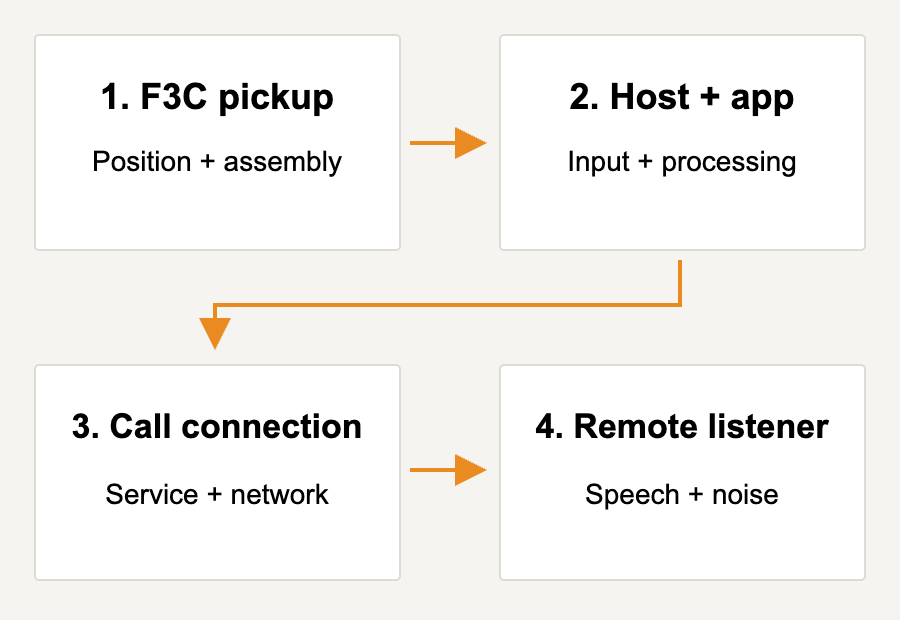
A sample-review plan for brand product managers and buyers: evaluate the voice delivered to the other end of the call, then connect the finding to the approved configuration.
CALL QUALITY · SAMPLE REVIEW
Approve the evidence, not the demo
01 · Fix the setup
Host · app · input · settings
02 · Run the agreed scene
Speech · noise · wearing position
03 · Record the decision
Sample revision · evidence · retest
Headset call quality testing should use the intended device and app, a repeatable wearing position, defined noise scenes and remote-end recordings. Approve the sample against agreed speech and noise criteria, with its hardware and firmware revision recorded.
Agree what the remote listener must understand
Imagine a brand preparing an open-ear headset for office staff who call customers beside other conversations. A quiet-room demo sounds acceptable. During a busy shift, the remote listener misses names or short numbers. This is a hypothetical evaluation scene, not a reported F3C result.
Write the priority task before comparing samples: the intended environment, devices, app, spoken material and reference headset. Include nearby speech and pauses in the trial. Wind belongs in the plan only when the product is intended for that setting. Agree the acceptance rule before listening.
The earlier product-definition guide covers scope and cost. This guide focuses on the evidence needed for the call-quality decision.
Fix the whole call path
A clear local recording and a clear call are different checks. The selected microphone, app processing and connection belong in the test record. A local recorder may use a different input or processing path from the target call app.
Microsoft documents microphone selection and a test-call function in Teams. Record the selected input and processing settings before a comparison. This is a test-planning example, not a claim that F3C is Teams-certified.
Keep a reference headset on the same host and call route. If the input changes or the connection fails, classify that run as invalid and repeat it. Do not quietly average it into an acoustic score.
WEARING RECORD
Make each run reproducible
Before the run
Follow approved wearing instructions
During the run
Observe movement and readjustment
Keep with the recording
Wearing photo + sample revision
Set pickup position before comparing samples
Alova F3C is an open-ear air-conduction platform with a boom microphone and dual-microphone noise reduction. Those features establish the configuration to evaluate; they do not establish a passing result in every workplace.
Photograph the wearing position for the test record. Observe whether normal head movement changes the position or makes the wearer readjust it. Keep the microphone opening clear. Use the approved wearing instructions rather than inventing a universal mouth-to-microphone distance.
For a brand, this links the sample review to the wearing guidance customers will receive. Separate a fit problem from a sound-processing problem before requesting changes.
Listen to speech and noise separately
Lower background noise is useful only if the voice remains usable. ITU-T P.835 uses separate ratings for speech, background noise and overall quality when evaluating noise suppression. The checks below borrow that distinction; they are not a formal P.835 test or a published F3C score.
Speech
Can the remote listener understand the agreed phrases? Note clipped word starts, missing endings, muffled voice and interruptions.
Background
What remains during speech and pauses? Record nearby talkers and changes in the noise, not just whether silence sounds quiet.
Overall call
Can the listener follow the task without repeated requests? Keep echo and connection failures visible as separate observations.
Keep the original recording and test notes. If you use a blind comparison, conceal the model labels and keep playback conditions the same. Set project-specific acceptance limits with the responsible team; this article supplies no universal pass threshold.
Define the trigger for a retest
Keep the microphone assembly and firmware revision with each recording. If either changes after acceptance, review which call scenes and host/app combinations need another run. Compare the revised sample with the approved reference using the same setup.
Do not carry a previous pass forward without checking the impact of the change. Record the reason for the retest, the affected scenes and who will review the new evidence. Assembly instructions describe intended controls; they cannot substitute for the revised sample’s call record.
A frequency-response check can support diagnosis, but it does not replace the target call trial. See the separate microphone frequency-response guide for that measurement topic.
CHANGE → REVIEW → RETEST
Decide what needs another call trial
Microphone assembly changes
Review pickup and affected checks
Firmware changes
Review processing and app behavior
Changed test conditions
Record the change before comparing
Keep an acceptance record with the sample revision
ACCEPTANCE RECORD
One traceable decision per run
Identify
Sample · hardware · firmware
Attach
Setup · wearing photo · recording
Decide
Accept / revise / retest + reason
Use one row per sample, scene and call path. Record the hardware revision, firmware, selected input, noise conditions, wearing photo, recording file and reviewer decision. Keep failures and retests linked.
Check mute, recovery after reconnection and the agreed two-device workflow separately where required. Bluetooth connectivity alone does not prove that every app uses the intended microphone or controls.
Before moving to a pilot, agree which checks repeat on the approved configuration and what evidence supports release. A changed microphone assembly or firmware needs an impact review; a past recording cannot stand in for the revised sample.
| Record field | What the buyer and manufacturer agree |
|---|---|
| Task and setup | Scene, host, app, input, settings and reference |
| Evidence | Sample/revision, wearing photo and recording filename |
| Listening result | Speech, remaining noise, echo and observed failures |
| Decision | Accepted, revise or retest; reason, owner and next check |
Discuss an F3C sample evaluation
Share the target users, call environments, devices and app, reference product, market and expected quantity. Alova can discuss the F3C platform, the proposed configuration and the checks needed for your project. Project-specific sample arrangements require confirmation.
Discuss your call-headset project