Voice pickup, close to the source
A boom microphone and dual-mic noise reduction support calls while keeping the ear canal open.

Bluetooth 6.0 open-ear communication headset for brand and OEM/ODM projects. Dual-mic noise reduction, two-device connectivity and ≥17-hour calls at 80% volume. Request samples and project pricing.
Evaluation Sample Price
Online purchasing is provided for evaluation samples only. Displayed prices are not bulk quotations, MSRP or recommended resale prices. Contact Alova for volume orders and OEM/ODM pricing.
Request the current specs, manual and model-specific compliance documents for your market.
OPENEAR Air F3C
A Bluetooth 6.0 headset with a boom microphone, dual-mic noise reduction and two-device connectivity. Built for brand and distribution projects.
For bulk supply and OEM/ODM projects. Sample terms are separate from volume pricing.

Three reasons to put F3C on your sample shortlist.
A boom microphone and dual-mic noise reduction support calls while keeping the ear canal open.
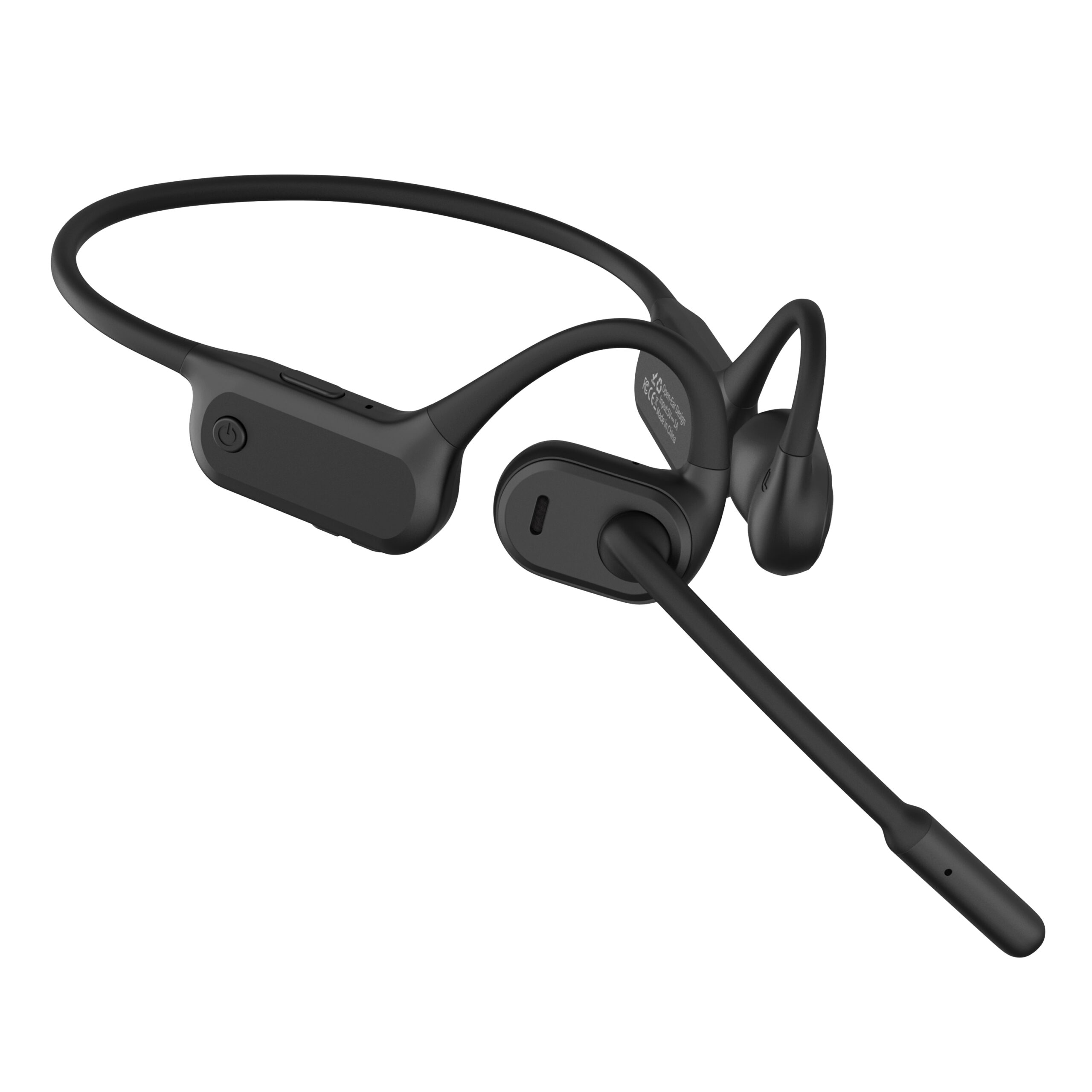
Two-device connectivity and separate communication / music EQ modes suit mixed daily use.
Listed for ≥17 hours of calls or ≥19 hours of music at 80% volume, with USB-C charging.
Review the intended application, then check the details that matter in sample evaluation.

Assess open-ear fit, microphone positioning and call behavior with your intended devices.
Application illustration. It is not a customer case study or evidence of call performance.
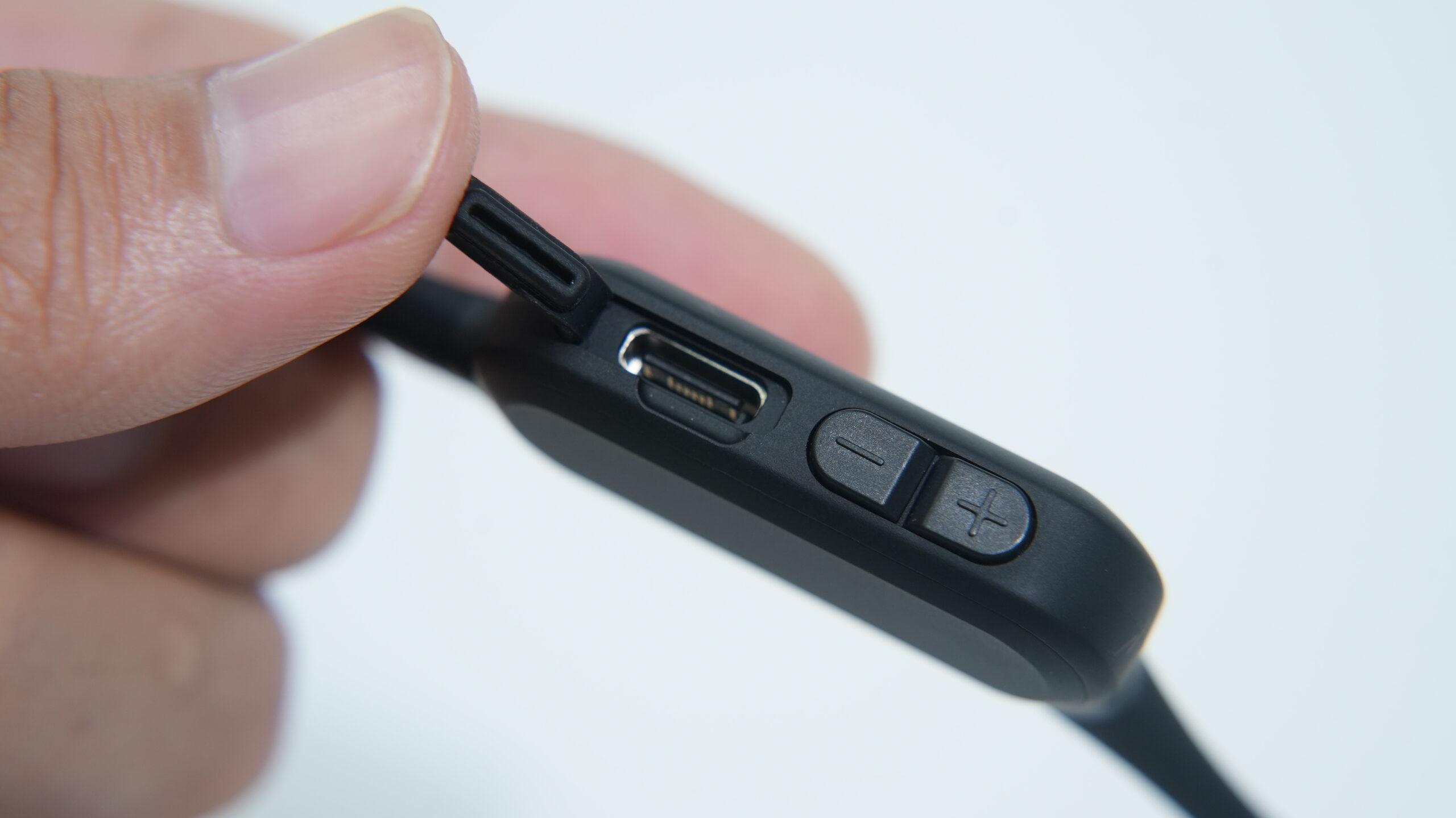
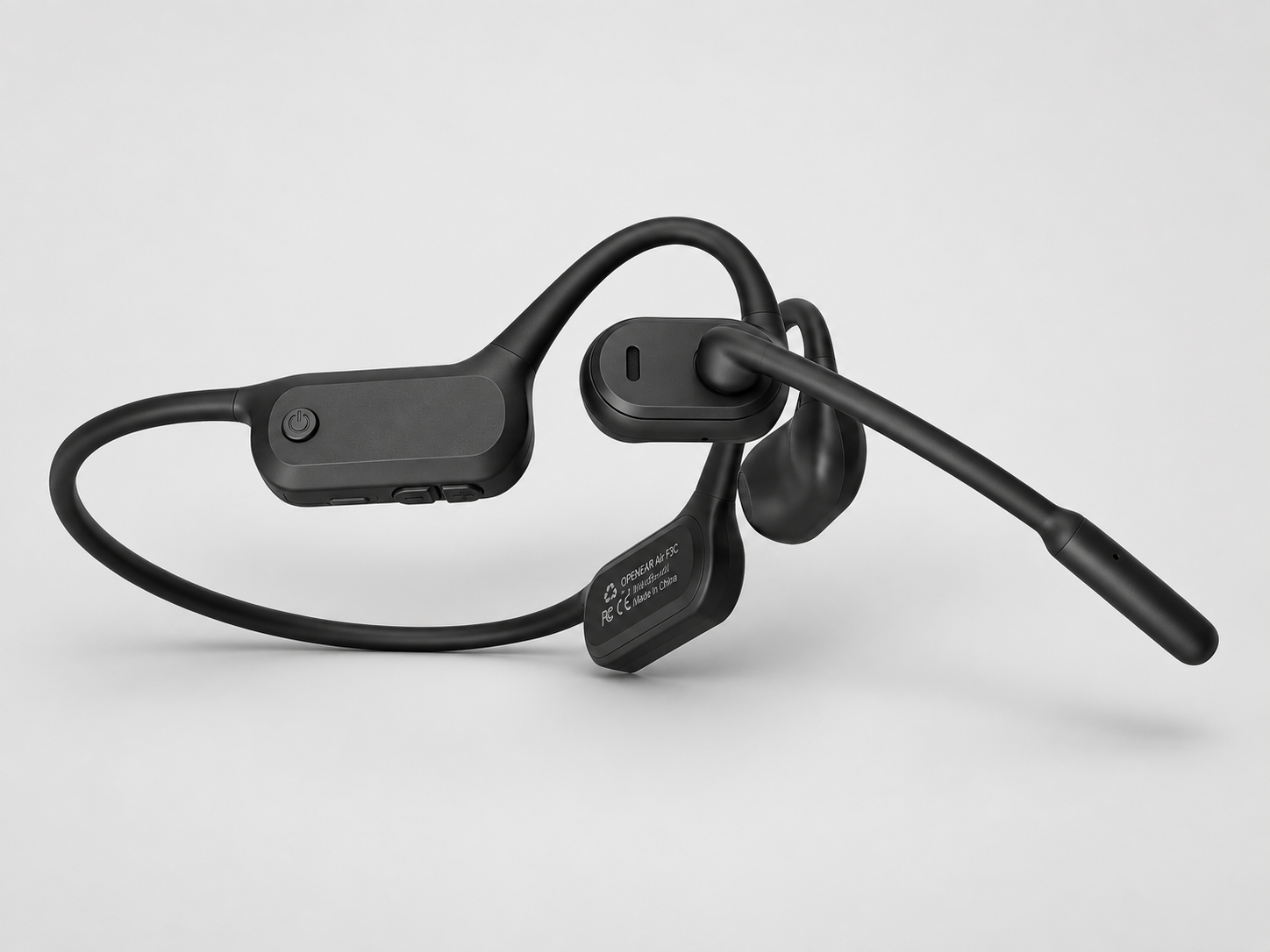
Actual product close-up from Alova’s F3C material library. Inspect charging access and controls during sample review.
Production appearance follows the approved sample.Start with F3C. Define the configuration your market needs.
Explore Alova OEM supportReview brand marking and color requirements.
Plan artwork, languages and accessory combinations.
Discuss supported controls and voice prompts with engineering.
Confirm the configuration, test documents and quotation before approval.
Check the essentials here. Request the current specification and model-specific documents for your target market.
Request the specification sheetRuntime varies with volume, audio and conditions. Customization scope, MOQ and lead time are confirmed for each project.
| Bluetooth | 6.0 · WQ7034MX |
|---|---|
| Connectivity | Two Bluetooth devices; approx. 10 m range |
| Audio | 16.2 mm stereo dynamic speakers |
| Microphone | Boom microphone; dual-microphone noise reduction |
| Battery | 250 mAh / 3.7 V lithium-polymer |
| Music / calls | ≥19 h music / ≥17 h calls, at 80% volume |
| Charging | USB-C; DC 5 V / 1 A input |
| Controls | Five physical buttons; communication / music EQ |
| Protection | IPX5; not for swimming |
| Weight / size | 37 g ±3 g / 135.6 × 111 × 46.1 mm |
F3C supports connection to two Bluetooth devices. Evaluate call behavior with your intended phone, computer and meeting software. No platform-specific certification is claimed.
F3C has a 250 mAh battery, USB-C and ≥17-hour calls. The current Air X3 has a 180 mAh battery, magnetic charging and ≥12-hour calls. Both runtime figures are at 80% volume.
Compare Air X3Request sample availability and terms for evaluation. Any online purchase price is for samples, not a bulk quotation or recommended resale price. Volume, customization and delivery requirements determine your project quotation.
Tell us your target market, estimated quantity and branding needs. Request the matching sample configuration and quotation.
Specifications reviewed 29 October 2026. Confirm the approved sample before production.

Air conduction speakers leave the ear canal open. A boom microphone and dual-microphone noise reduction support voice pickup for office calls and remote meetings.
The 250 mAh battery is specified for at least 17 hours of calls or 19 hours of music at 80% volume. Actual runtime depends on operating conditions.
Connect the headset to two Bluetooth devices. During a call, press M to toggle microphone mute; double-click M to switch communication and music EQ modes when not in a call.
USB-C charging, five physical function buttons and an IPX5 rating support everyday use. The listed weight is 37 g ±3 g. This model is not designed for swimming.
Air-conduction headphones deliver sound through the air to the ear. Bone-conduction headphones use vibrations transmitted through bone to the inner ear. Check the selected model’s specifications to confirm its sound transmission method and intended use.
Use this product page’s specification table and available manual. Before ordering, request confirmation of the model revision, Bluetooth version, battery performance, charging interface, weight and included accessories. A specification listed for another model does not apply automatically.
Protection varies by model. Use only the IP rating documented for the selected product. An IPX rating does not establish a dust-protection rating, and water resistance does not automatically mean suitability for swimming.
A different protection target requires engineering review and validation. Share your use environment and target IP rating so Alova can assess the enclosure, seals, components and testing scope before confirming feasibility, cost and schedule.
Open-ear audio products and hearing aids serve different purposes. Do not assume hearing-loss treatment, medical-device status or clinical performance from an open-ear design. Request the selected model’s documented intended use and applicable market requirements.
Certification and test documentation must be checked for the exact model, configuration and destination market. Request available reports and confirm their scope before using a compliance claim in packaging or marketing.
Customization depends on the selected platform and engineering feasibility. Share the required listening time, functions and target size; request confirmation of supported firmware options and any design or testing work needed.
Customize an existing Alova health headphone platform for your brand: logo, colors, packaging, manuals, compatible accessories and supported firmware options. Confirm the selected model and customization scope, then approve samples before production.
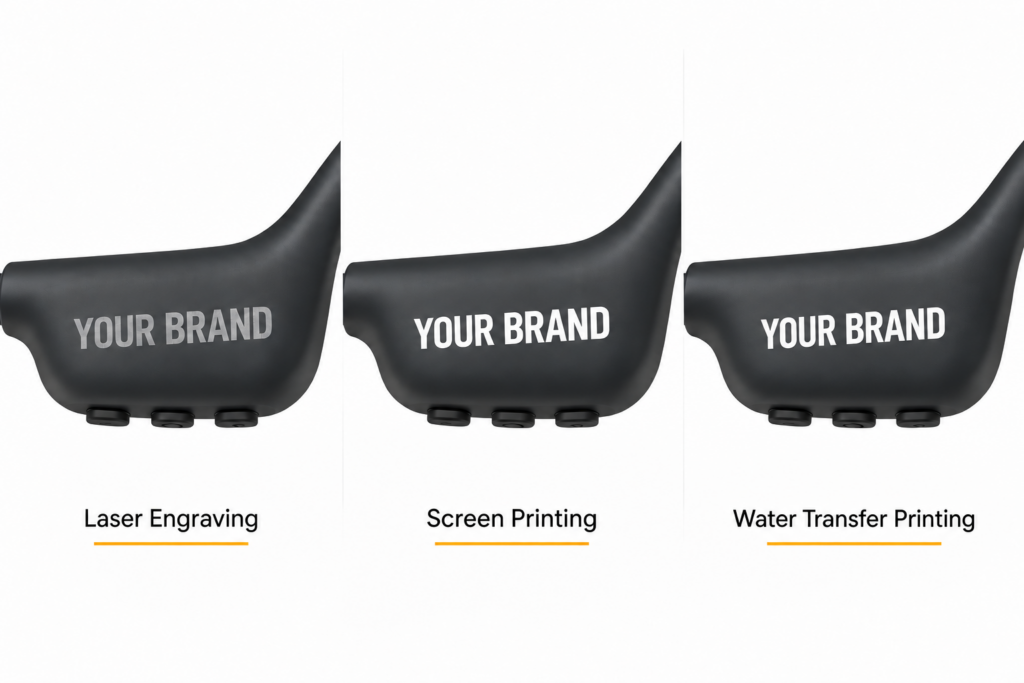
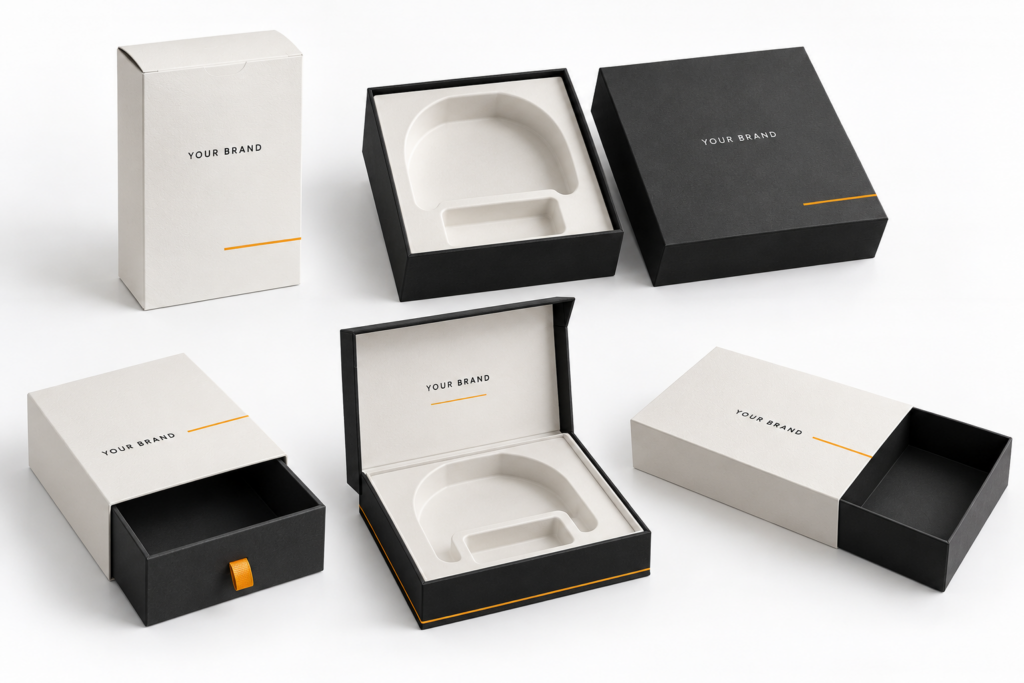
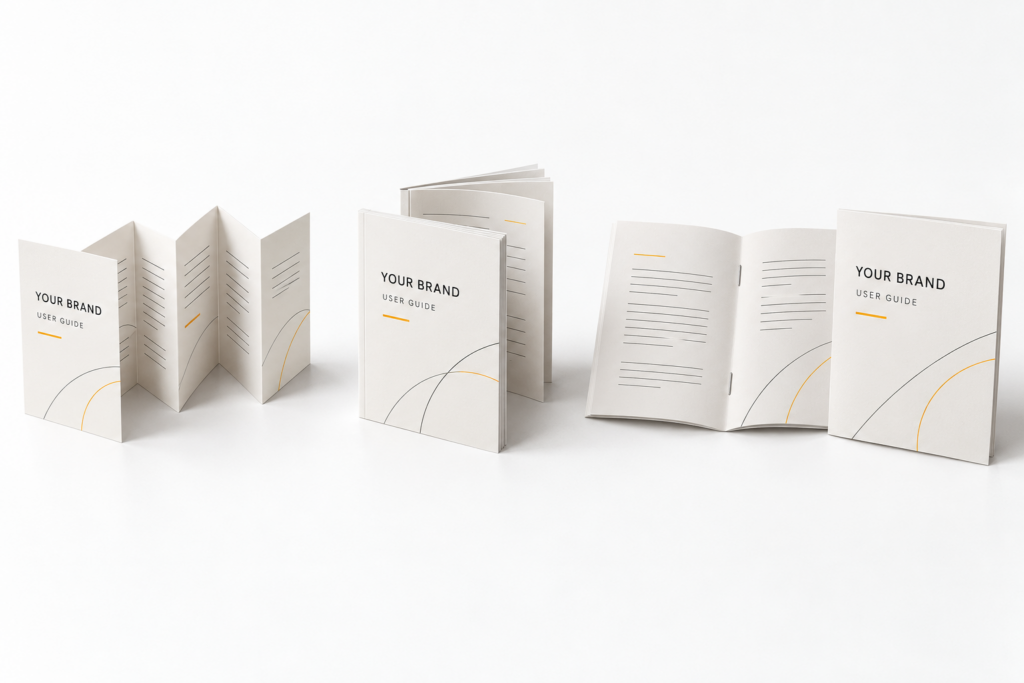
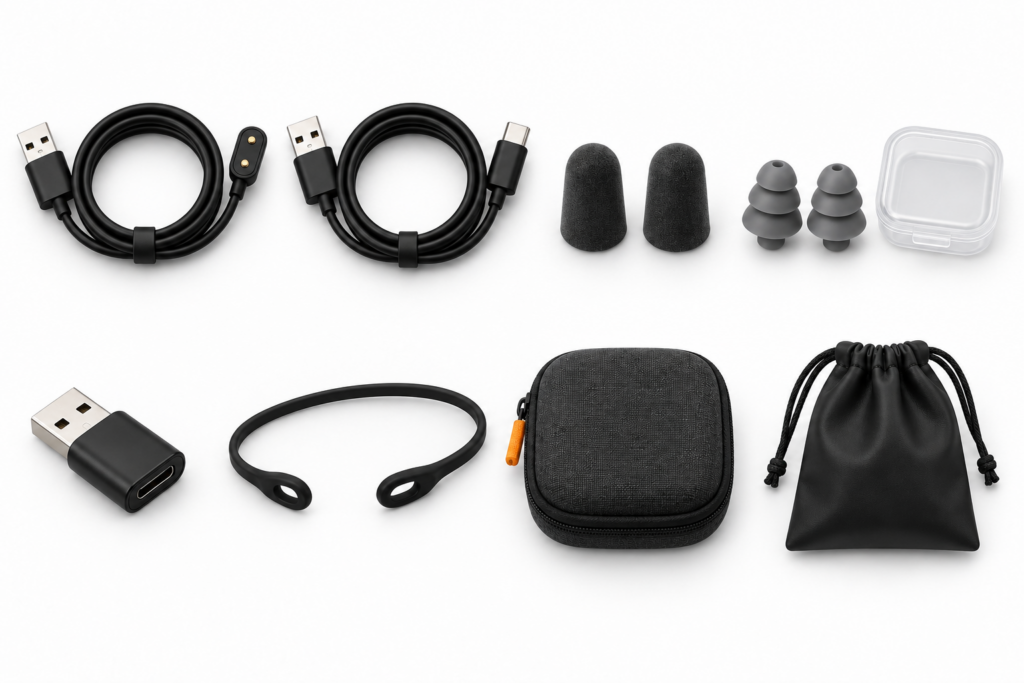
Packaging, branding, manual and accessory images are illustrative concepts. Final materials, dimensions and finishes are confirmed with approved samples.
OEM projects can cover logo, colors, packaging, manuals, compatible accessories and supported firmware options. Availability depends on the selected model and agreed scope. Confirm the options in your quotation and approved sample.
Share your artwork, packaging dimensions, language requirements and destination market. Materials, printing, included accessories and manual content should be confirmed before sample approval. Images on this page illustrate customization concepts.
Start with the model and requirements, confirm the quotation and customization scope, approve samples, then agree production, inspection and shipping arrangements. Your order documents should record the approved specifications and acceptance criteria.
Lead time depends on stock, customization, sample approval, order quantity and production scheduling. Request a project-specific production estimate and a separate shipping estimate rather than relying on a universal lead time.
Submit the target territory, channels, product model and purchase plan for commercial review. Exclusivity applies only when explicitly agreed in the signed terms.
Provide the product model, quantity, target market, logo artwork, colors, packaging requirements, accessories, firmware needs and desired delivery date. Include any required compliance documents or testing.
MOQ depends on the model and customization scope. Ask for the MOQ and pricing for your exact configuration; a quantity quoted for another project is not a universal minimum.
Request sample availability and trial-batch terms for the selected model. Confirm pricing, customization limits and delivery timing before using samples for evaluation.
Discuss the artwork and packaging support required for your project. Confirm deliverables, revisions, fees and approval responsibilities in the agreed scope.
Provide the destination, quantity, required arrival date and preferred trade terms. Confirm freight, duties, handling responsibilities and the delivery estimate in your quotation.
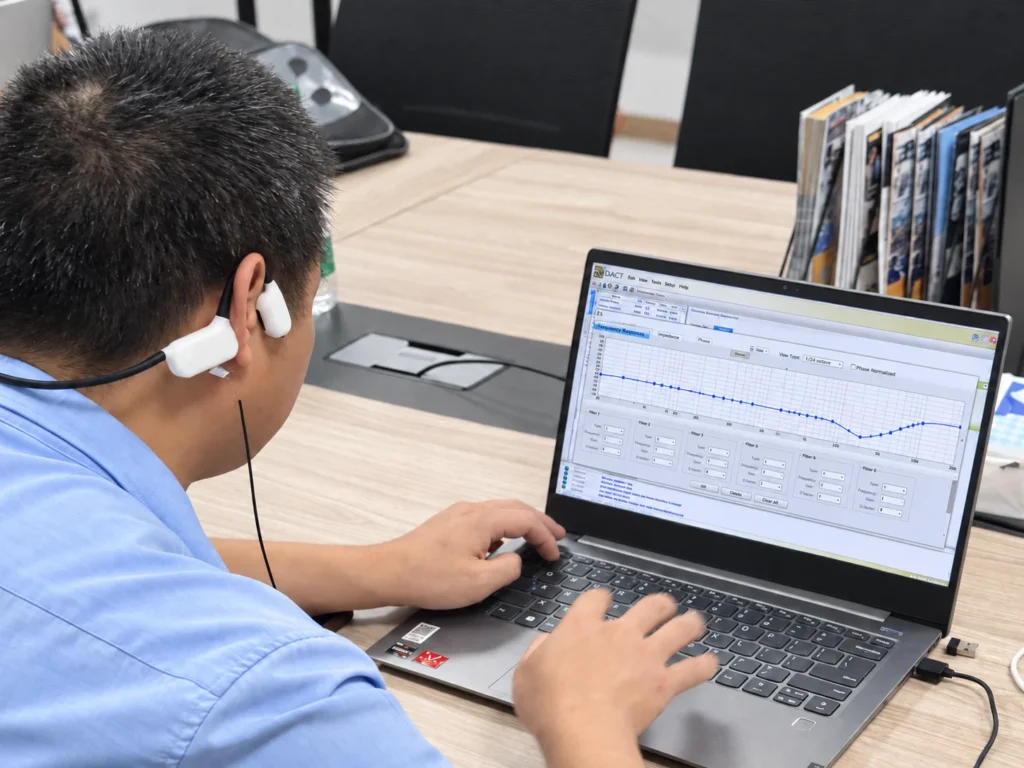
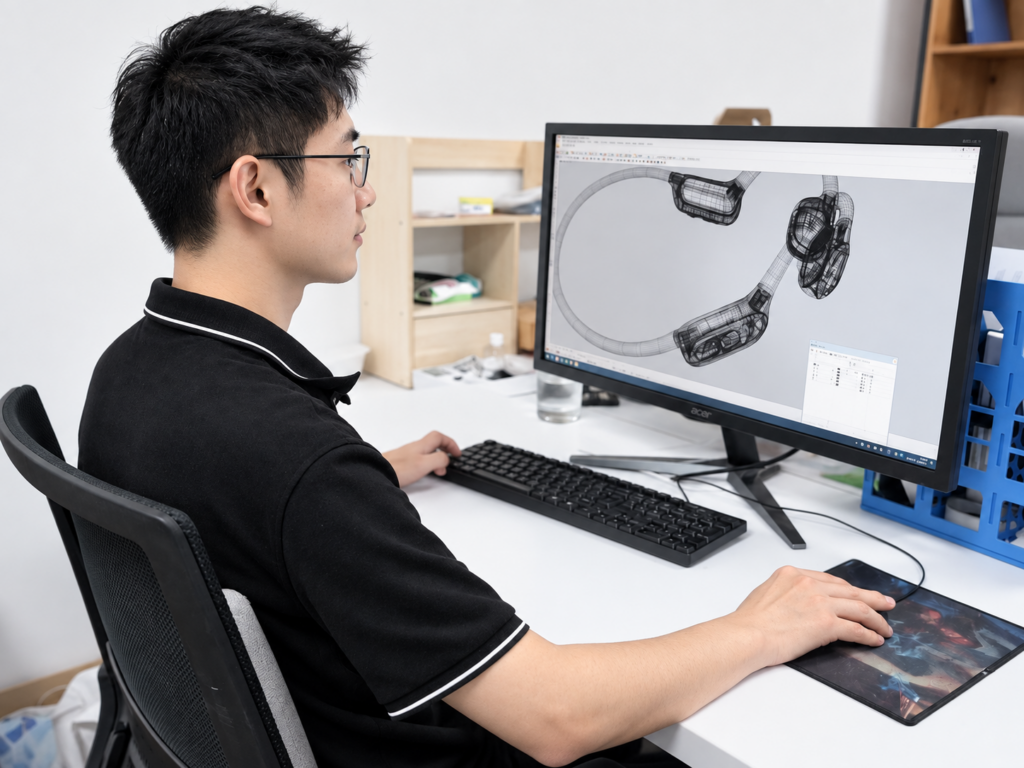
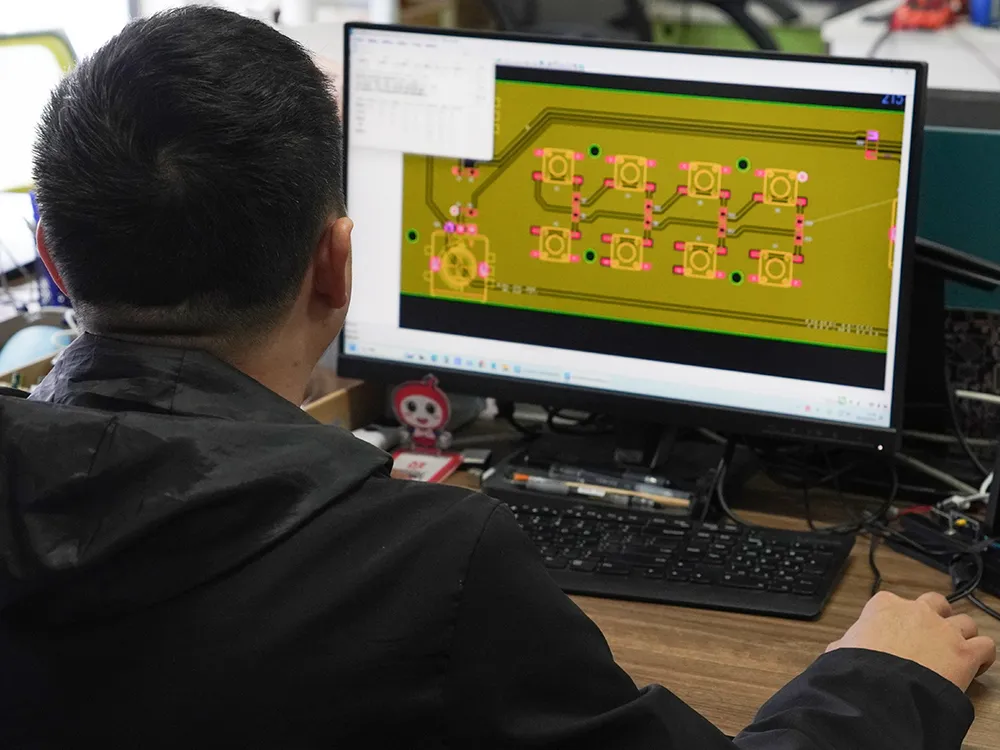
Alova connects industrial design, acoustic tuning, PCBA development and manufacturing preparation for open-ear health audio projects. Share your target users, core functions, target cost and launch market to define the development scope and sample verification plan.
ODM development can combine industrial and structural design, acoustic tuning, PCBA development, prototype validation and production preparation. The exact deliverables depend on the agreed project scope.
Share target users, intended use, core functions, design references, target cost, destination markets, expected volume and launch schedule. Identify required performance and compliance evidence early.
Agree requirements and feasibility, develop the design and electronics, evaluate prototypes, validate the product, and prepare production. Set review milestones and acceptance criteria for each agreed stage.
Submit your concept, drawings or functional brief for feasibility review. Confirm which elements are supplied by your team and which require Alova development before agreeing costs and deliverables.
Discuss industrial design, mechanical structure, acoustic tuning, electronics, firmware and testing needs. Each workstream should have defined deliverables and validation requirements in the project scope.
ODM production quantities depend on tooling, components, design complexity and commercial terms. Request a project-specific MOQ together with development and tooling costs.
The schedule depends on requirements, engineering complexity, tooling, component availability, testing and approvals. Request a milestone-based plan after feasibility review; there is no single development period for every project.
Provide the latest requirements, drawings, design constraints and unresolved decisions. Agree review dates and approval responsibilities with the project team to avoid proceeding on unconfirmed assumptions.
Discuss confidentiality, ownership of designs and tooling, usage rights and permitted disclosures before sharing sensitive information. These arrangements should be documented in the applicable agreements.
Agree the approved specifications, sample configuration, test evidence and acceptance criteria. Record design changes and approvals before authorizing the next production stage.
WhatsApp us