Health Headphone OEM & Brand Customization
Build Your Brand on a Proven Product Platform
Alova is a Shenzhen-based open-ear health audio R&D and manufacturing company. Our OEM service helps global brands customize existing headphone platforms with their own logo, colors, packaging, accessories and supported firmware options.
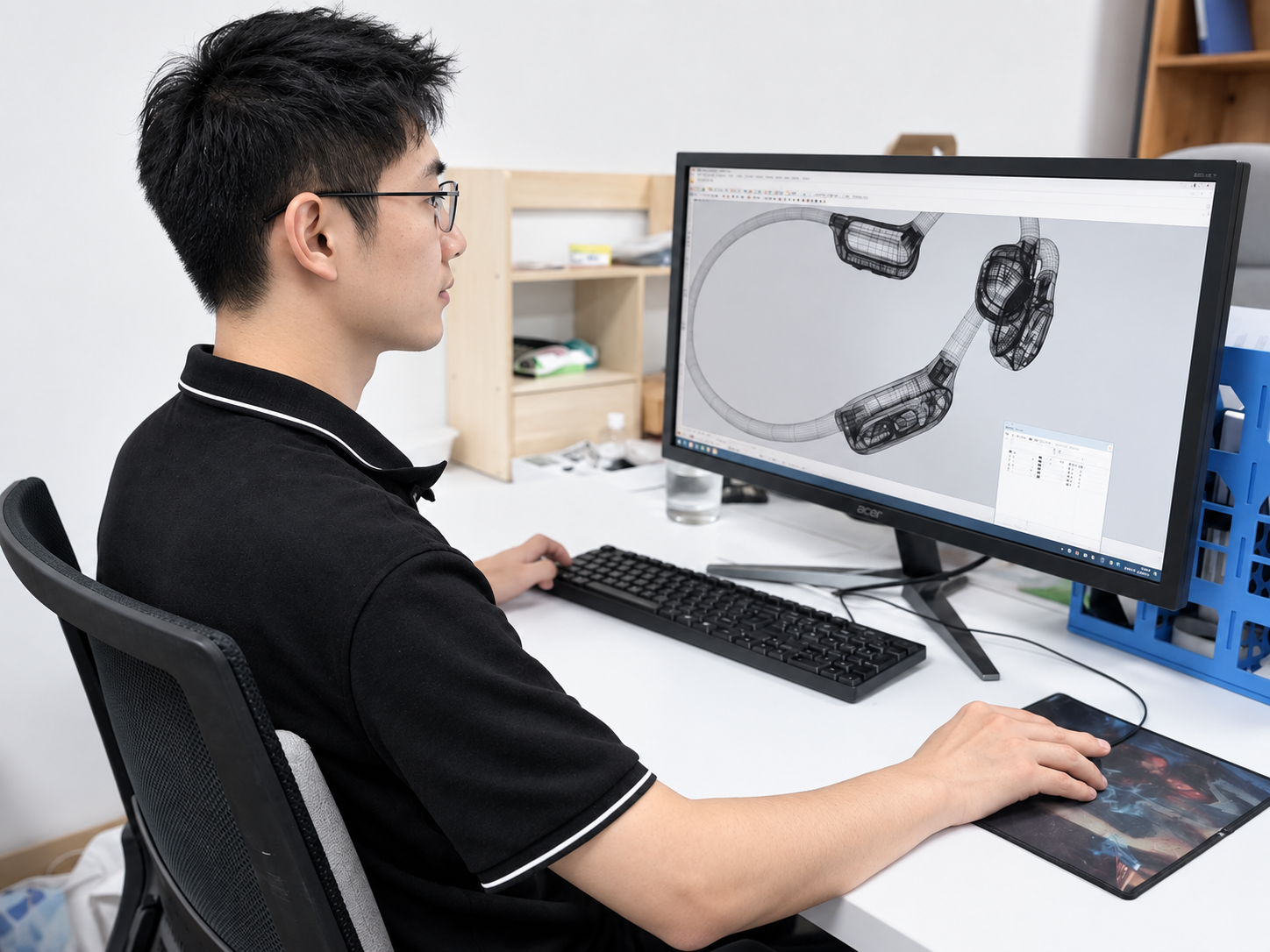
Start with a suitable model, agree the customization scope, and approve samples before production. For a new product structure or deeper engineering changes, explore our ODM development service.
Customization Capabilities
Diverse Customization Options to Meet Your Brand Needs
Product Branding
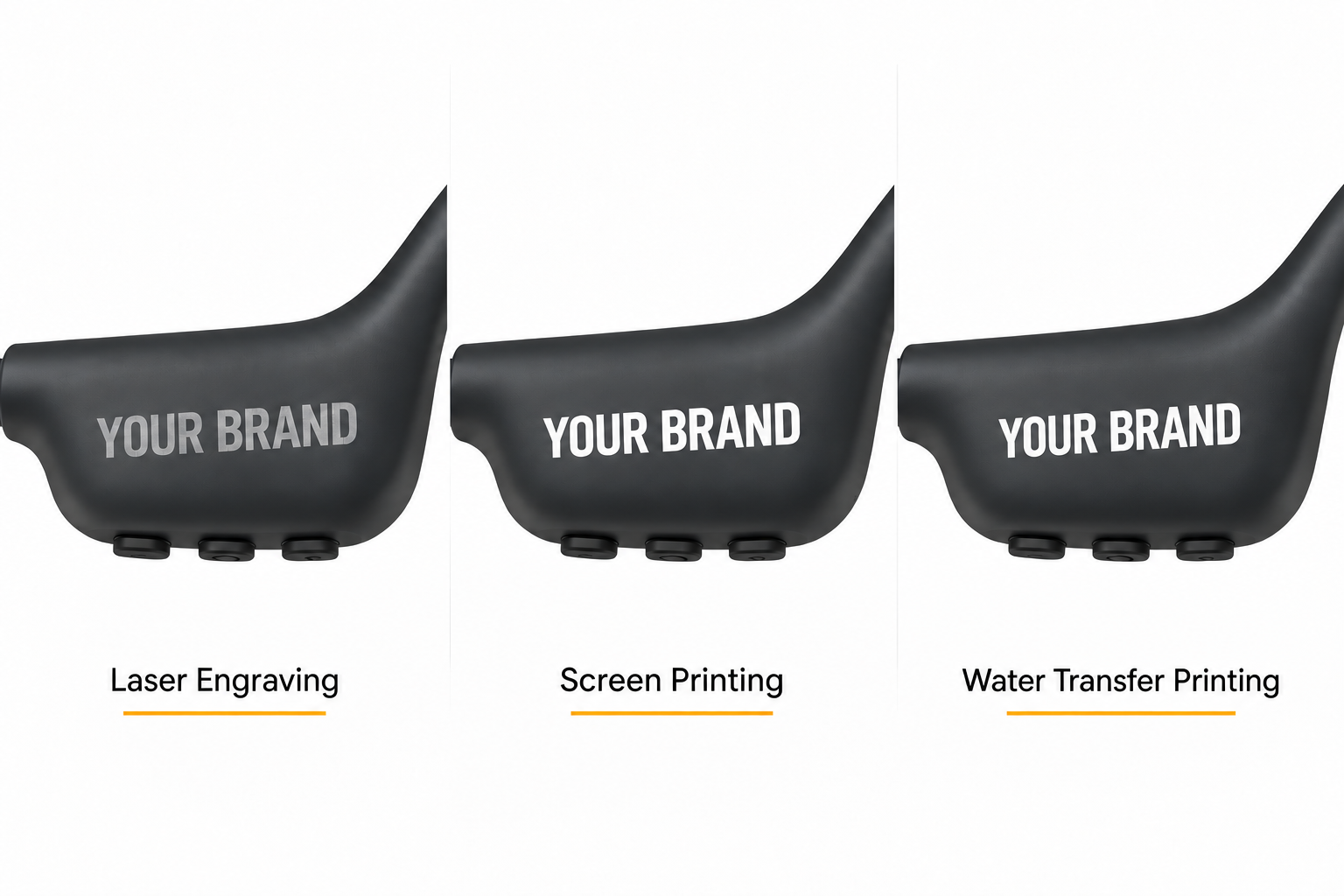
Logo application: Compare laser engraving, screen printing and label options against the selected product surface and artwork.
Laser engraving or single-color printing typically starts at 1,000 units. Some label-based projects may start at 100 units, subject to model availability and quotation. Multi-color artwork requires a separate review.
Color & Firmware Options
Brand experience: Discuss Pantone color references, Bluetooth device names, prompt sounds and supported firmware functions.
Name and prompt changes typically start at 1,000 units; color or deeper firmware customization typically starts at 3,000 units, subject to the selected platform. Bluetooth version and feature availability depend on the chipset and hardware; changes require an engineering review.
Custom Packaging Materials
Retail presentation: Customize box artwork, inserts, manuals and outer cartons around the product and your sales channel.
Printing on standard-size boxes typically starts at 1,000 units. Custom structures, materials and special finishes are quoted after reviewing artwork, dimensions and quantities. Lower-volume label options can be assessed separately.
Accessories & In-Box Content
In-box experience: Select compatible charging cables, pouches, straps and other model-specific accessories.
Confirm accessory style, color, quantity and compatibility in the approved packing list. Availability and minimum quantities vary by item.
Branding, Packaging & Accessories
Illustrative OEM options for your brand. Packaging, logo finishes, accessories and manual visuals are AI-assisted concepts; final materials, structures and results are confirmed with approved samples.
Logo Options for Products
Laser engraving: A subtle etched mark; contrast depends on the housing material and finish. Screen printing: Opaque ink for a clearly defined brand mark. Water transfer printing: Transferred artwork, subject to surface and process suitability.
Logo finish concepts based on the supplied product image. Approve contrast, adhesion and durability on an actual sample.
Logo Options for Packaging
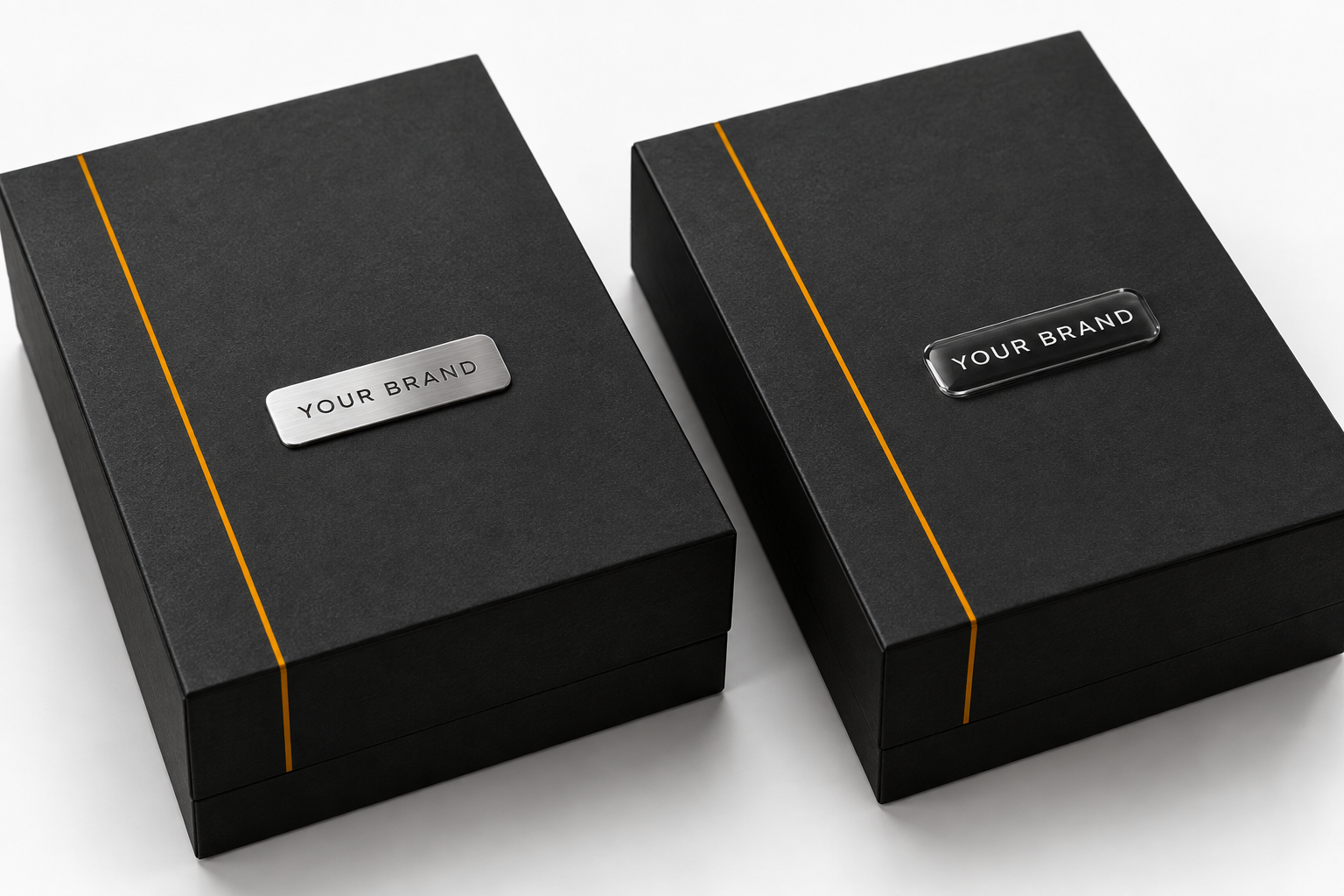
Metal labels: A thin metallic brand detail. UV labels: A raised glossy brand mark. Select the finish against your artwork and packaging surface; verify adhesion and appearance on samples.
Custom Headphone Packaging
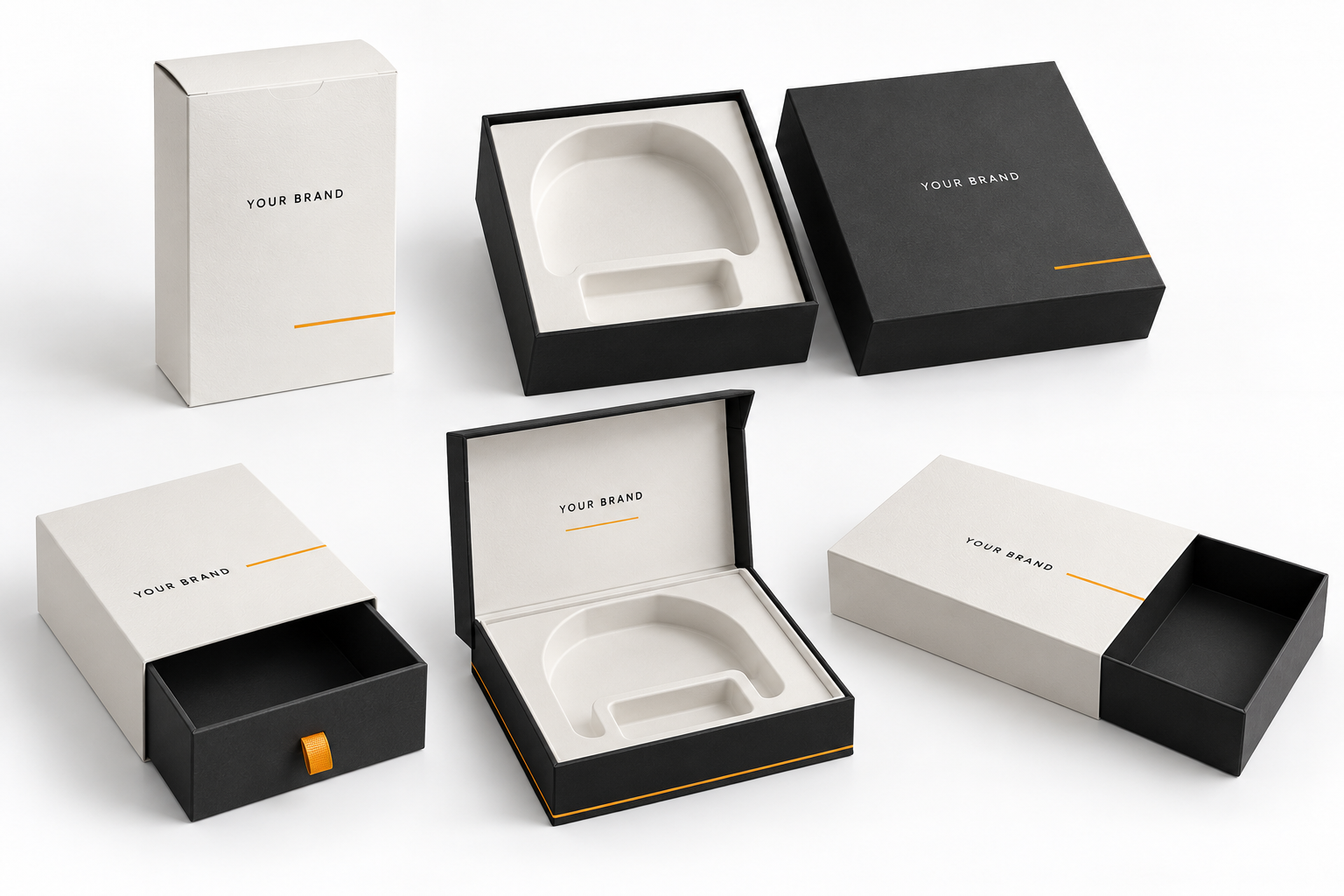
Folding carton · Lift-off lid box · Drawer box · Hinged box · Printed sleeve
AI-generated packaging concepts for illustration. Final box dimensions, inserts, materials and finishes are confirmed through approved samples.
Printing Techniques
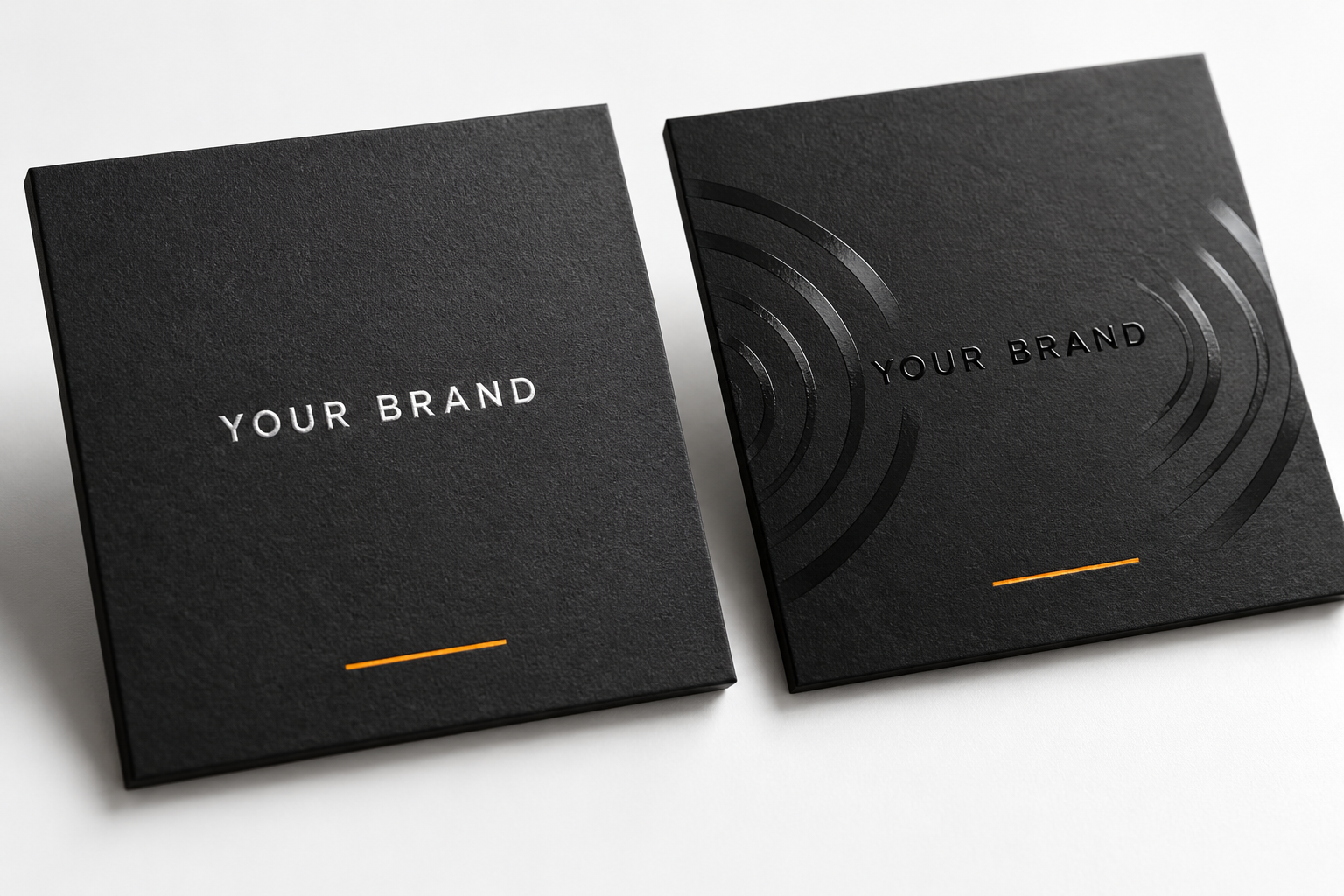
Silver foil: A reflective metallic accent. Spot UV: A glossy printed detail against matte paper. Discuss artwork, print area and production quantity before quotation.
Accessory Options
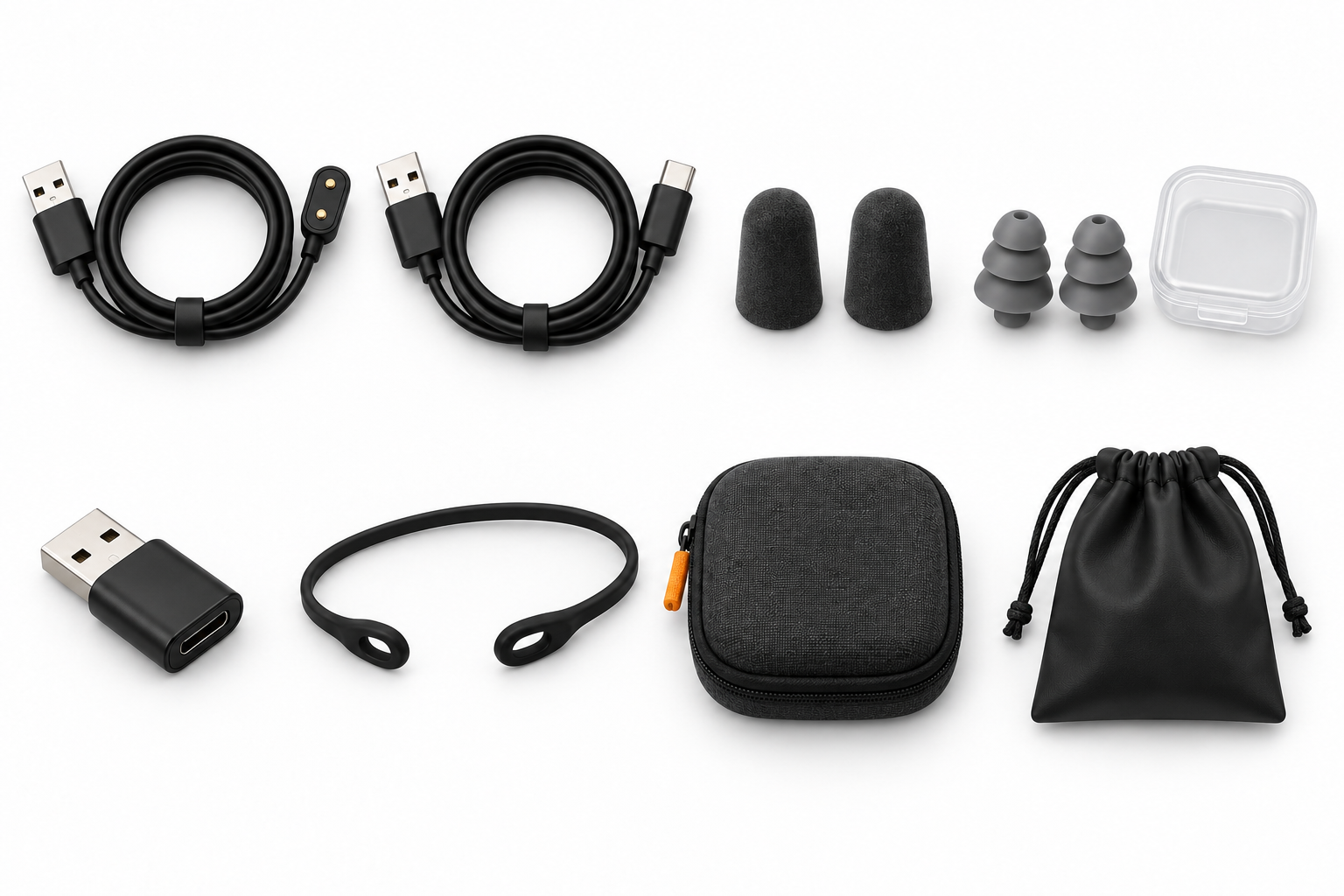
Charging: Magnetic or USB-C cable options and a USB adapter, subject to the selected model’s connector and electrical requirements.
Wearing and storage: Foam earplugs, silicone earplugs with case, silicone strap, zippered fabric pouch and PU drawstring bag. Confirm dimensions, materials, colors and quantities in the approved packing list.
Concept illustrations. Accessories are optional and must be checked for model compatibility; the image does not define connector specifications or standard box contents.
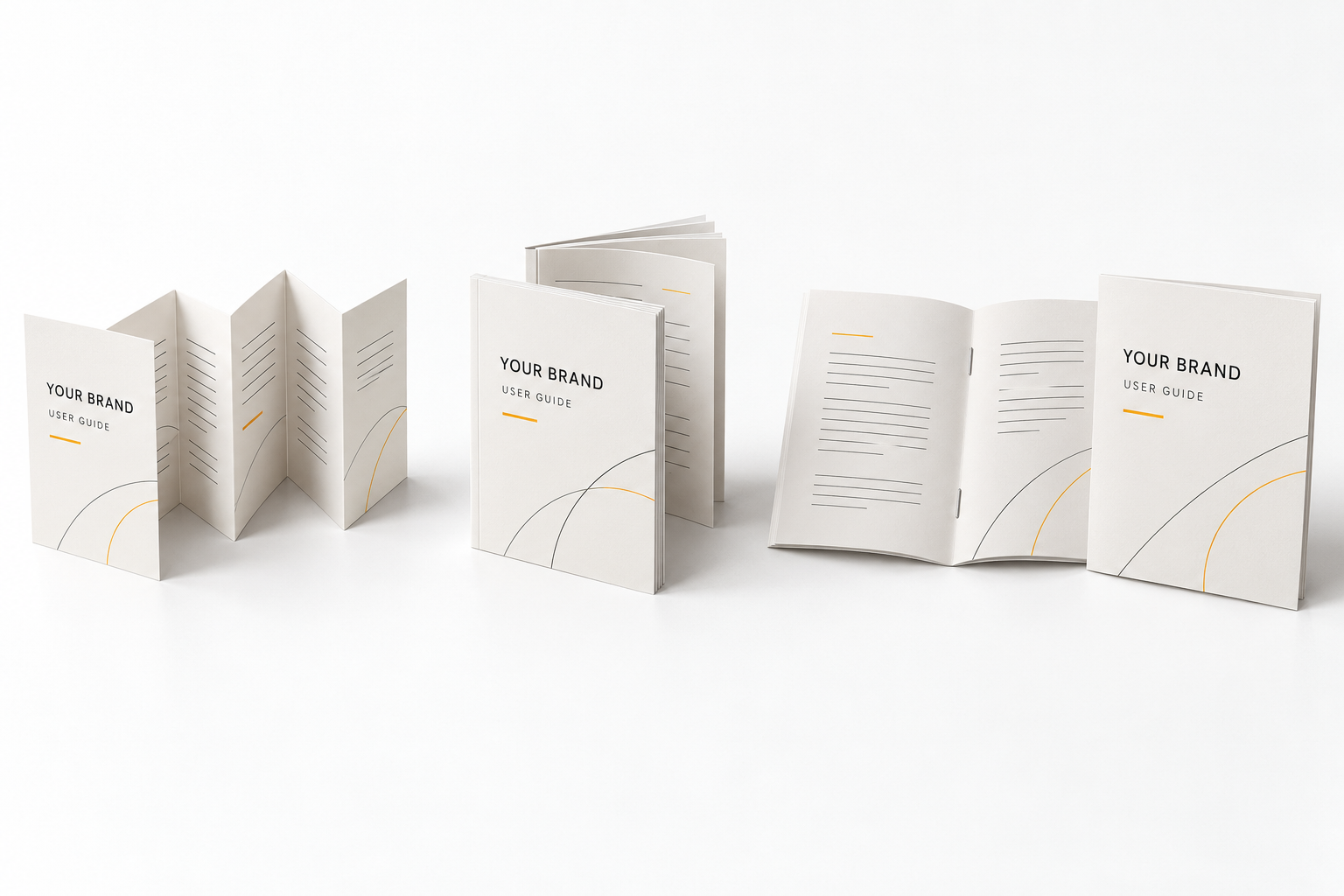
User Manual Styles
Accordion fold: A compact format for quick-start instructions. Perfect bound: A booklet format for longer content. Saddle stitched: A slim stapled guide.
Confirm language versions, page count, paper, diagrams, operating instructions and market-specific labeling with the selected model. Approve the final print file before production.
Tell us your product idea or preferred model, target sales market, expected quantity and intended launch timing. Specify whether you need a standard product, brand and packaging customization, or product-level development. We will review the feasible scope and identify the samples, files and approvals needed before production.
From OEM Brief to Shipment
Step 1: Customization Requirements Stage
1. Requirement Discussion
Clients engage in detailed discussions with us regarding product design, features, and market positioning requirements.
2. Prepayment of 30% Deposit
A 30% deposit is paid to confirm the order and purchase necessary materials.
3. Approve Logo Artwork
Review artwork placement, size and finish on the selected product before approving the branding sample.
4. Confirm Color & Firmware
Confirm color references and supported software changes, then check the agreed functions on samples.
5. Approve Packaging Artwork
Approve box dimensions, artwork, inserts and required labeling before packaging production.
6. Confirm Accessories
Confirm the accessories, manual languages and packing list for the selected product.
Step 2: Production and Shipment
1. Approve Pre-Production Samples
Review pre-production samples against the agreed specification, branding and packaging requirements.
2. Schedule Mass Production
Schedule production after sample approval and confirmation of materials and commercial terms. The stated standard payment split is 30% deposit and 70% balance; the signed quotation confirms payment milestones.
3. Client Inspection
Clients arrange for the inspection of bulk products.
4. Arrange Packing & Shipment
Confirm logistics methods and arrange shipment.
Quality-Control Equipment
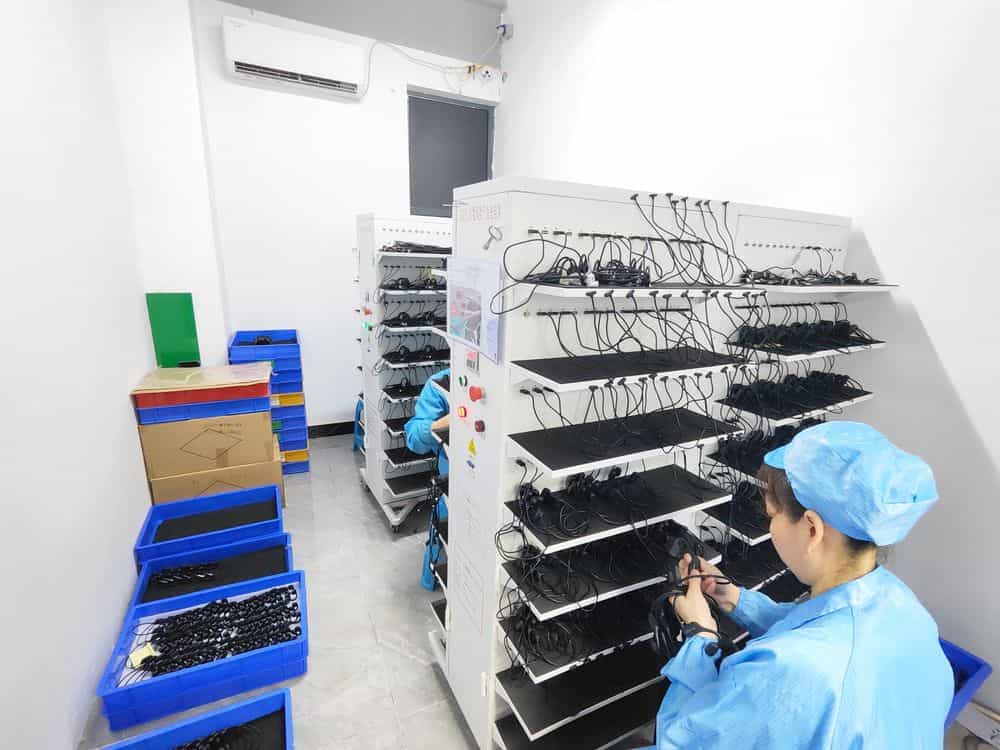
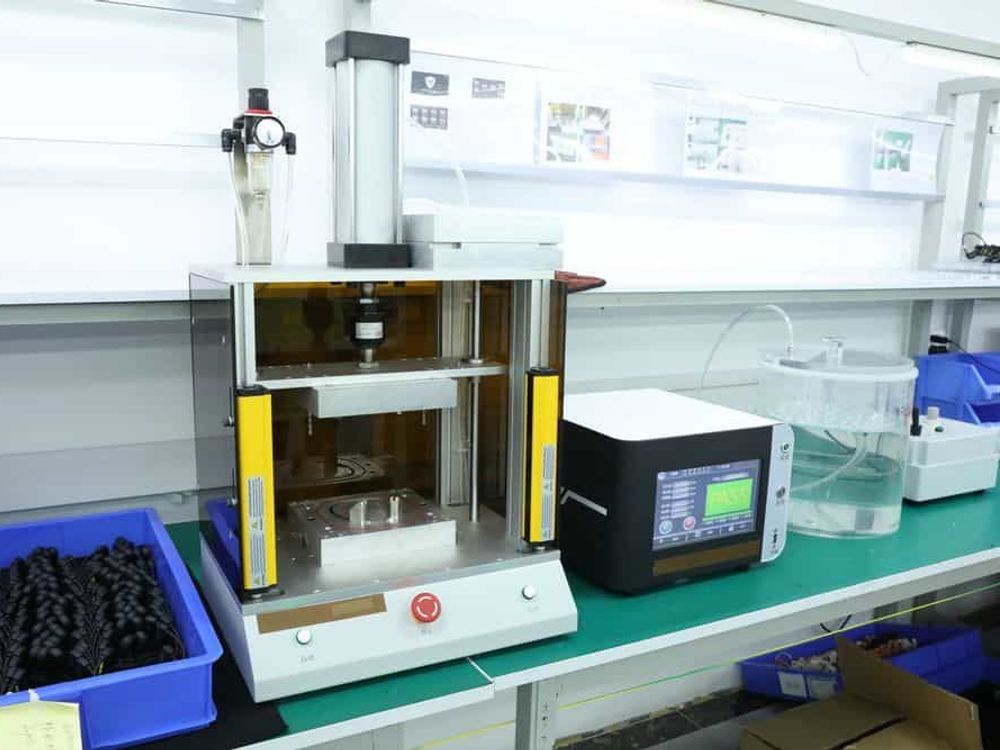
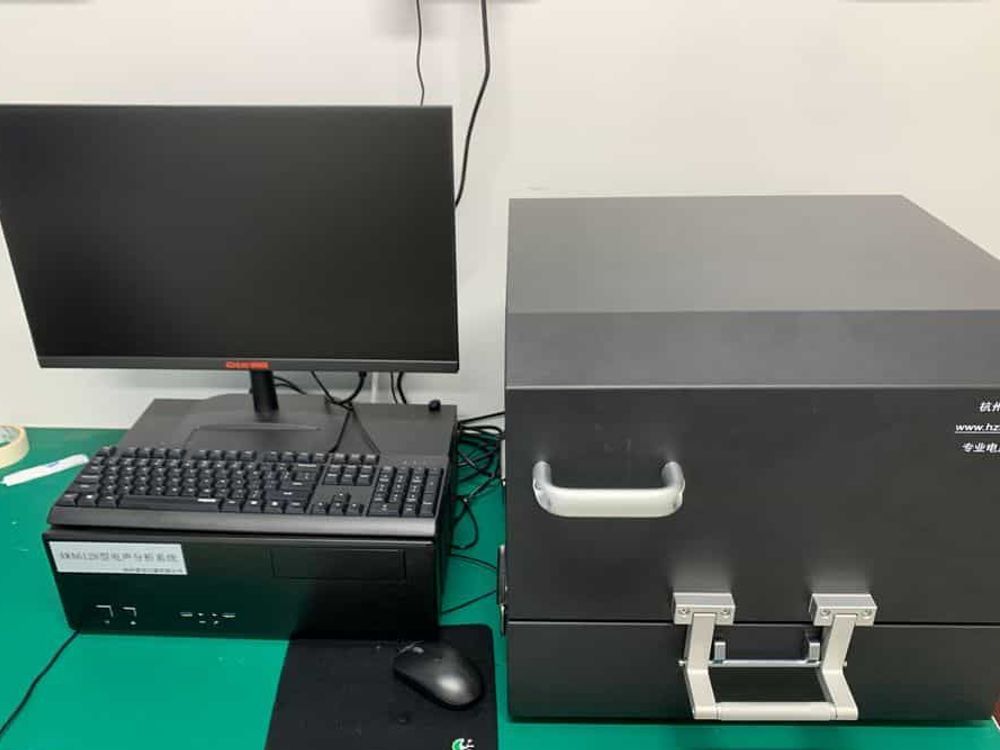
Our equipment supports model-specific durability, charging, acoustic and reliability checks. The examples below illustrate test methods; acceptance criteria and inspection scope are agreed for each project. Learn more about our quality-control process.
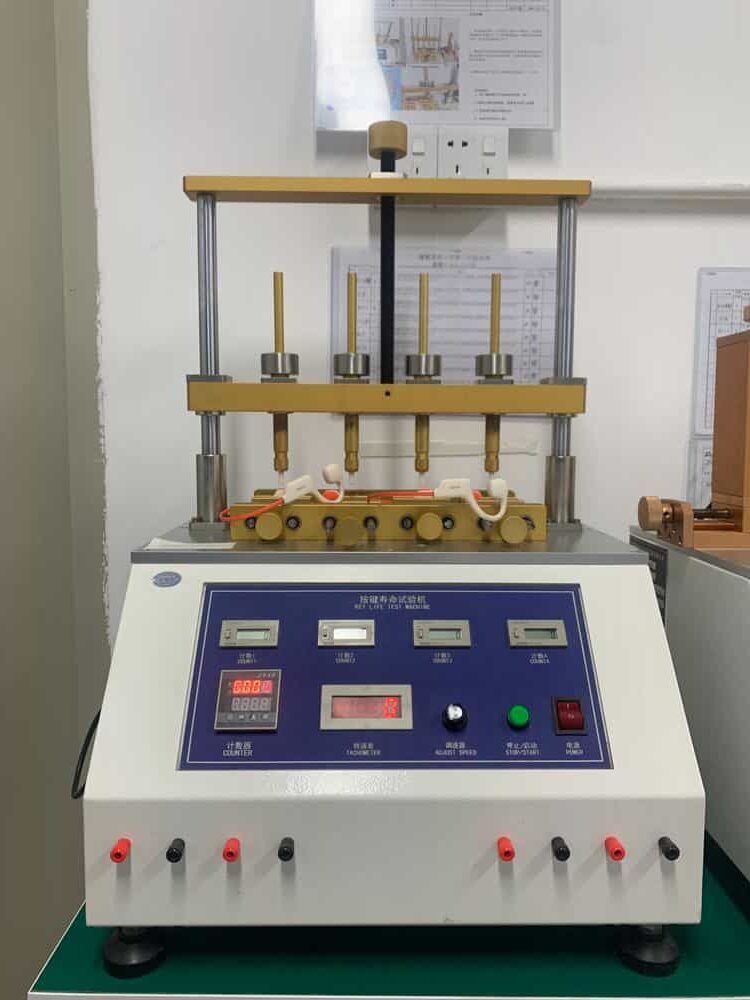
Button Durability
Repeated actuation checks button function and mechanical durability against the selected model’s test plan.
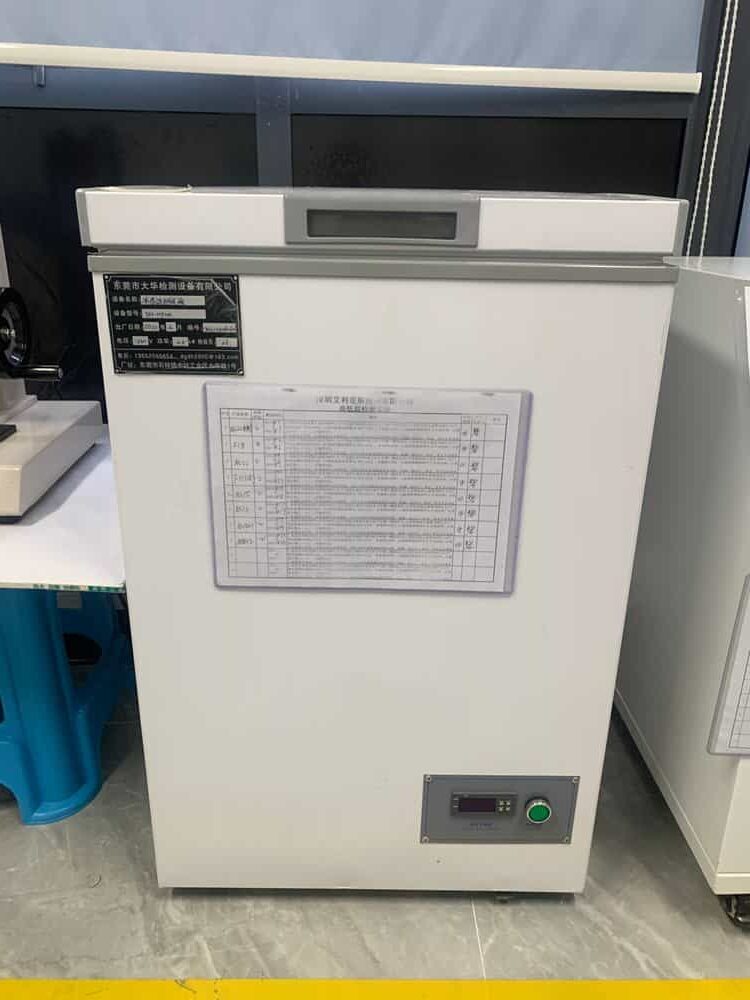
Temperature Cycling
Temperature exposure helps assess operation and physical condition under the agreed high- and low-temperature test conditions.
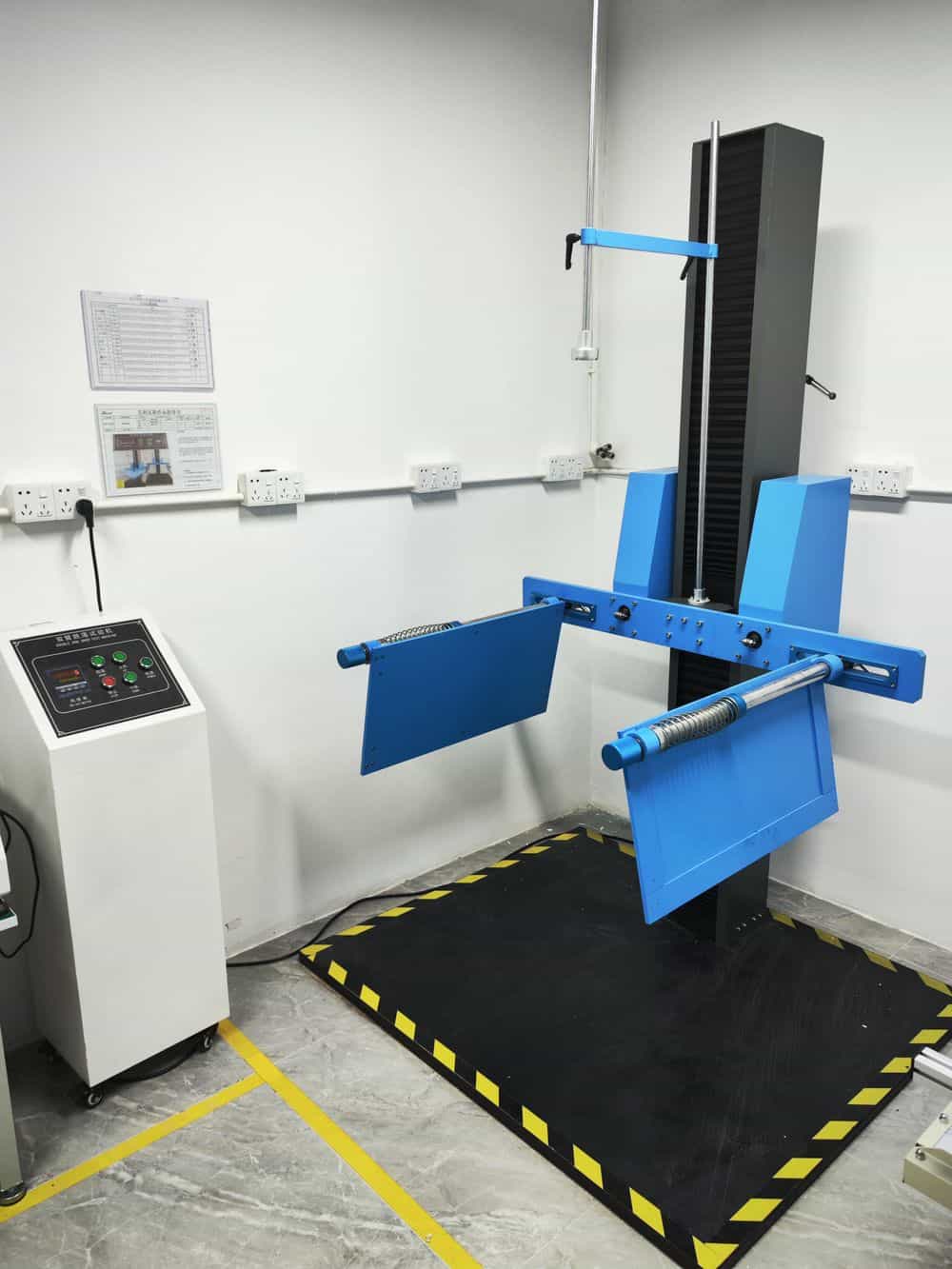
Drop Resistance
Controlled drops assess housing integrity and post-test functions, including controls, indicators and audio.
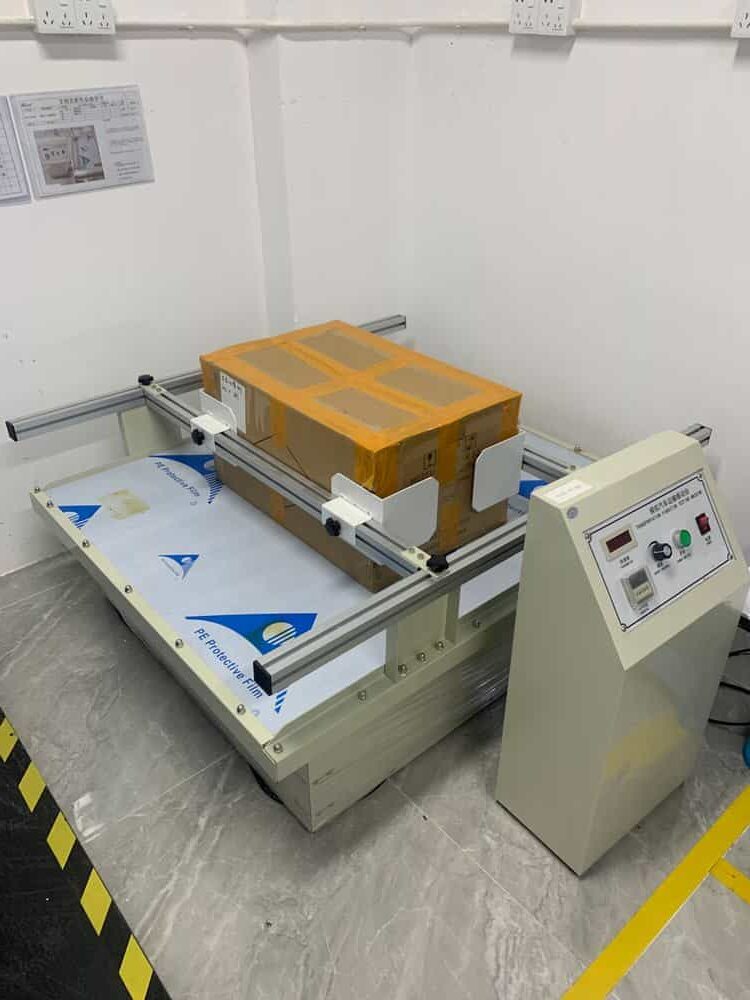
Transport Vibration
Vibration testing checks assemblies and connections for looseness or damage under the agreed transport test conditions.
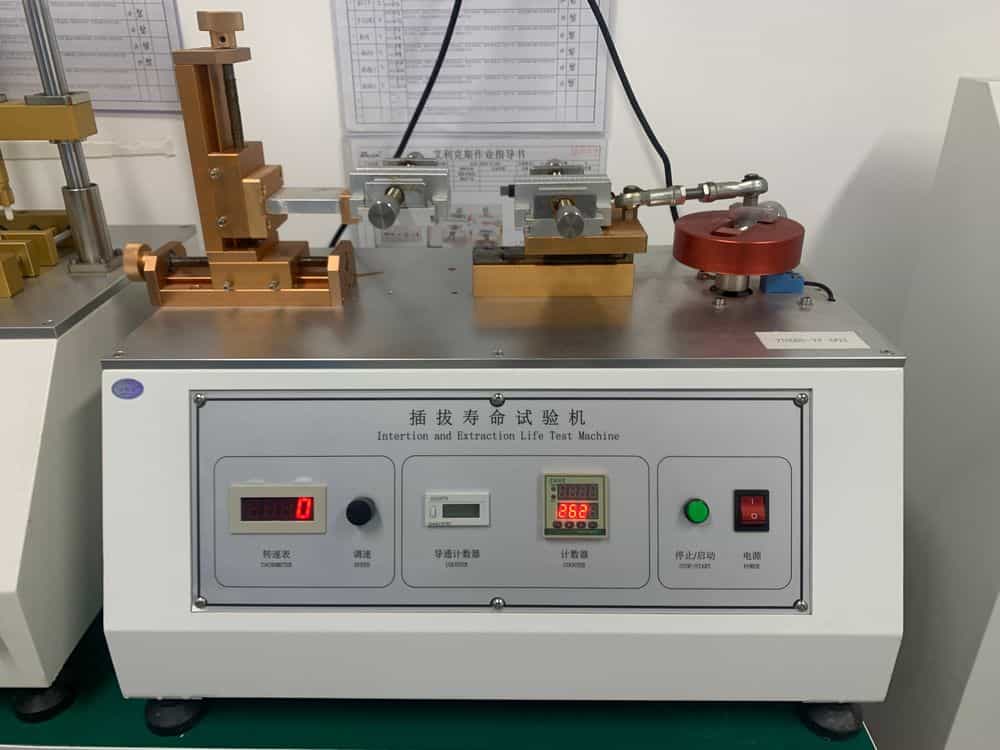
Charging-Port Durability
Repeated connection cycles assess charging-port function, contact stability and mechanical wear.
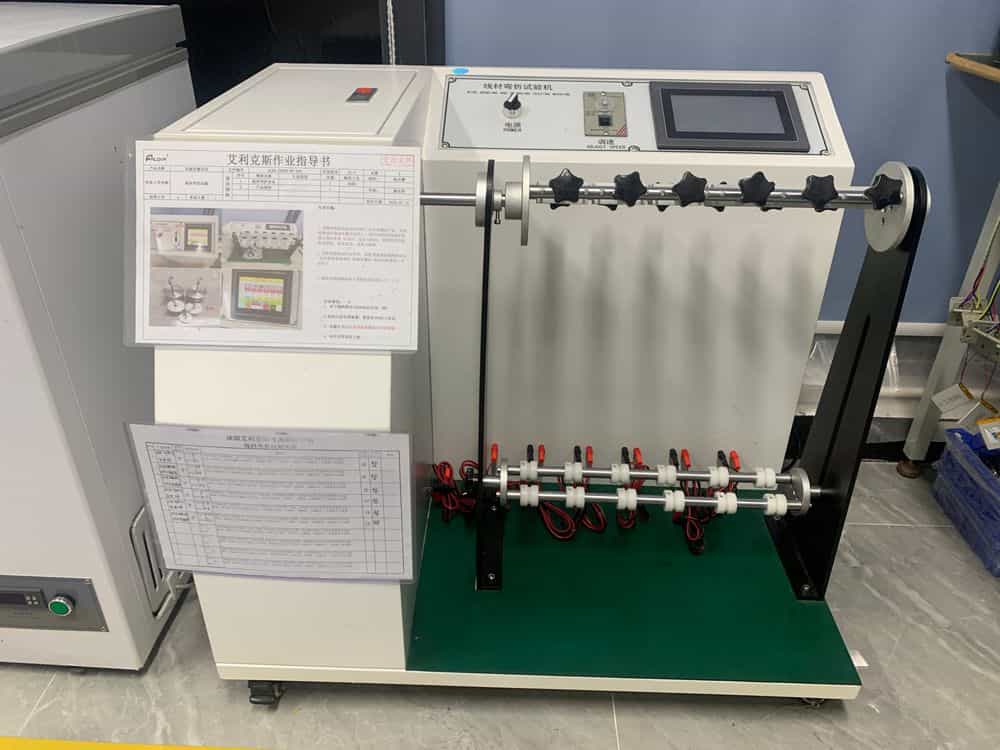
Cable Bending
Repeated bending under the specified load helps evaluate cable and connection durability.
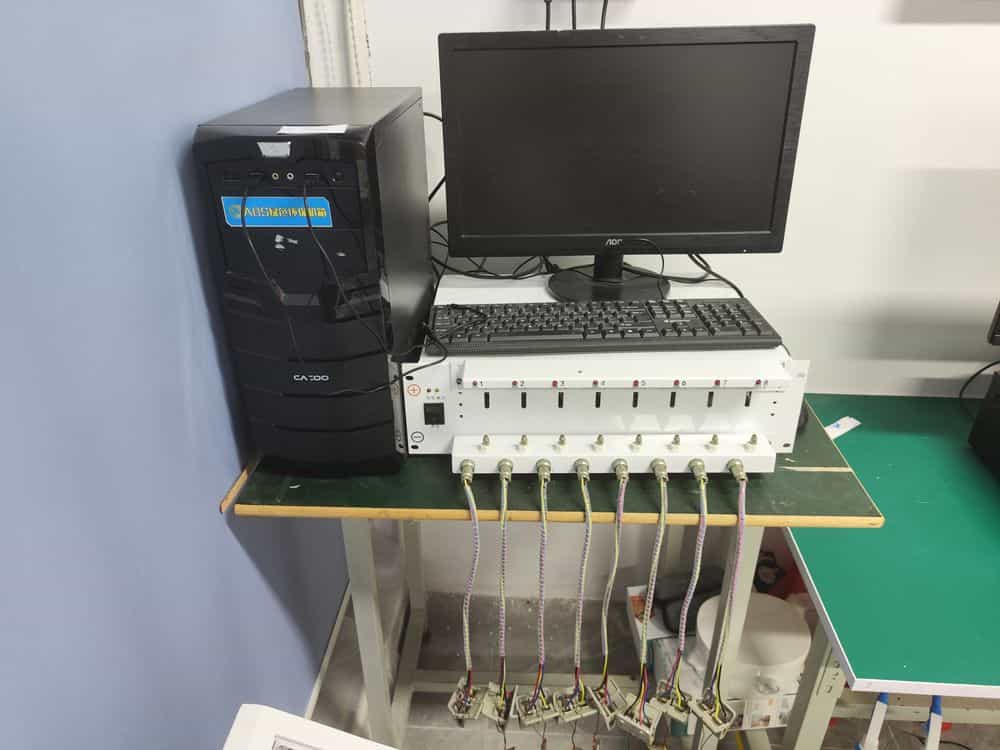
Battery Capacity
Charge and discharge testing checks battery capacity and voltage against the selected product specification.
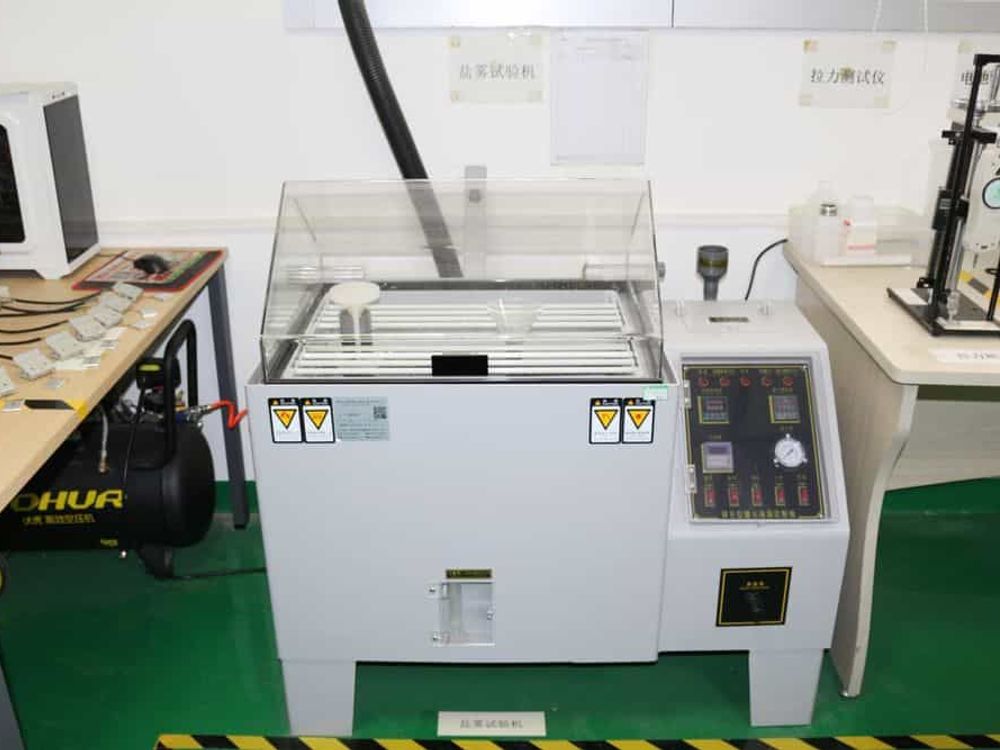
Salt-Spray Resistance
Salt-spray exposure assesses corrosion resistance of applicable metal parts and finishes under the agreed test plan.
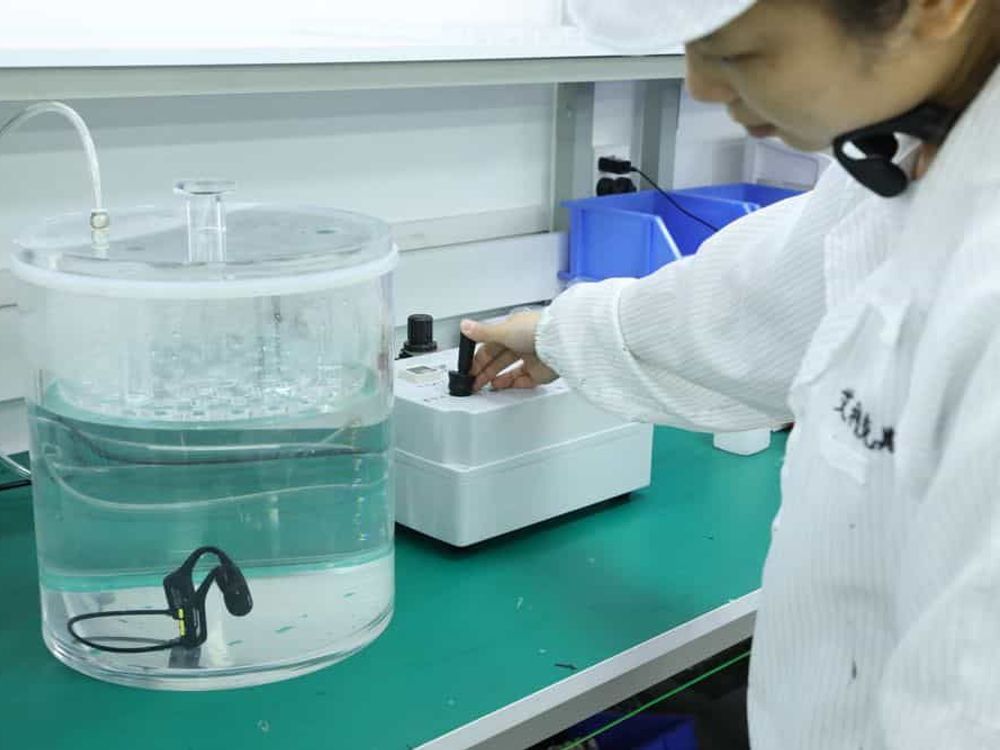
Leak Detection
Leak checks help identify sealing weaknesses during development or production. Test pressure and acceptance criteria are model-specific.
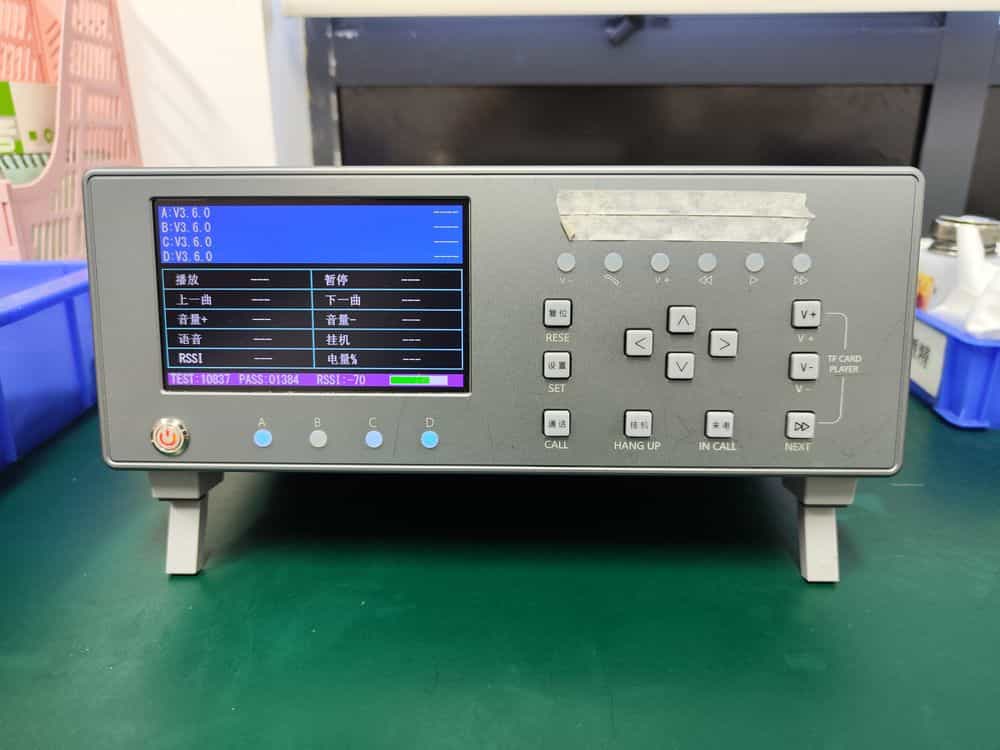
Bluetooth Functions
Check pairing, calls, media controls, battery indication and buttons against the selected model’s specification.
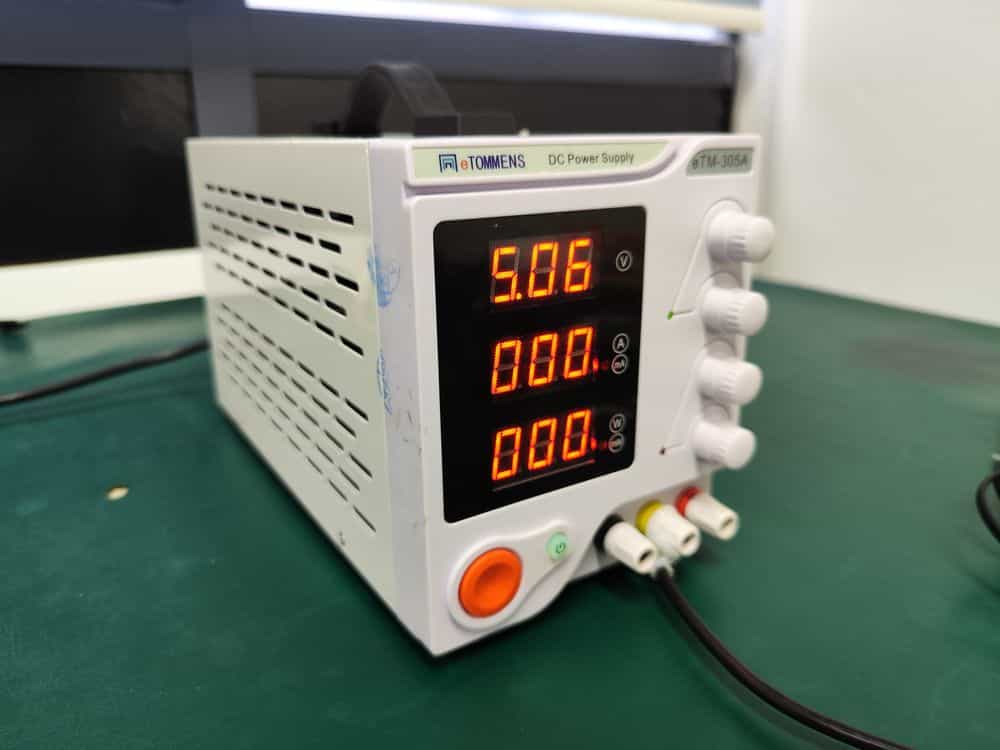
Charging Power
Measure charging current and power consumption under the agreed operating and charging conditions.
Charging Aging
Monitor charging operation, connections and indicators over the specified test period.
Waterproof Testing
Verify sealing and water-resistance performance against the selected model’s test method. Ratings apply only to the tested configuration.
Hearing-Aid Acoustics
Measure gain, frequency response and distortion for applicable hearing products using the agreed acoustic test procedure.
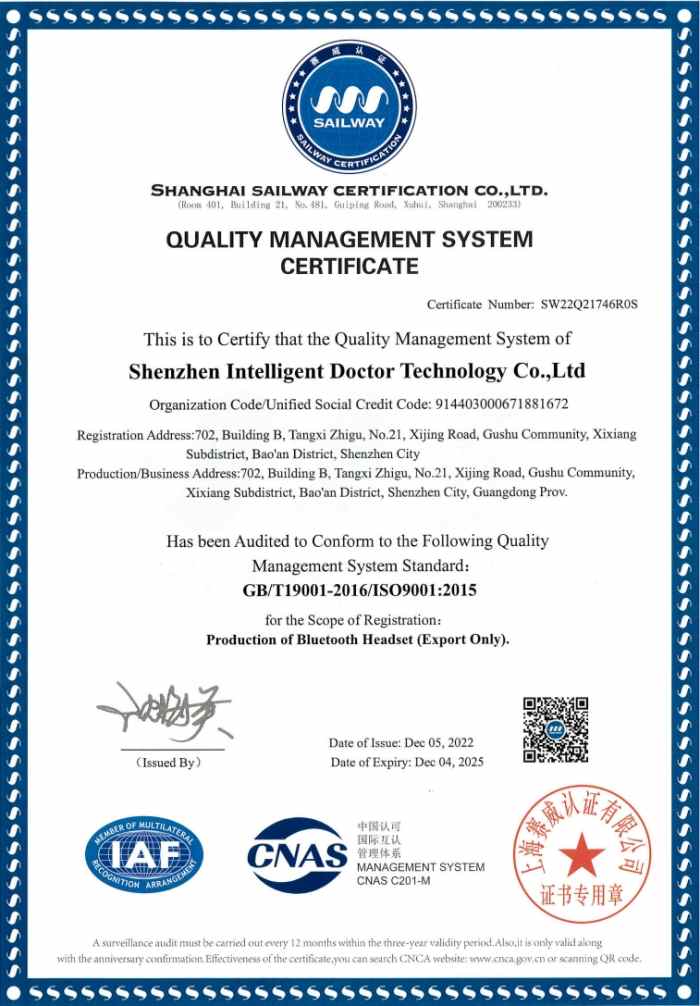
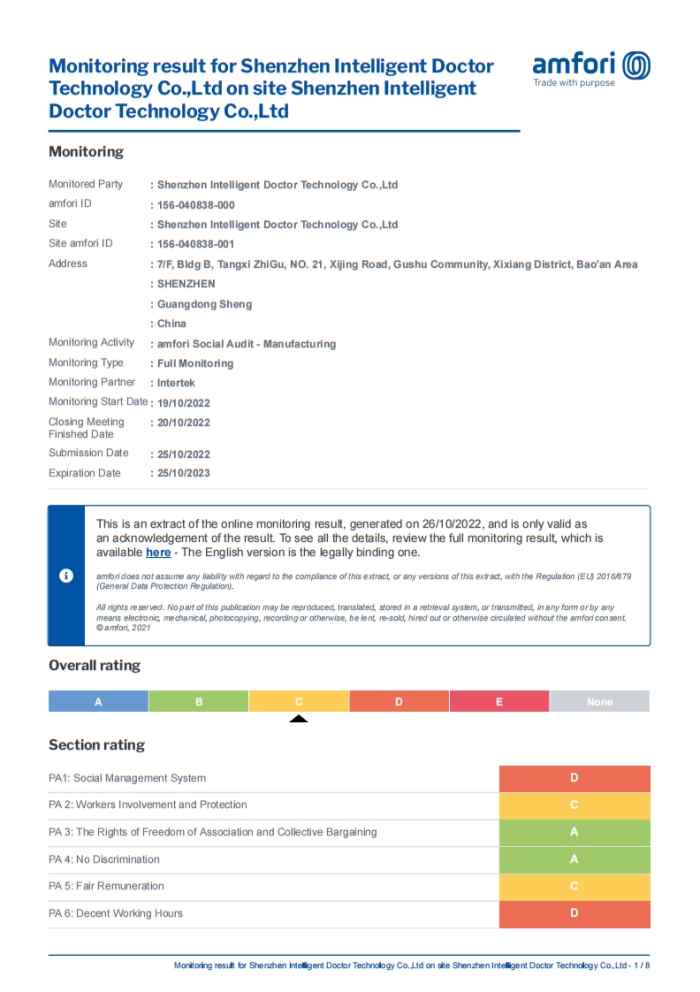
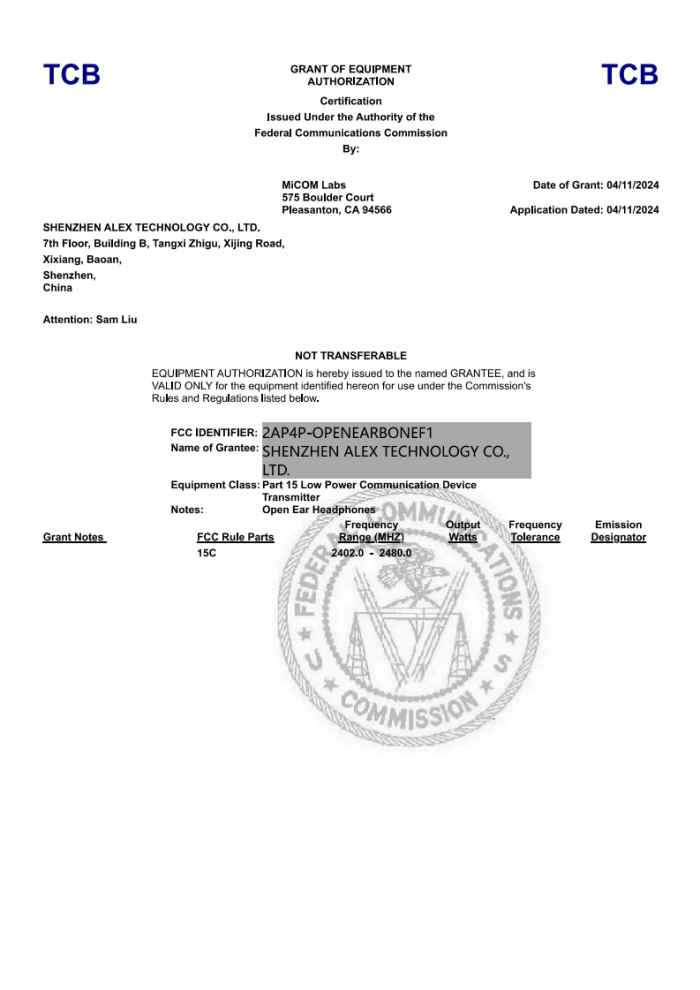
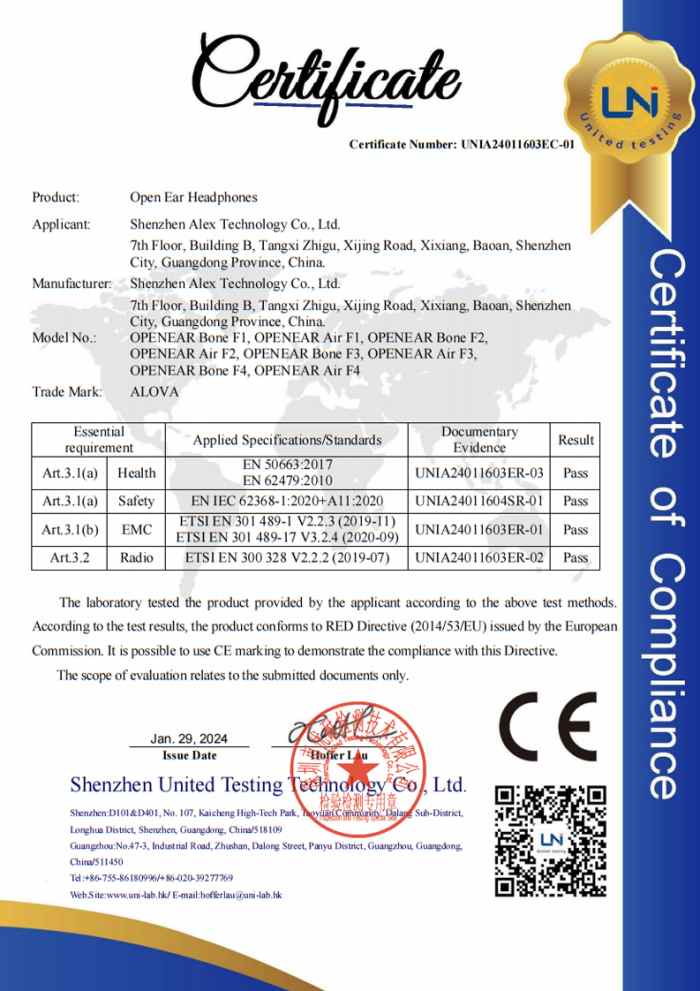
Certificates & Registrations
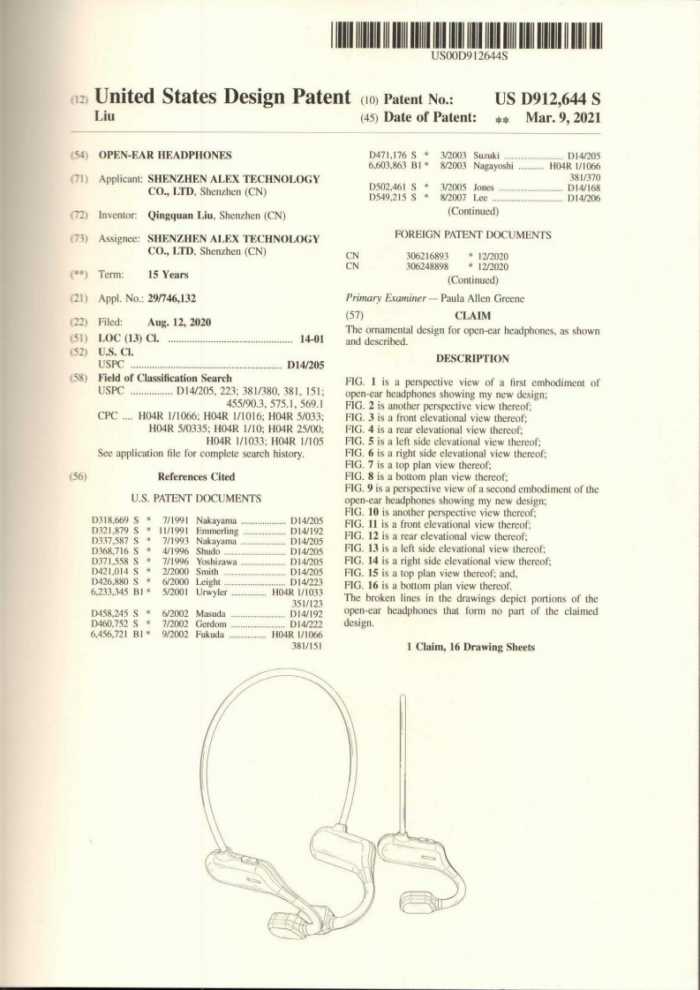
Document scope & viewing
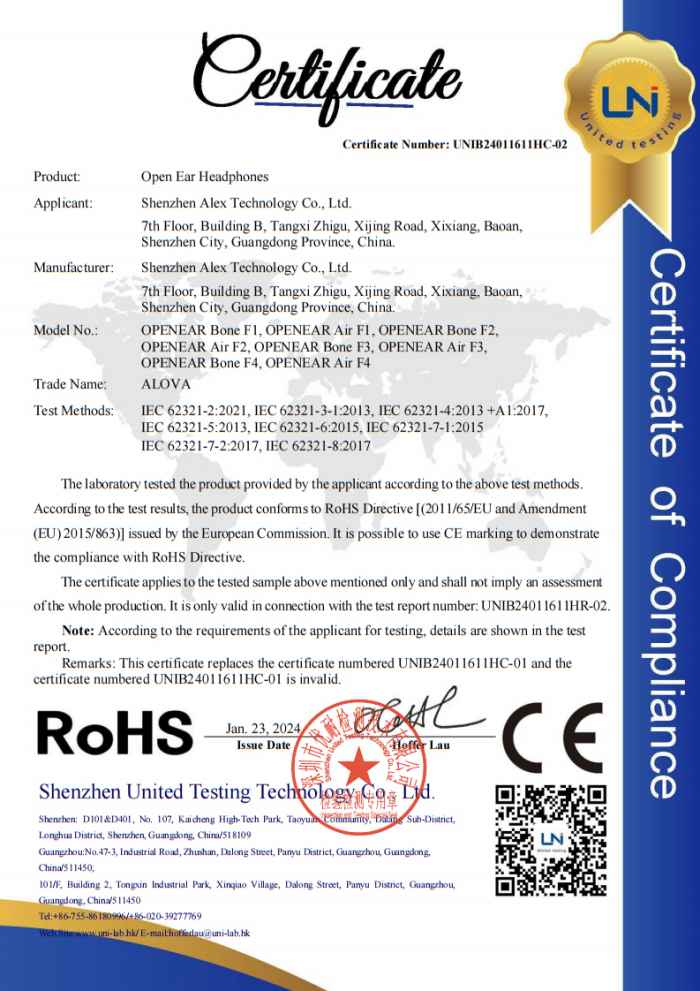
Review available certificates, test reports and design registrations with Alova. Coverage varies by product model, issuing entity and target market; confirm the documents applicable to your selected OEM product before placing an order.
Select the centre document to view the original.
Clients Who Trust Us
We are proud to be the trusted partner of leading brands and businesses around the world.
OEM Frequently Asked Questions
OEM starts with a suitable existing product platform and adapts its branding, packaging, accessories and supported features for your brand. New structures or substantial engineering changes are reviewed through ODM development.
Yes. Discuss folding cartons, lift-off lid boxes, drawer boxes, hinged boxes or sleeves, plus inserts and manuals. The packaging overview is an AI-generated concept illustration. Final structure, materials and print finish are confirmed through artwork review and samples.
Standard OEM projects typically start at 1,000 units. Some label-based projects may start at 100 units; color or deeper firmware changes typically start at 3,000 units. The selected model, materials and customization scope determine the final quoted MOQ.
The usual planning range is 3–6 weeks, subject to model availability, order quantity and customization. Sample revisions, material availability, testing and freight can change the schedule. Confirm the start point and shipment date in the quotation.
Options include laser engraving, screen printing, water transfer printing, UV labels and metal labels. Suitability depends on the product surface, artwork and order quantity. Approve the selected finish on a sample.
Device names, prompts and selected firmware functions can be reviewed for the chosen platform. Bluetooth version is tied to chipset and hardware capability. New functions require an engineering assessment before cost and timing are confirmed.
Send the target model or use case, destination market, estimated quantity, required delivery date, logo artwork, packaging brief and feature requirements. Include any retailer testing or documentation requirements.
Agree the product specification and quotation, confirm commercial terms, review branding and packaging, approve pre-production samples, then proceed with production, inspection and shipment.
Request documents for the exact model and target market. Certificates and reports have defined product and entity scope; a document shown on this page does not establish coverage for every customized product.
Product and packaging design support can be assessed within the project scope. Regional exclusivity is discussed separately and applies only under an agreed written arrangement.