
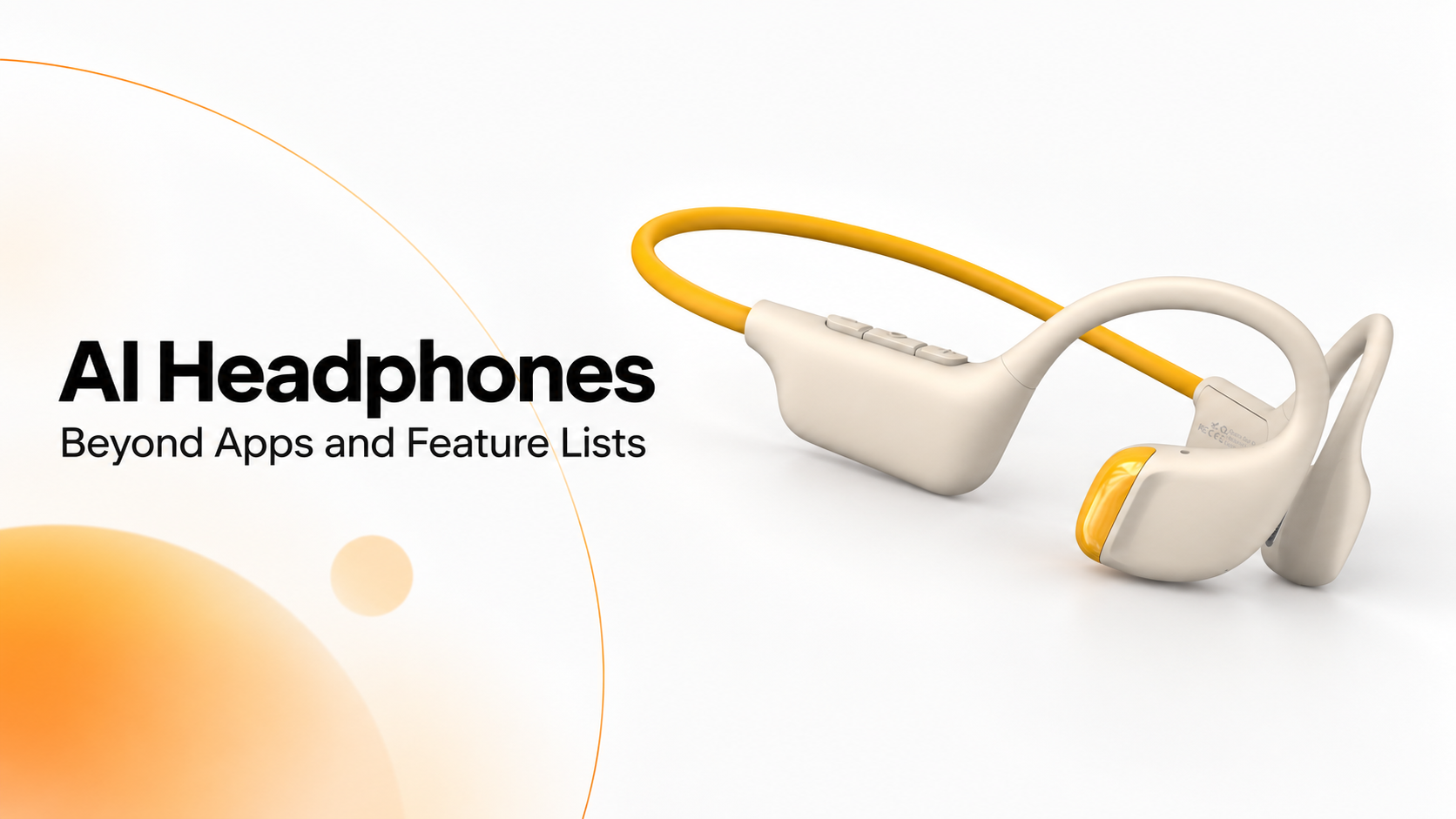
Before starting an AI headphone OEM project, brands should validate one useful user task, the headset-to-app audio path, and ongoing software responsibilities. AI headphones combine audio capture and playback with access to software features such as assistants, translation, or meeting notes; the architecture varies by product. The AI label alone does not establish local model processing or a better user experience. This guide helps overseas brand teams decide what the hardware must do, what to ask a platform provider, and which sample checks should come before a development commitment.
Key Takeaways
- Choose one repeatable user task; compare it with completing the same task directly on a phone.
- Specify the responsibilities of the headset, mobile app, and connected services before pricing the project.
- Treat Bragi as a public platform example; confirm device integration and commercial terms separately.
- Approve the experience through representative sample tests, including weak connectivity and service failure.
In this guide
- Start with a task worth moving to the ear
- Separate hardware, app, and service responsibilities
- Turn audio fundamentals into acceptance questions
- Validate the whole journey before committing
- Summary
- Buyer FAQ
Start with a task worth moving to the ear
The headset needs to improve how a specific task gets done. A useful starting question is whether the user can complete it with fewer interruptions, less screen handling, or a more practical interaction than with a phone alone. This is an evaluation question, not an assumption that hands-free use is always better.
Consider requesting a short answer while both hands are occupied. The relevant experience includes starting the request, knowing that the microphone is active, hearing the response, and stopping or correcting it. A long list of available assistants tells a buyer little about these steps.
Translation and meeting notes need their own definitions. Who is speaking, whose voice reaches the microphone, and where is the translated response played? For notes, distinguish capturing the wearer’s speech from capturing a room or a conferencing service. Do not assume that one microphone path serves all three.
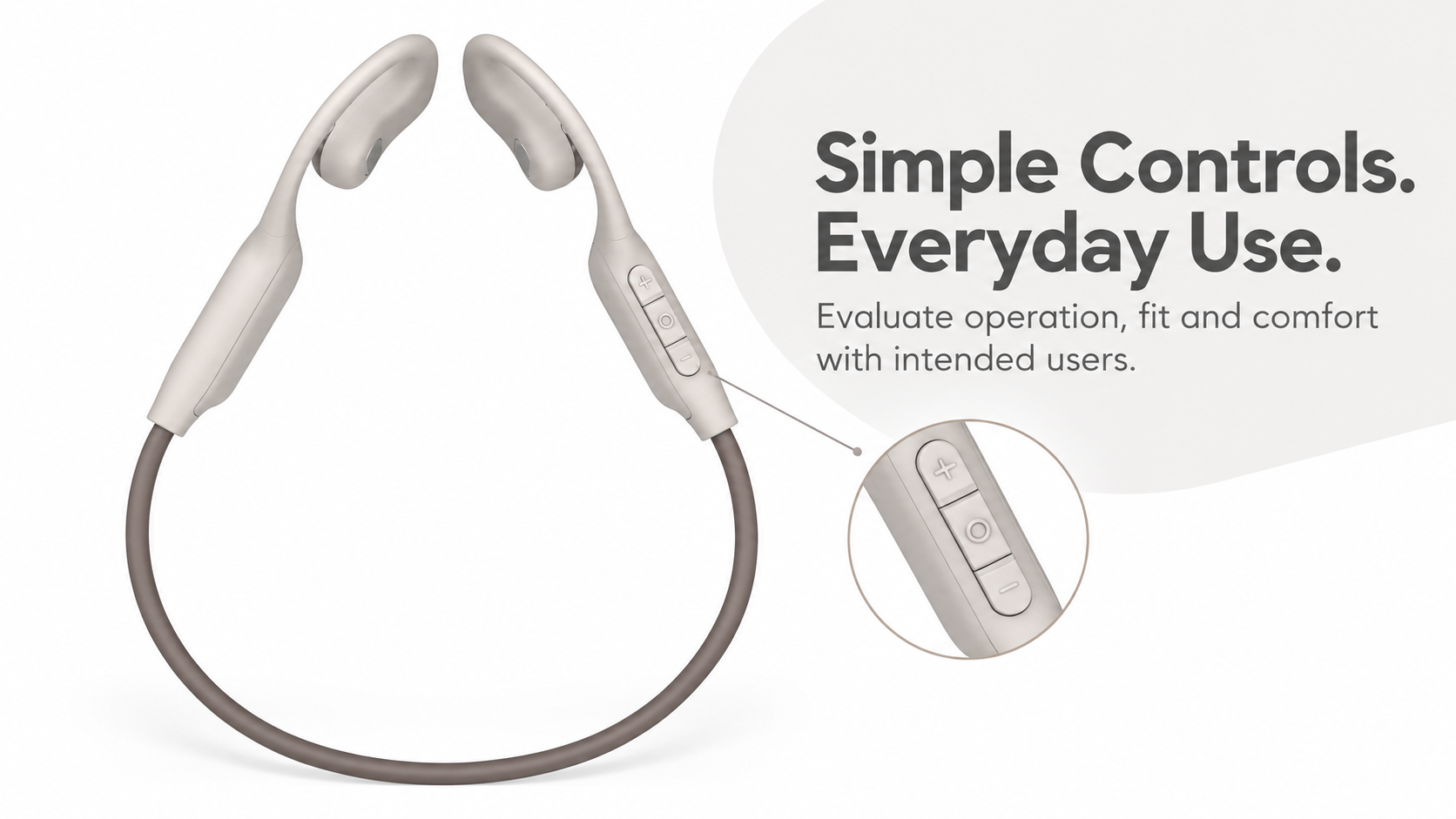
Alova’s project discussion for this article emphasizes call quality, runtime, sound, and comfort as foundations for AI interaction. That position is useful only when linked to a defined task: good basic audio remains necessary, but the additional AI experience still has to justify itself.
Separate hardware, app, and service responsibilities
An app connection is one part of an AI audio system, not its full specification. Document the actual path from the user’s voice to the response, including where processing happens and what works without a network connection. Accessing an assistant through headphones does not establish that its model runs inside them.
| Layer | Define in the project | Buyer’s decision |
|---|---|---|
| Headset | Audio capture, playback, controls, firmware, power | Which device functions must work reliably? |
| Phone and app | Pairing, permissions, routing, account and service access | What setup and phone interaction are acceptable? |
| Connected service | Model access, language support, data handling, billing | Who maintains availability and ongoing costs? |
What Bragi’s public platform example shows
Bragi describes its platform as covering device controls, a companion app, connected services, and AI. It also describes branded app and SDK options. Its Audio Apps catalogue presents AI conversation, translation, music, and Fireflies meeting functions, with interactions through taps, words, or gestures.
These are vendor descriptions, not independent performance results or an integration approval for the headset shown here. The useful lesson is to evaluate the platform around interaction and continuing service, rather than equating it with a standalone translation app.
For a candidate platform, request a demonstration using the intended hardware, phone operating system, region, and account configuration. Ask which features require firmware work, subscriptions, or network access, and who owns support after release. This article does not announce a partnership or compatibility between Alova and Bragi.
Turn audio fundamentals into acceptance questions
Hardware value becomes concrete when each design choice has an acceptance question. Microphone count, a chip name, or a wireless version cannot replace testing the intended product and software configuration. The following are proposed sample checks, not reported performance results.
Voice capture: verify what the service receives
The supplied product briefing identifies two microphone positions and describes dual-microphone call noise reduction. Buyers should request recordings from the actual voice path used by the AI service, alongside ordinary call recordings. A good call demonstration alone does not prove the behavior of a different app’s recording path.
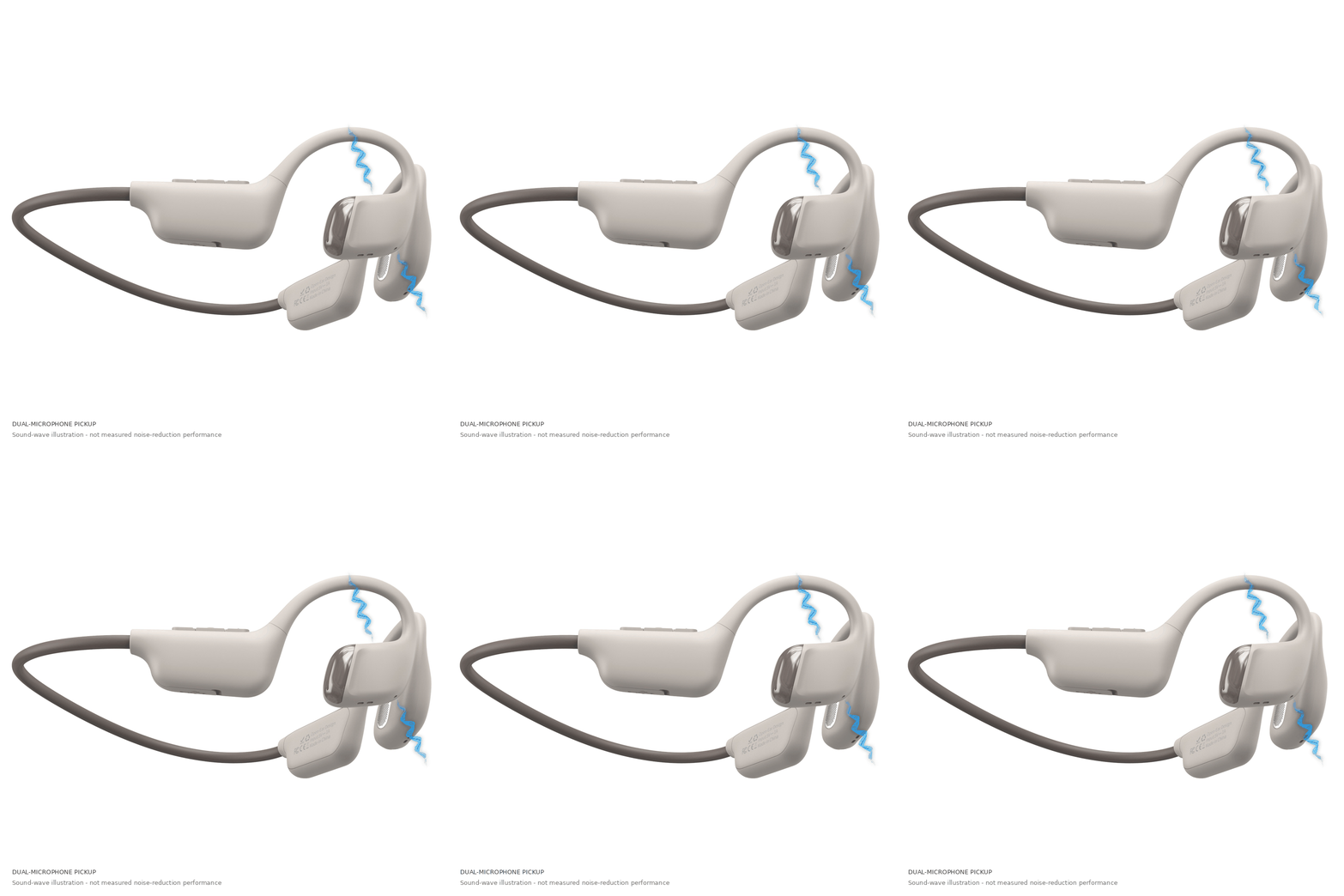
Include the user’s intended noise and wind conditions, speaking directions, and wearing positions. Listen for lost words and unnatural speech as well as background sound. Dual-microphone call noise reduction must not be described as active noise cancellation for the wearer’s listening experience.
Playback and comfort: check the complete interaction
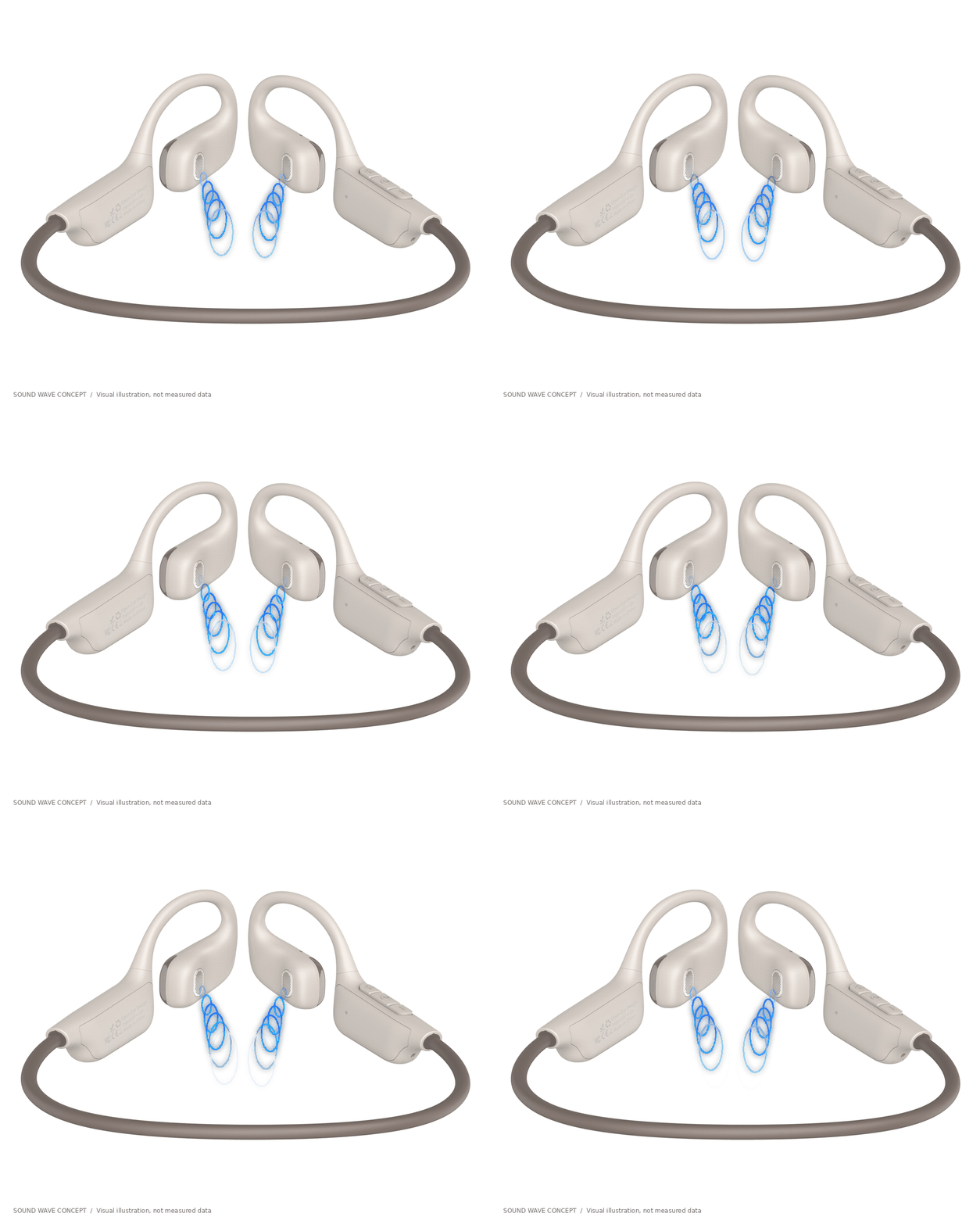
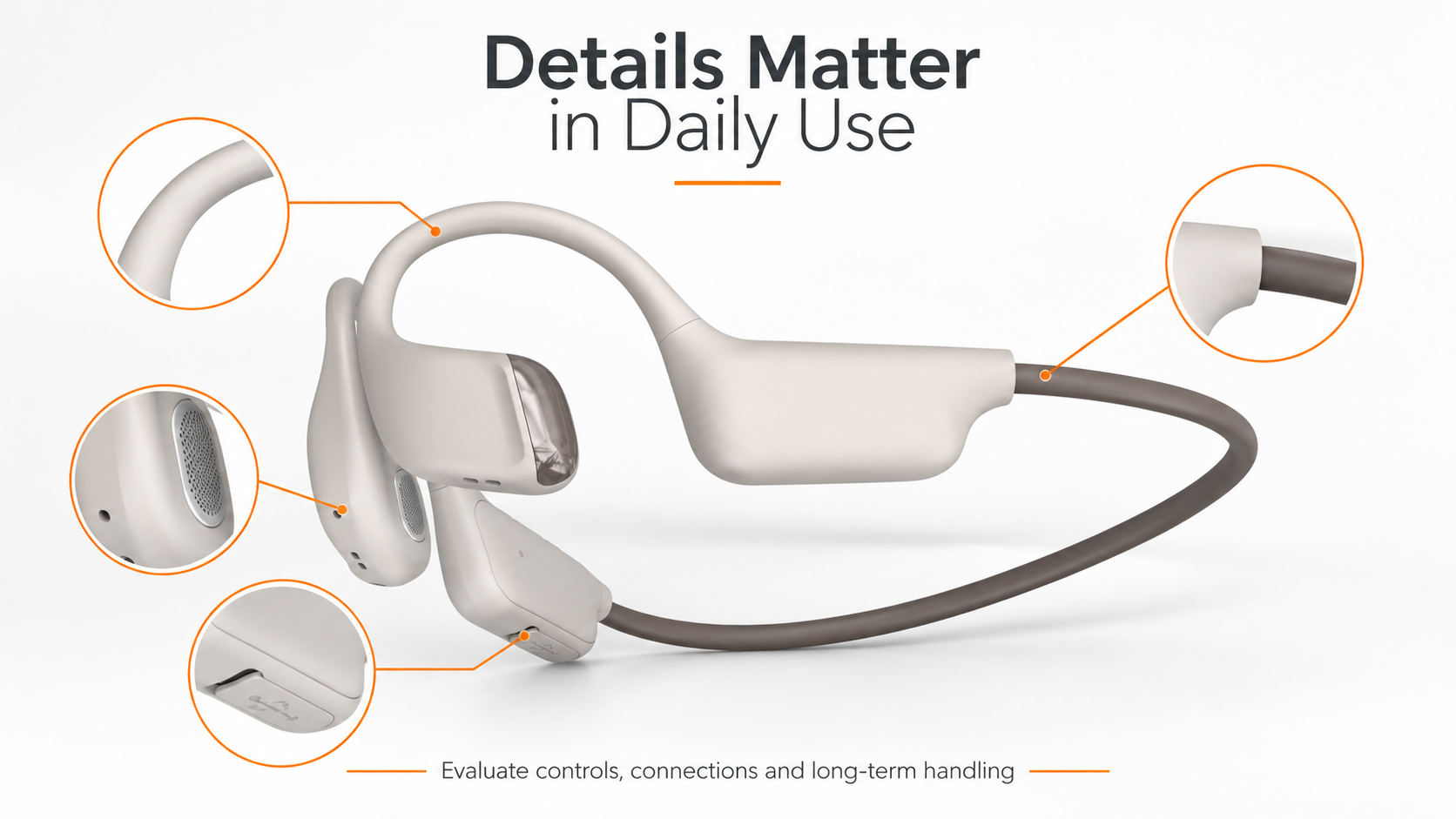
Evaluate whether spoken replies are understandable at the agreed listening level, and whether prompts are easy to distinguish from content. For an open-ear design, assess the relevant listening environment and sound leakage with the intended users. The illustration below establishes no acoustic performance.
Test fit during the task, including head movement, glasses where relevant, and repeated control use. Define runtime around the planned mixture of listening, capture, standby, and interaction. A music-only battery statement should not be reused as the runtime of an AI workload.
Validate the whole journey before committing
Approve a repeatable sample experience before expanding the feature scope. Compare the proposed headset interaction with the phone-only baseline and record where users need help. The objective is a defensible go/no-go decision, not a polished demonstration that hides setup or failure.
| Buyer question | Evidence to request | Sample check |
|---|---|---|
| Does it simplify the task? | Complete task demonstration | Count interruptions, retries, and phone handling. |
| Does speech arrive clearly? | Actual app-path recordings | Repeat agreed phrases across relevant environments. |
| What happens when service fails? | Failure and recovery behavior | Try locked phone, revoked permission, and lost network. |
| Who supports the product? | Responsibility and cost schedule | Assign app, firmware, service, and customer support owners. |
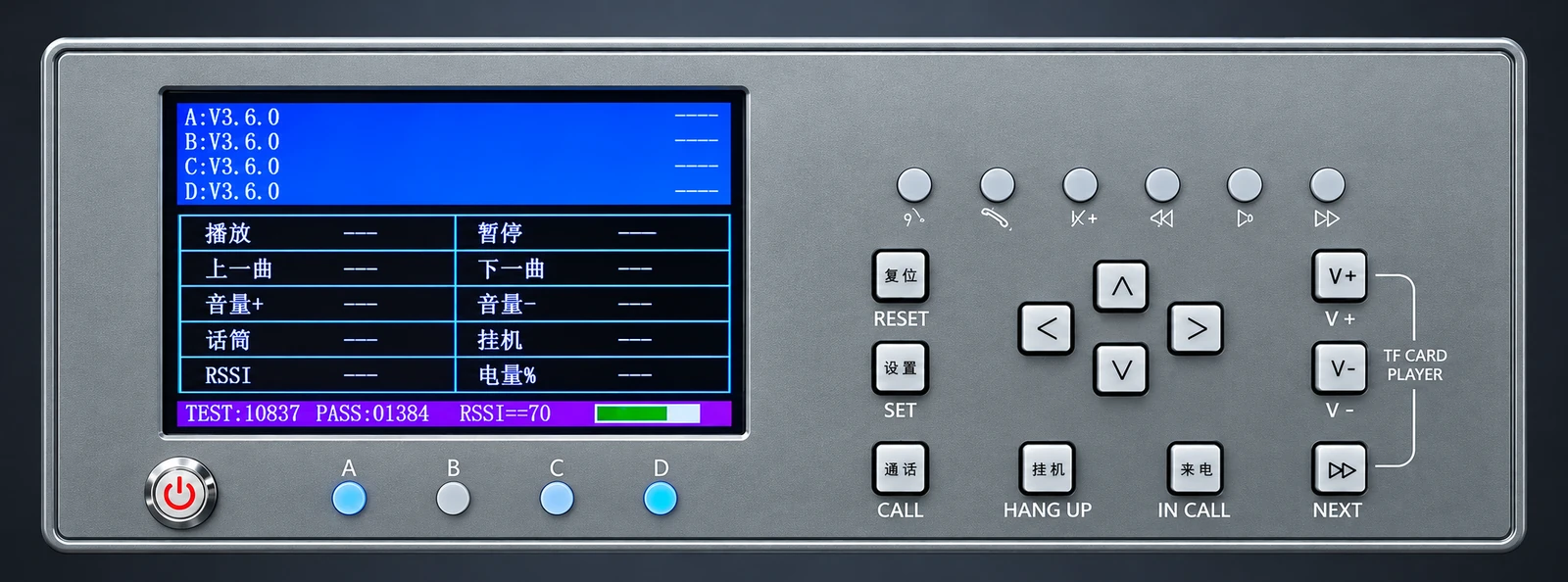
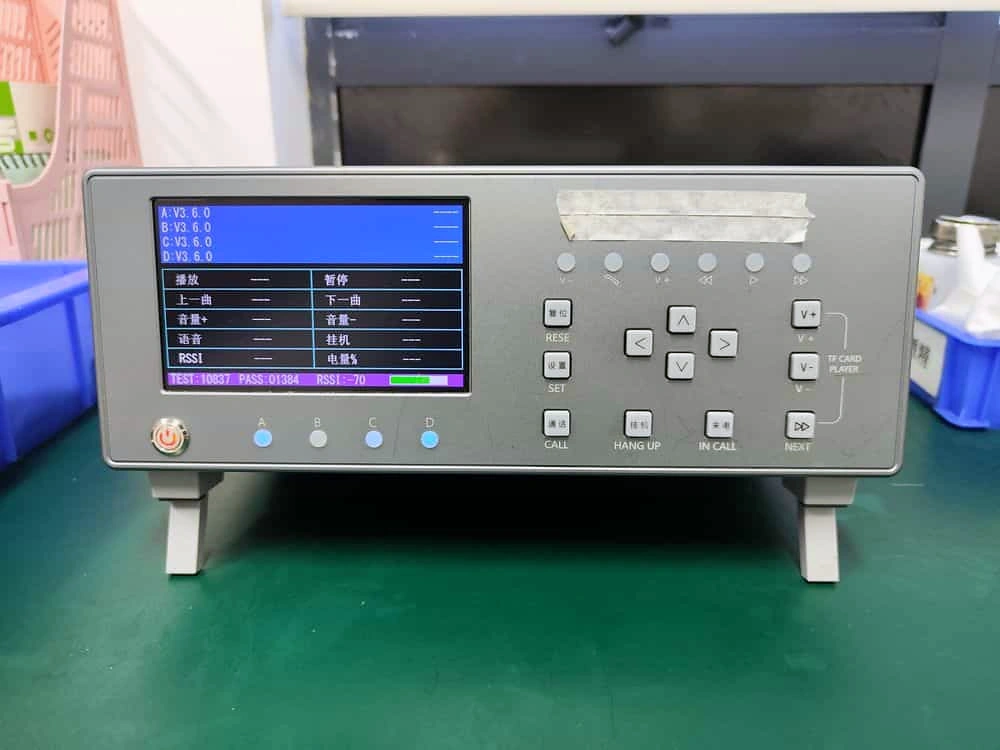
View the original laboratory equipment photograph
Agree acceptance conditions before testing: software versions, phone models, environment, test task, and pass criteria. Keep enough records to repeat the check after firmware or service changes. Set targets jointly rather than copying unspecified industry averages.
Before tooling or an order commitment, define ownership of app accounts, firmware, integration work, service fees, updates, and customer data handling. Specify what happens if a service changes price or closes. A platform can support reuse, but switching providers may still require integration and validation work.
For Alova, the proposed development approach is to begin with the audio hardware and the user’s task, then define which AI functions and software relationships require project validation. It is not a claim that the illustrated product already supports the services discussed.
Summary: proceed when the experience earns its place
Proceed when a defined user task benefits from the headset, representative samples pass agreed checks, and the parties accept ongoing software and service responsibilities. Pause when the AI label is the main selling point, the audio path is unclear, or operating costs and maintenance remain undefined. The next useful step is a focused evaluation brief with a phone-only baseline.
Buyer FAQ
Does an AI headphone need to run a model locally?
No. Specify the actual processing architecture and dependencies. Local audio processing and access to a connected assistant are different capabilities; request evidence for each claimed function.
Is a generic app enough to create a differentiated product?
It may support an initial evaluation. Differentiation depends on whether the complete interaction solves the target task better, and whether support and continuing access are commercially workable.
Can Bragi be used with any existing headset?
Do not assume so. Bragi describes a platform and app integration options; obtain device-specific confirmation, an integration scope, and a demonstration before promising compatibility.
Does dual-microphone noise reduction prove AI accuracy?
No. The microphone configuration is an input to evaluation. Test the captured speech and task outcome through the intended app and service under stated conditions.
What should a brand send before discussing development?
Provide the target market, intended users, use case, expected quantity, phone platforms, required functions, and service assumptions. Include any existing sample or app that defines the expected experience.
Discuss your AI audio evaluation brief
Alova is a Shenzhen-based open-ear health audio R&D and manufacturing company providing OEM/ODM services for global brands. AI function scope and platform integration require project-specific assessment.
Send your target market, intended users, application, expected quantity, and proposed AI functions to [email protected]. Alova can discuss the OEM/ODM project scope and which hardware, software, and sample checks need to be defined.
Related Articles
- Driver and Microphone Consistency — explore component consistency questions for supplier discussions.
- PCB Test Boards in Audio Development — consider how development hardware supports early checks.
- Headset Microphone Frequency Response Testing – understand what microphone measurements can and cannot establish.
Sources & Editorial Notes
- Bragi official platform description and Audio Apps catalogue, checked October 19, 2026. Descriptions are attributed to the vendor; availability and integration must be confirmed for the proposed program.
- Alova product-planning discussion and supplied product renderings, October 19, 2026. The discussion establishes the development priorities and identified microphone positions, not a completed AI integration or a measured performance result.
- Product artwork includes digitally adapted layouts. Animations show conceptual pickup and playback. The laboratory equipment photograph is identified separately below; no field-use or product-specific AI performance test is claimed.
- The evaluation framework is editorial guidance for a proposed project. No unpublished customer identity, project result, price, certification, or delivery commitment is disclosed. This article reports no comparative test results.
- The two related articles are supplementary reading, not verification of the illustrated headset or its AI capabilities. No Bragi logo or endorsement is used.
- Original laboratory equipment photograph: Alova website media library, Bluetooth multifunction tester, checked October 19, 2026. The image illustrates test equipment, not an AI-product test report.