
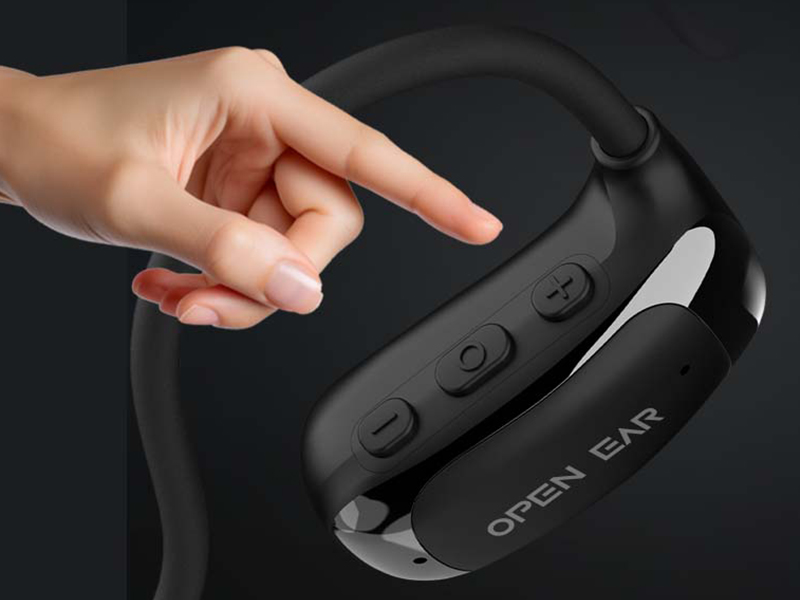
A headphone button looks like a small detail.
But for open-ear headphones, it can affect comfort, waterproofing, touch feel, appearance, and long-term reliability.
If the button design is wrong, the whole product experience can feel cheaper than expected.
The best button structure for open-ear headphones depends on the product positioning.
An independent attached button is better for fast and cost-sensitive projects.
A silicone-sealed composite button gives a better balance of sealing and touch feel.
An integrated waterproof button is usually better for mid-to-high-end products that need stronger protection and a cleaner design.
There is no single “best” button structure for every product.
A sports air-conduction headphone, a communication air-conduction headset, and a premium sports model may need different button solutions.
The real question is not only “Which button feels better?”
The better question is: Which button structure matches the product’s use case, waterproof target, cost level, and mass production plan?
What Are the Main Button Structures Used in Open-Ear Headphones?
Open-ear headphones usually need a button that is easy to find, easy to press, and reliable during daily use.
But different button structures are built in very different ways.
The three common button structures are independent attached buttons, silicone-sealed composite buttons, and integrated waterproof buttons.
They look simple from the outside, but their internal structures are very different.
The first type is the independent attached button.
This structure uses a separate plastic button cap.
The button cap is attached to the headphone housing after molding, usually with glue, adhesive, or other bonding methods.
For example, OPENEAR Duet, a sports air-conduction headphone, uses this type of button structure.
This structure is simple, flexible, and cost-friendly.
It is useful when a project needs faster development or more flexible appearance changes.
The second type is the silicone-sealed composite button.
This structure adds a silicone sealing layer under the external button cap.
The silicone layer helps with sealing and rebound.
The external plastic cap improves the touch feel and appearance.
For example, OPENEAR PTT01, a communication air-conduction headset, uses this type of structure.
This is a balanced solution for products that need better protection than a simple attached button, but still want a clear plastic button feel.
The third type is the integrated waterproof button.
In this structure, the button area is formed as part of the housing through overmolding or integrated molding.
There is no separate external button cap attached later.
For example, OPENEAR Air G6, a sports air-conduction headphone, uses this type of button design.
This structure gives the strongest sense of integration.
It also helps reduce assembly steps and improve long-term reliability.
| Button Structure | External Model Example | Product Type | Main Feature |
|---|---|---|---|
| Independent attached button | OPENEAR Duet | Sports air-conduction headphone | Low cost and fast development |
| Silicone-sealed composite button | OPENEAR PTT01 | Communication air-conduction headset | Better balance of sealing and touch feel |
| Integrated waterproof button | OPENEAR Air G6 | Sports air-conduction headphone | Better integration and protection |
These three solutions are not simply “low, medium, and high.”
They represent different design choices.
Each one can be right when used in the right product.
When Is an Independent Attached Button a Good Choice?
An independent attached button is one of the most direct and cost-effective button structures.
It is often used when a product needs faster tooling, simple assembly, and flexible appearance changes.
An independent attached button is a good choice for cost-sensitive open-ear headphones or projects that need faster development.
It is easy to adjust, but its waterproofing and long-term bonding reliability are usually weaker than more integrated structures.
In this structure, the headphone housing is molded first.
The plastic button cap is molded separately.
After that, workers attach the button cap to the housing surface.
This can be done with glue, adhesive, backing tape, or UV bonding, depending on the product design.
The external button cap is not always the real waterproof structure.
In many cases, it mainly works as the user’s contact surface.
It helps transfer pressing force to the internal switch, silicone dome, metal dome, or other trigger structure.
This is why the external button can look simple, but the full button system still needs proper internal design.
For OPENEAR Duet, this type of button fits its role as a sports air-conduction model with a more practical structure.
The benefit is clear.
The structure is simple.
The development cost is lower.
The button shape can be adjusted more easily.
If a buyer wants to change the button size, texture, or surface detail, the project can usually stay more flexible.
But there are limits.
Because the button cap is attached after molding, the final quality depends partly on assembly control.
Glue amount, bonding position, pressing force, and worker consistency can all affect the final result.
Over time, the button cap may face risks such as edge lifting, loosening, aging, or slight position shift.
For products with higher waterproof or sweatproof requirements, this structure may not be the best choice.
| Advantage | Limitation |
|---|---|
| Lower cost | Weaker long-term bonding reliability |
| Faster development | More dependent on manual assembly |
| Flexible appearance changes | Lower appearance integration |
| Easier to adjust button cap | Waterproofing depends more on internal sealing |
This structure is not bad.
It is simply better suited to projects where cost, speed, and flexibility matter more than premium integration.
Why Choose a Silicone-Sealed Composite Button?
A silicone-sealed composite button is a more balanced solution.
It separates the sealing function from the external touch surface.
A silicone-sealed composite button is useful when a product needs better sweat and water resistance, but still wants the clearer touch feel of a plastic button cap.
The silicone layer supports sealing and rebound, while the external cap improves appearance and finger contact.
This structure is more advanced than a simple attached button.
The key difference is the silicone layer.
The headphone housing has a silicone sealing layer in the button area.
This layer forms a more continuous barrier.
It helps reduce the risk of water or sweat entering through the button area.
Then, a separate plastic button cap is attached on the outside.
The user touches the external plastic cap.
But the silicone layer under it provides sealing and rebound.
This is why this solution can feel more balanced.
For OPENEAR PTT01, a communication air-conduction headset, this structure makes sense.
Communication headsets often need a clear and dependable button feel.
Users may press buttons during calls, work, communication, or outdoor use.
The product does not only need to function.
It needs to feel reliable in daily operation.
Compared with a simple attached button, this structure can improve protection.
Compared with a fully integrated button, it may keep development more manageable.
It also gives designers more freedom to shape the outer plastic button cap.
The cap can be matte, glossy, textured, or designed with a clearer press area.
This helps the user locate the button more easily.
Still, this structure has its own trade-offs.
It still has an external attached part.
That means bonding quality is still important.
The cap may still face loosening or edge lifting over long-term use.
The process is also more complex than a basic attached button.
| Design Factor | Silicone-Sealed Composite Button |
|---|---|
| Waterproofing | Better than simple attached button |
| Touch feel | Better balanced |
| Appearance | More refined |
| Assembly difficulty | Medium |
| Long-term cap risk | Still exists |
| Best fit | Balanced mid-range or functional products |
This solution is often attractive because it does not push the project to the highest tooling cost.
At the same time, it improves both protection and touch feel.
For many open-ear headphone projects, this is a strong middle path.
Why Are Integrated Waterproof Buttons Used in Higher-End Models?
Integrated waterproof buttons are often used when the product needs a cleaner look and stronger protection.
They are not just about appearance.
They are also about reliability.
Integrated waterproof buttons are often better for mid-to-high-end open-ear headphones because they reduce external bonding parts, improve appearance integration, and support stronger sweat and water resistance.
They cost more to develop, but they usually offer better consistency and long-term reliability.
In an integrated waterproof button structure, the button area is formed directly with the housing.
This can be done through overmolding, composite molding, or related integrated molding processes.
The button is not a separate part attached afterward.
It is already part of the product structure during molding.
This is why the final appearance looks more complete.
There are fewer visible gaps.
There is less part separation.
There is also less risk of external button cap detachment.
For OPENEAR Air G6, a sports air-conduction headphone, this type of structure fits a more advanced sports product direction.
Sports headphones face sweat, movement, outdoor use, and frequent button operation.
A more integrated structure can help improve durability and user confidence.
The button area feels like part of the whole product, not an extra component added later.
This also helps the product look more premium.
For waterproof and sweatproof performance, integrated buttons have a clear advantage.
There are fewer bonding interfaces.
There are fewer manual assembly steps.
There are fewer chances for glue inconsistency, cap shift, or edge lifting.
Mass production consistency can also be better once the mold and process are stable.
But this structure is not easy.
The early development work is more difficult.
The mold cost is higher.
The button travel, rebound, trigger force, material hardness, and sealing performance must be balanced together.
If the button feel is not right, later changes may be more expensive.
| Advantage | Trade-Off |
|---|---|
| Best appearance integration | Higher tooling cost |
| Better sweat and water resistance | More difficult early development |
| Fewer assembly steps | Less flexible for later changes |
| Better long-term reliability | More process control needed |
| Better mass production consistency | Higher engineering requirement |
This structure is usually better for mature projects.
It is also better for products where the brand wants a stronger premium feeling.
For higher-end sports air-conduction headphones, integrated waterproof buttons can support both appearance and real use reliability.
Which Button Structure Has the Best Waterproof Performance?
Waterproofing is not only about the IP rating.
It begins with structure design.
In most cases, integrated waterproof buttons offer the best waterproof and sweatproof potential, followed by silicone-sealed composite buttons, then independent attached buttons.
The more integrated the button structure is, the fewer potential weak points the product may have.
The button area is one of the most important points in waterproof design.
When users press a button, they apply force to the housing.
That force creates movement.
If the structure is not well sealed, sweat or water may enter through small gaps.
This is why waterproofing cannot rely only on a final test.
It must be planned during structure design.
For an independent attached button, the external button cap is usually not the main waterproof barrier.
The real waterproofing depends on the inner housing design.
If the inside is not sealed well, the external button cap cannot solve the problem by itself.
That is why this structure is usually weaker for high sweat and water protection.
For a silicone-sealed composite button, the silicone layer becomes the real sealing part.
This improves waterproof potential.
The plastic cap improves user feel, while the silicone layer helps protect the internal structure.
This is a better solution for products that need a balance between function and cost.
For an integrated waterproof button, the button is formed as part of the housing structure.
This reduces separate bonding surfaces.
It also reduces cap detachment risks.
This is why it usually performs better in high-protection products.
| Waterproof Ranking | Button Structure | Example Model |
|---|---|---|
| 1 | Integrated waterproof button | OPENEAR Air G6 |
| 2 | Silicone-sealed composite button | OPENEAR PTT01 |
| 3 | Independent attached button | OPENEAR Duet |
But this ranking is only a general rule.
Actual waterproof performance still depends on material, mold accuracy, assembly process, glue control, internal sealing, and product testing.
A good simple structure can perform better than a poorly made advanced structure.
So buyers should not judge only by the name of the button structure.
They should ask how the button area is sealed, how it is assembled, and how the final product is tested.
Which Button Structure Gives the Best Touch Feel?
Touch feel is more subjective than waterproofing.
But it still follows engineering logic.
The best touch feel depends on the balance between button travel, rebound, trigger force, surface material, and assembly consistency.
A silicone-sealed composite button is often easier to balance, while an integrated button can feel premium if developed well.
A good headphone button should not feel too hard.
It should not feel too soft either.
It should give users a clear response.
The user should know that the press has been triggered.
This is especially important for open-ear headphones, because users often press buttons without looking.
During sports, calls, cycling, or walking, the user may only use finger memory.
So button feel matters.
The independent attached button can be adjusted by changing the cap shape, cap thickness, bonding layer, and internal support.
It is flexible.
But because it depends more on post-assembly, the final feel may vary if production control is not strong.
The silicone-sealed composite button is often easier to balance.
The silicone layer gives rebound.
The plastic cap gives a clearer finger contact.
This creates a good mix of softness and definition.
That is why this structure is common in products that need both protection and touch feel.
The integrated waterproof button can also feel excellent.
But it needs stronger early engineering.
The material hardness, button area thickness, trigger force, and molding accuracy must all work together.
If the design is right, the result can feel clean and premium.
If the design is not right, later adjustment can be more difficult.
| Button Structure | Touch Feel Character |
|---|---|
| Independent attached button | Flexible, but more affected by assembly |
| Silicone-sealed composite button | Balanced and easier to tune |
| Integrated waterproof button | Premium if well developed, but harder to tune |
For brands, the best choice depends on the product positioning.
A cost-driven product may accept a simpler feel.
A communication headset may need a clear and reliable button response.
A higher-end sports headphone may need both premium feel and strong protection.
Which Button Structure Is Best for Mass Production?
A good prototype is not enough.
The real test is mass production.
For mass production, integrated waterproof buttons often offer better consistency after the process is stable, while independent attached buttons are easier to start but more dependent on manual assembly control.
Silicone-sealed composite buttons sit between the two, offering a balance of performance and production difficulty.
Mass production is where small details become big issues.
A button may look fine on ten samples.
But when a factory produces thousands of units, every step must be repeatable.
The independent attached button has a simple structure.
That makes it easy to start.
But because it often needs post-assembly bonding, quality control becomes important.
Workers need to control position, glue amount, pressure, and curing.
If the process is not stable, units may look slightly different.
Some caps may sit higher.
Some may shift slightly.
Some may have weaker bonding.
The silicone-sealed composite button adds more process steps.
The silicone sealing layer must be formed correctly.
The external cap still needs to be attached properly.
This increases process complexity.
But it also gives better structure performance than a simple attached button.
The integrated waterproof button usually needs more upfront development.
The mold and process are harder.
But once the process is stable, the part integration can reduce later assembly variation.
There is no separate external button cap to attach.
This can improve consistency and reduce long-term detachment risk.
| Mass Production Factor | Independent Attached | Silicone-Sealed Composite | Integrated Waterproof |
|---|---|---|---|
| Early development difficulty | Low | Medium | High |
| Assembly steps | More post-assembly | Medium | Fewer external button steps |
| Consistency risk | Higher | Medium | Lower after stable process |
| Tooling cost | Lower | Medium | Higher |
| Long-term reliability | Medium | Good | Better |
| Best for | Fast launch | Balanced projects | Mature higher-end projects |
For OEM and ODM headphone projects, this matters a lot.
Brands should not choose a button structure only by sample appearance.
They should also consider production yield, process control, inspection difficulty, and after-sales risk.
The best button structure is the one that matches the brand’s real volume plan.
How Should Brands Choose the Right Button Structure?
The right button structure depends on what the brand cares about most.
Cost, waterproofing, touch feel, appearance, and reliability cannot all be maximized at the lowest price.
Brands should choose button structure based on product positioning, target price, waterproof requirement, launch timeline, and expected order volume.
The best design is not always the most expensive one, but the one that best fits the product’s real market role.
If the product is cost-sensitive and needs fast launch, an independent attached button may be enough.
This direction is more flexible and easier to adjust.
For example, a sports air-conduction model like OPENEAR Duet can use this type of button when the product needs a practical balance of cost and function.
If the product needs better sealing and better touch feel, a silicone-sealed composite button is a stronger choice.
This is useful for communication air-conduction headsets like OPENEAR PTT01, where users may press the button often during work or calls.
If the product is positioned as a more premium sports headphone, an integrated waterproof button is usually more suitable.
For example, OPENEAR Air G6 uses this direction to support a cleaner look, better protection, and stronger long-term reliability.
Simple decision guide
| Brand Priority | Recommended Button Structure |
|---|---|
| Lowest cost | Independent attached button |
| Fast development | Independent attached button |
| Better sealing and clear touch feel | Silicone-sealed composite button |
| Balanced cost and protection | Silicone-sealed composite button |
| Premium appearance | Integrated waterproof button |
| Better sweat and water resistance | Integrated waterproof button |
| Better long-term reliability | Integrated waterproof button |
| Stable mature product line | Integrated waterproof button |
The best OEM/ODM decision is not to say yes to every request.
It is to understand the product’s real use case and then choose the structure that fits.
A button is small.
But it reflects how deeply a product has been engineered.
For open-ear headphones, the button structure can show whether the product is built only for appearance or built for long-term use.
Conclusion
The best button structure depends on the product goal.
For open-ear headphones, the right choice should balance cost, touch feel, waterproofing, appearance, and mass production reliability.
FAQ
What is the best button structure for open-ear headphones?
There is no single best option for every model.
Independent attached buttons suit cost-sensitive products, silicone-sealed composite buttons offer balance, and integrated waterproof buttons suit higher-end protection needs.
Are integrated buttons better for waterproof headphones?
In most cases, yes.
Integrated buttons reduce external bonding areas and can improve sweat and water resistance when the structure and molding process are well controlled.
Why do some headphones use external button caps?
External button caps are flexible, cost-friendly, and easier to adjust during development.
They can also improve finger contact and make the button easier to locate.
What is a silicone-sealed composite button?
It is a button structure with a silicone sealing layer under an external plastic cap.
The silicone supports sealing and rebound, while the plastic cap improves touch feel and appearance.
Are glued button caps reliable?
They can be reliable when bonding and assembly are well controlled.
But compared with integrated structures, they may have higher risks of loosening, edge lifting, or assembly variation over time.
Which button structure feels best?
Silicone-sealed composite buttons are often easier to balance for touch feel.
Integrated buttons can feel more premium, but they require stronger early development and tuning.
Do headphone buttons affect waterproof testing?
Yes.
The button area is a common risk point for sweat and water entry, so the sealing structure behind the button is important for waterproof performance.
Which button structure is best for OEM headphone projects?
It depends on the brand’s goal.
For fast launch, choose independent attached buttons.
For balanced performance, choose silicone-sealed composite buttons.
For premium protection, choose integrated waterproof buttons.