
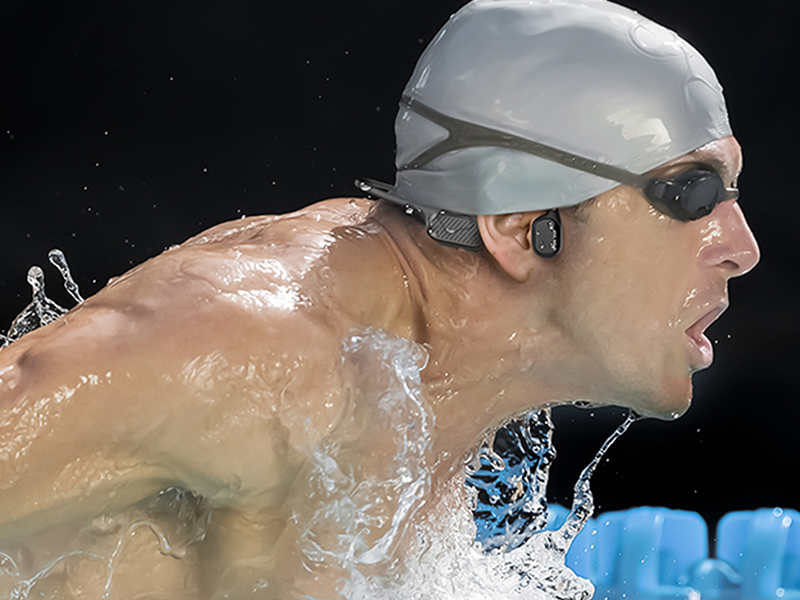
Many headphones claim to be waterproof, but the wrong rating can create returns, product damage, and false marketing risk.
IP68 means a product has dust protection and can handle continuous water immersion under defined test conditions.
For bone conduction headphones, buyers should check test depth, test time, sealing design, charging structure, mass production control, and whether the claim fits sports or swimming use.
This matters even more when the product is sold as swimming bone conduction headphones.
A swim-ready headphone is not just a sports headphone with a higher waterproof rating.
It needs the right structure, playback mode, user instructions, and production testing.
What Does IP68 Actually Mean?
Many buyers see IP68 and think the product can handle any water condition.
That is a risky assumption.
IP68 means the product has dust protection and continuous water immersion protection under defined test conditions.
The first number shows dust protection.
The second number shows water protection.
For headphones, the real value depends on the test depth and test time.
IP68 belongs to the IP rating system.
IP means Ingress Protection.
It tells buyers how well the product enclosure can stop dust and water from entering the inside of the device.
The first number is about solid particles, such as dust.
The second number is about water.
In IP68, the number “6” means strong dust protection.
The number “8” means the product can handle continuous water immersion under defined conditions.
This is the most important part for buyers.
The “8” does not mean every IP68 product is tested in the same way.
One product may be tested at one water depth.
Another product may be tested deeper or longer.
A third product may use conditions agreed by the manufacturer and the test lab.
So the better question is not only “Is it IP68?”
The better question is “What was the IP68 test condition?”
How to read IP68
| Code | Meaning | Buyer view |
|---|---|---|
| IP | Ingress Protection | Protection against dust and water entering the product |
| 6 | Dust protection level | Strong dust protection |
| 8 | Water protection level | Continuous immersion under defined conditions |
Why test depth and test time matter
A waterproof rating is useful only when buyers understand the test condition.
For example, a product tested for short immersion should not be promoted like a long-time swimming device.
A product tested in still water may not behave the same in all real-use water scenes.
A product tested as a sample may not represent every mass production unit.
Bone conduction headphones are also more complex than simple plastic products.
They may include buttons, charging contacts, microphone holes, shell joints, vibration parts, silicone areas, and coating areas.
Each area can become a water entry point.
A small gap can create big after-sales problems.
This is why IP68 should be treated as a technical claim, not just a marketing word.
For B2B buyers, IP68 is only the starting point.
The buyer still needs to check the report, structure, production process, and final product claim.
Is IP68 the Same as Waterproof?
The word “waterproof” is easy to understand, but it is not precise.
That is where many sales problems start.
IP68 is a tested dustproof and waterproof rating, while “waterproof” is only a broad marketing word.
Buyers should always ask for the exact IP rating, test condition, and use limit before using strong waterproof claims.
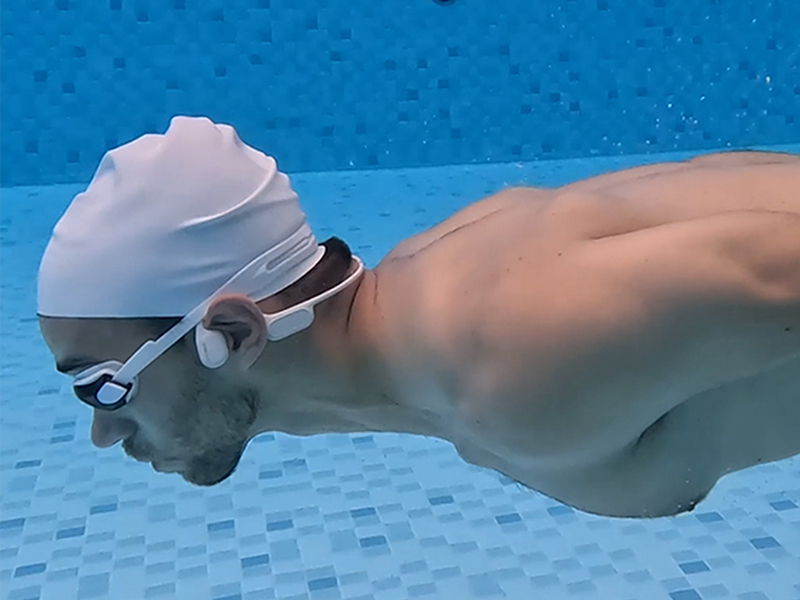
“Waterproof” looks simple on a product page.
It helps users understand the benefit fast.
But it can also create the wrong expectation.
Some sellers use waterproof to mean sweatproof.
Some use it to mean splash-resistant.
Some use it to mean the product can be used for swimming.
These are not the same.
For bone conduction headphones, this difference is very important.
A sports headphone may be designed for sweat and rain.
A swimming headphone must survive longer water contact.
It may also need to work while the user moves in water.
It may need to handle wet hands, repeated drying, and repeated charging.
This is a very different product logic.
Waterproof words vs IP rating
| Marketing word | Main risk | Better buyer question |
|---|---|---|
| Waterproof | Too broad | What IP rating does it have? |
| Sweatproof | Not enough for swimming | What sweat or water test was done? |
| Water-resistant | May only mean light protection | Is there an IP test report? |
| Swimming-safe | Strong claim | What depth and time were tested? |
| IP68 | More specific | What exact condition was used? |
Why wording matters in B2B sales
Product wording can create real business risk.
If a product page says “swimming headphones,” users will expect the product to work in the pool.
If the product only has a lower water rating, complaints may increase.
If a retail buyer asks for proof, the seller must show a matching report.
If a sales platform reviews the product claim, weak documents may create listing problems.
This is why the product page, packaging, user manual, and test report should tell the same story.
If the product is only designed for sweat and rain, the wording should stay close to sports use.
If the product is designed for swimming, the rating, playback mode, manual, and production control should support that claim.
What IP68 does not prove
IP68 does not prove Bluetooth will work underwater.
IP68 does not prove sound quality in water.
IP68 does not prove salt-water resistance.
IP68 does not prove hot shower safety.
IP68 does not prove the product can handle soap, sunscreen, or pool chemicals for a long time.
IP68 also does not prove that every mass production unit will pass the same test.
It proves that tested samples passed a defined ingress protection test.
That is important.
But it is not the whole product story.
What Is the Difference Between IPX5, IPX7, IPX8 and IP68?
Many waterproof claims fail because buyers mix up IP ratings.
The difference is simple but important.
IPX5 is for water jets.
IPX7 is for short immersion.
IPX8 is for continuous immersion.
IP68 adds dust protection to continuous water immersion protection.
Not every waterproof rating fits the same product.
A running headphone does not need the same protection as a swimming headphone.
A rainproof product is not the same as an underwater product.
A short immersion test is not the same as repeated pool use.
This is why buyers should match the rating with the real use scene.
Simple IP rating comparison
| Rating | Simple meaning | Better for | Common mistake |
|---|---|---|---|
| IPX5 | Protected against water jets | Sweat, rain, sports use | Selling it as swim-ready |
| IPX7 | Protected against short immersion | Accidental drop in water | Treating it as swimming use |
| IPX8 | Protected for continuous immersion | Swimming or stronger water use | Not checking depth and time |
| IP68 | Dust protection plus continuous immersion | Swimming and outdoor water use | Assuming all IP68 products are equal |
The “X” means the dust rating is not stated in that code.
So IPX8 focuses only on the water part.
IP68 includes both dust and water numbers.
This makes IP68 look more complete than IPX8.
But buyers still need to check how the immersion test was done.
Why IPX5 is not enough for swimming
IPX5 can be useful for sports headphones.
It can support sweat, light rain, and water spray.
It may fit running, cycling, gym, and outdoor use.
But it should not be sold as swimming-safe.
Swimming means longer water contact.
It also means head movement, repeated pressure, wet-hand operation, and pool-water exposure.
These conditions are much harder than water spray.
Why IPX7 is easy to overuse
IPX7 is stronger than IPX5 in one way.
It covers short immersion.
But it is not a swimming rating by default.
A product may survive being dropped into water for a short time.
That does not mean it is designed for daily swimming.
For headphones, repeated water exposure can stress many parts.
It can affect glue, shell joints, charging contacts, buttons, microphone holes, and internal coatings.
Why IPX8 and IP68 need details
IPX8 and IP68 are stronger ratings.
But they are not all equal.
Buyers should ask these questions:
- What test standard was used?
- What water depth was used?
- How long was the test?
- Was the product powered on or off?
- Was the test done on a sample or a production unit?
- Did the product still work after the test?
- Was the test done before or after aging, drop, or charging-cycle checks?
These questions help buyers understand whether the rating supports the sales claim.
The rating is useful.
The test condition gives it real meaning.
Can IP68 Bone Conduction Headphones Be Used for Swimming?
Some IP68 bone conduction headphones can be used for swimming, but buyers must check more than the rating.
Swimming use needs a clear immersion test, stable sealing, protected charging design, wet-use controls, fit stability, and a playback mode that works underwater.
Swimming is one of the strongest use cases for waterproof bone conduction headphones.
Bone conduction keeps the ear canal open.
The headphone sits outside the ear.
This design can be more suitable for water use than many in-ear products.
But a swimming headphone is not just a waterproof sports headphone with a stronger IP rating.
It needs a different product logic.
A normal sports headphone may only need to handle sweat and rain.
A swimming headphone must handle longer water contact, repeated water pressure, and a more difficult user scene.
What makes swimming harder
Swimming is more difficult than normal waterproof use because the product faces many stress points at the same time.
The headphone moves with the user’s head.
It may touch swim caps or goggles.
It may be used in pool water.
It may be dried and charged after each use.
Users may press buttons with wet hands.
Water may remain around charging contacts after swimming.
The product may also face repeated use over weeks and months.
These details matter because after-sales problems often appear after repeated use, not only during the first test.
What a swim-ready headphone should check
| Area | Why it matters |
|---|---|
| IP rating | Supports the basic swimming claim |
| Test depth and time | Shows the strength of immersion proof |
| Charging design | Reduces water entry and corrosion risk |
| Button structure | Controls moving-part sealing risk |
| Shell sealing | Protects internal electronics |
| PCB protection | Adds protection if moisture enters |
| Playback mode | Determines whether audio works underwater |
| Fit stability | Keeps the product stable during swimming |
| User manual | Reduces misuse and complaints |
Bluetooth does not work well underwater
This point is often missed by buyers.
IP68 only talks about water entering the product.
It does not mean Bluetooth will work well underwater.
Bluetooth uses radio signals.
Water weakens radio signals very quickly.
So even if the headphone is waterproof, the Bluetooth connection may become unstable once the device is underwater.
This is why many swimming bone conduction headphones use built-in memory or MP3 mode.
The user loads music into the headphone first.
Then the headphone plays music from internal storage during swimming.
This avoids the underwater Bluetooth problem.
What buyers should ask before using a swimming claim
Before selling a product as swimming bone conduction headphones, buyers should ask:
- Is the product IPX8 or IP68?
- What depth and time were tested?
- Does it support MP3 mode or built-in storage?
- Can it play audio without Bluetooth underwater?
- Are buttons easy to use with wet hands?
- Is the charging system protected from water residue?
- Does the manual explain drying before charging?
- Does the manual explain pool, sea, shower, and hot-water limits?
A swimming claim can help conversion.
But if the product design cannot support it, the same claim can create returns and trust problems.
Why an IP68 Report Does Not Guarantee Mass Production Quality
An IP68 report proves that tested samples passed the test.
It does not prove every production unit will pass.
Mass production waterproof quality depends on sealing design, glue control, assembly pressure, curing time, material stability, leak testing, and process discipline.
This is the most important point for B2B buyers.
A lab report is useful.
But a lab report is not the same as mass production quality.
A sample can pass the IP68 test.
Mass production can still fail if the process is not stable.
This is especially true for small electronic products like bone conduction headphones.
Waterproof performance is built by many small details.
If one detail is unstable, water may enter.
Why sample testing is not enough
A test report usually proves that selected samples passed.
That is valuable.
But buyers should ask how the same result is controlled in mass production.
If the product uses glue, the glue amount must be stable.
If the product uses shell pressure, the pressure must be stable.
If the product uses sealing rings, the position must be stable.
If the product uses silicone parts, the bonding must be stable.
If the product uses charging contacts, water residue and corrosion must be considered.
If the product has microphone holes, the acoustic opening must be protected.
This is why the production process matters as much as the design.
Common waterproof risk points
| Area | Possible risk |
|---|---|
| Shell joint | Water may enter through poor fitting or weak glue |
| Button area | Moving parts may create small gaps |
| Charging contact | Water residue may cause corrosion or short risk |
| Microphone hole | Acoustic opening makes sealing harder |
| Vibration area | Must transfer vibration and still stay sealed |
| LED window | Small gaps may appear around transparent parts |
| Soft silicone area | Hard-soft material bonding must stay stable |
| Internal PCB | Moisture may damage the circuit if protection is weak |
Production control makes the difference
Good waterproof products need a closed-loop production process.
This may include:
- Stable glue application
- Controlled assembly pressure
- Proper curing time
- Clean shell joints
- Sealing inspection
- Air-leak testing
- Water test sampling
- Failure analysis
- Process improvement after failed units
Air-leak testing is especially useful for waterproof headphones.
It can help find whether the enclosure has a leakage path.
If a unit fails, the team can find the leak point and improve the process.
This creates better production control.
What buyers should ask the supplier
Buyers should not only ask for the IP68 report.
They should also ask:
- Is there waterproof testing during production?
- Is every unit tested or only samples?
- How are leak failures handled?
- Can the factory trace common leak points?
- Is the waterproof process manual or automated?
- Is glue application controlled?
- Are workers trained for waterproof assembly?
- Is there a process for product changes after IP testing?
These questions are not too technical.
They are practical.
They help buyers know whether the supplier can make the same waterproof product again and again.
For serious B2B projects, this is more important than a nice certificate image.
What Should Buyers Check Before Trusting an IP68 Claim?
An IP68 claim should be checked through both documents and product details.
Buyers should review the IP report, test depth, test time, product photos, model coverage, structure, charging method, production testing, user manual, and final marketing wording.
Trust is good.
Verification is better.
This is very true for waterproof headphones.
A supplier may say the product is IP68.
But the buyer still needs to confirm whether that claim fits the product, the market, and the sales wording.
The report should match the product.
The product should match the use case.
The marketing claim should match the report.
IP68 buyer checklist
| What to check | Why it matters |
|---|---|
| IP test report | Confirms whether the rating was tested |
| Test standard | Shows how the test was done |
| Test depth | Helps judge immersion strength |
| Test time | Helps match the claim with real use |
| Product photos | Confirms whether the tested sample matches the order |
| Model coverage | Confirms whether the report covers the ordered model |
| Function check after test | Shows whether the product still works after immersion |
| Charging design | Helps judge water entry and corrosion risk |
| Button design | Helps judge moving-part sealing risk |
| Production testing | Shows whether mass production is controlled |
| User manual | Helps control misuse and after-sales risk |
| Marketing wording | Prevents over-claiming beyond the report |
Check the report details
The IP report should include the model name.
It should include the test method.
It should include test depth and test time.
It should include whether the product passed.
It should be clear whether the test was done on the finished product.
It should also be clear whether the product was checked after immersion.
If the report only says “pass” but does not show the condition, ask for more details.
If the report is for another model, ask why.
If the report is for another housing, ask whether it still applies.
If the product changed after testing, ask whether a new test or review is needed.
Check the claim level
Marketing wording should not go beyond the report.
“IP68 waterproof” is different from “unlimited underwater use.”
“Waterproof sports headphones” is different from “swimming headphones.”
“Pool use” is different from “sea water use.”
“Cold water immersion” is different from “hot shower use.”
The claim must be careful because users follow what the seller says.
If the seller overpromises, the product may face complaints even if the report is real.
Check the manual
A good waterproof headphone should have a clear user manual.
The manual should explain how to dry the product after use.
It should explain charging precautions.
It should explain whether the product supports pool water, sea water, shower use, or hot water.
It should explain what to do if water remains around the charging area.
It should also explain whether Bluetooth works underwater or MP3 mode is needed.
This is not only user education.
It is also risk control.
Good instructions can reduce misuse, returns, and negative reviews.
Conclusion
IP68 can support strong waterproof claims, but buyers must verify test conditions, swimming use, MP3 mode, structure, mass production control, and marketing wording.
FAQ
What does IP68 waterproof mean?
IP68 means a product has dust protection and continuous water immersion protection under defined conditions.
Buyers should still check depth and test time.
Is IP68 fully waterproof?
IP68 is a strong waterproof rating, but it is not unlimited protection.
Hot water, pressure, salt water, or chemicals may still create risk.
Can IP68 headphones be used for swimming?
Some IP68 headphones can be used for swimming.
Buyers should check test depth, test time, fit stability, controls, charging design, and playback mode.
Do IP68 headphones need MP3 mode for swimming?
Many swimming headphones use MP3 mode or built-in storage because Bluetooth does not work well underwater.
This helps keep playback stable during swimming.
Is IPX8 better than IP68?
Not always.
IPX8 focuses on water immersion, while IP68 includes dust protection plus water immersion.
The exact test condition still matters.
What is the difference between IPX7 and IP68?
IPX7 usually means short-time immersion.
IP68 means dust protection and continuous immersion under defined conditions, so it is usually stronger.
Can I shower with IP68 headphones?
It depends on the product instructions.
Hot water, steam, soap, and pressure may damage products even if they have a high IP rating.
Can salt water damage IP68 headphones?
Yes, salt water can increase corrosion risk.
If sea use is allowed, users should rinse and dry the headphones as instructed.