
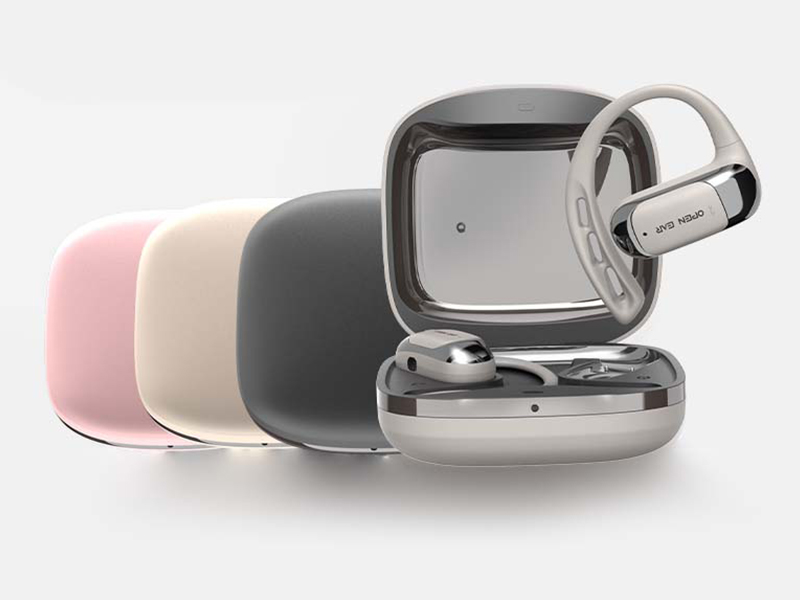
Color looks simple on a headphone shell.
But one wrong color choice can affect cost, lead time, surface quality, and brand image.
Open-ear headphone shells are usually colored in three ways: molded-in color, surface finishing, and structural color integration.
Molded-in color puts color inside the plastic material.
Surface finishing adds color or texture after molding.
Structural color integration uses processes like two-shot molding to combine color and structure.
For open-ear healthy headphones, color is not only about beauty.
It also affects touch feel, scratch risk, batch consistency, production yield, and how premium the product feels in the user’s hand.
What Are the Main Ways to Color Headphone Shells?
Headphone shell coloring is not one single process.
It is a group of choices that affect product quality from the inside out.
The main coloring methods for headphone shells can be divided into molded-in color, surface-applied color, and integrated structural color.
Each method has a different effect on color stability, texture, cost, durability, and production flexibility.
When people look at an open-ear headphone, they usually see only the final color.
They may see black, white, beige, gray, blue, silver, transparent smoke, or a special brand color.
But behind that color, the production process may be very different.
The first route is molded-in color.
This means the color is already inside the plastic material before or during injection molding.
The shell is colored from the material itself.
If the part is scratched lightly, the inside is usually close to the outside color.
Common methods include pre-colored resin, custom compounded pellets, color masterbatch, pigment powder, and transparent material coloring.
The second route is surface-applied color.
This means the plastic shell is molded first.
Then color, texture, or coating is added to the surface.
Common methods include spray painting, UV coating, soft-touch coating, rubber oil, vacuum plating, IML, IMD, water transfer printing, and heat transfer printing.
The third route is integrated structural color.
This is not just color adjustment.
It uses structure and material process to create two-color or multi-material effects.
The most common example is two-shot molding.
This can combine hard plastic and soft material, or two different colors, in one molded part.
| Coloring Route | Basic Meaning | Common Methods | Best For |
|---|---|---|---|
| Molded-in color | Color is inside the plastic | Compounded pellets, masterbatch, pre-colored resin | Stable mass production |
| Surface-applied color | Color is added after molding | Painting, UV, plating, transfer printing | Premium surface effects |
| Integrated structural color | Color and structure are formed together | Two-shot molding, multi-material molding | Higher-end integrated design |
There is no perfect method for every product.
A simple black open-ear headphone may use pre-colored material.
A premium sports model may use molded-in color plus UV coating.
A fashion model may use spray painting or transparent material.
A high-end model may use two-shot molding with local coating.
The best choice depends on the brand target, cost level, MOQ, surface quality, and long-term production plan.
What Is Molded-In Color for Headphone Shells?
Molded-in color is often the most stable route for mass production.
It puts the color into the plastic itself.
Molded-in color means the plastic material is colored before or during injection molding.
It is often used when a headphone brand needs stable color, good batch consistency, and fewer risks from surface peeling or paint scratches.
Molded-in color is common in headphone shells because it is practical.
The color is not only on the surface.
It is part of the plastic material.
This can reduce the risk of paint peeling.
It can also make the part more stable for long-term use.
There are several ways to do molded-in color.
Custom compounded pellets
This method mixes plastic resin, color, and additives first.
Then the mixture is made into colored plastic pellets.
These pellets are used later for injection molding.
This method is often used for brand colors and mass production.
It offers strong batch consistency.
It is also easier to control color difference when the order volume is stable.
But it usually has a higher MOQ.
It also needs trial color matching before production.
If the order is small, leftover material can become a problem.
Color masterbatch
Color masterbatch is a very common choice in the headphone industry.
During injection molding, base resin and color masterbatch are mixed in a set ratio.
Then the mixed material is molded into shell parts.
This method is more flexible than custom compounded pellets.
The MOQ can be lower.
Color change is also faster.
It is useful for trial orders, first orders, and regular colors.
But color consistency is usually not as strong as custom compounded pellets.
Light colors can be harder to control.
The mixing ratio and machine control must be managed well.
Pigment powder
Pigment powder can be mixed directly with raw material.
It may be cost-friendly in some cases.
But it is usually not the best choice for visible headphone shell parts.
It can cause color spots, uneven mixing, and poor color stability.
For open-ear headphones, users look at the product very closely.
Small defects are easy to notice.
That is why pigment powder is better for internal parts or low-appearance parts.
Pre-colored resin
Pre-colored resin is material that already comes in a standard color.
It is fast, easy, and stable enough for common colors.
It is useful for black, white, gray, or standard transparent parts.
But color choices are limited.
It is not ideal when a brand needs a special Pantone color or a unique market identity.
| Molded-In Method | Main Strength | Main Limitation | Best Use |
|---|---|---|---|
| Custom compounded pellets | Best color stability | Higher MOQ | Brand color, mass production |
| Color masterbatch | Flexible and practical | Slight batch color risk | Small to medium orders |
| Pigment powder | Lower material cost | Higher appearance risk | Internal parts |
| Pre-colored resin | Fast and simple | Limited color choice | Common colors, samples |
For open-ear healthy headphones, molded-in color is often the base choice.
It gives a stable foundation before any premium surface effect is added.
How Does Surface Finishing Change Headphone Appearance?
Surface finishing can make a headphone look more premium.
It can also add touch feel and special visual effects.
Surface finishing colors the headphone after the plastic shell is molded.
It is used when the product needs matte, glossy, metallic, pearl, soft-touch, gradient, carbon fiber texture, or other effects that molded-in color cannot easily achieve.
Surface finishing gives brands more design freedom.
A molded plastic shell can be stable, but it may look too plain.
Surface finishing can make the same shell look more premium, softer, more technical, or more fashion-driven.
The most common method is spray painting.
The shell is molded first.
Then paint is sprayed on the surface.
Spray painting can create matte color, glossy color, pearl color, metallic feeling, gradient color, and soft visual effects.
It is very common for mid-to-high-end headphone shells.
But it adds cost and process risk.
Paint may scratch.
Paint may peel if adhesion is poor.
Dust, particles, uneven coating, and color difference can also happen.
UV coating, soft-touch coating, and rubber oil
These coatings are often used to improve touch feel.
They can make the surface feel smoother, softer, warmer, or more skin-friendly.
Many users feel a product is “premium” not only because of color, but because of touch.
A fine matte coating can make a headphone feel more high-end.
But these coatings must be tested carefully.
Some soft-touch surfaces may become shiny, sticky, or worn after long use if the process is not stable.
Plating and vacuum metalizing
Plating and vacuum metalizing can give plastic a metal-like effect.
These methods are useful for small decorative parts, logo parts, rings, or highlight areas.
They can create silver, gunmetal, gold, or mirror-like finishes.
But large-area plating is not always suitable for headphones.
It can show fingerprints and scratches easily.
It may also look too heavy if not used carefully.
IML, IMD, water transfer, and heat transfer
IML and IMD can add refined patterns or decorative films during molding.
They are suitable for strong visual identity and high-design products.
Water transfer and heat transfer can add patterns like carbon fiber, wood grain, camouflage, or special textures.
Many products that look like carbon fiber are not real carbon fiber.
They use transfer printing to create the carbon fiber look.
| Surface Method | Common Effect | Main Benefit | Main Risk |
|---|---|---|---|
| Spray painting | Matte, gloss, pearl, gradient | Rich color effect | Scratches and peeling |
| UV / soft-touch coating | Smooth, matte, skin-friendly | Better touch feel | Wear risk over time |
| Plating / vacuum metalizing | Metallic look | Premium accent | Fingerprints and scratches |
| IML / IMD | Patterns, graphics, texture | Strong design identity | Higher development cost |
| Water / heat transfer | Carbon fiber, wood, camouflage | Flexible texture effect | Durability depends on process |
Surface finishing is powerful.
But it should not be chosen only because it looks good on a sample.
It must also pass abrasion, adhesion, sweat, UV, and long-term use tests.
Why Are Light Colors Hard to Control on Headphones?
Light colors often look clean and premium.
But they are usually harder to produce well.
Light headphone shell colors are harder to control because they show color difference, black dots, flow marks, dirt, and molding defects more easily.
Colors like beige, cream, light gray, skin tone, and soft pastel shades need stricter material and process control.
Many brands like soft light colors.
They may choose cream white, warm beige, stone gray, pale pink, soft green, or muted blue.
These colors can make open-ear headphones look healthy, modern, friendly, and lifestyle-oriented.
They are especially suitable for open-ear healthy audio products.
But they are also harder to make stable.
A black shell can hide many small problems.
A light beige shell cannot.
A tiny black dot may become obvious.
A small flow mark may be visible.
A slight color difference between two plastic parts may be noticed immediately.
For open-ear headphones, this problem is stronger because the product is small and handheld.
Users look at it closely.
Buyers also compare left and right parts, ear hooks, button areas, and charging areas.
If the color is slightly different between parts, the whole product may look less premium.
Why light colors are difficult
Light colors reflect more visible detail.
They also give less room to hide defects.
When plastic flows inside the mold, marks can appear.
When material is not clean enough, black dots may appear.
When mixing is not stable, color may drift.
When the shell has different wall thicknesses, the color may look slightly different.
Surface texture also matters.
A high-gloss light color will show more defects.
A fine matte texture can hide small issues better.
That is why design and process must be considered together.
| Color Type | Appearance Risk | Production Difficulty |
|---|---|---|
| Black | Low | Low |
| Dark gray | Low to medium | Low to medium |
| White | Medium to high | Medium |
| Beige / cream | High | High |
| Pastel colors | High | High |
| Transparent smoke | High | High |
Light colors are not impossible.
They just need better control.
For brand projects, the factory should confirm color samples before mass production.
The team should also define acceptable color tolerance.
If the product has several plastic parts, all parts should be checked together.
A color that looks good on one part may look different when assembled.
This is why light color projects should not be rushed.
How Do Texture and Gloss Affect Shell Color?
Color is not only about color itself.
Gloss and texture can change how the same color looks.
The same headphone shell color can look very different on glossy, matte, fine-textured, soft-touch, or transparent surfaces.
Texture and gloss affect how light reflects, how defects appear, and how premium the product feels.
A product color does not exist alone.
It always appears with a surface.
A black glossy shell and a black matte shell can feel like two different products.
A beige smooth shell and a beige fine-textured shell can show different levels of quality.
Glossy surfaces look bright and sharp.
They can feel more premium when made well.
But they show scratches, flow lines, shrink marks, dust, and fingerprints more easily.
For headphones, glossy surfaces must be used carefully.
They can look attractive in photos, but may be harder to keep perfect in mass production.
Matte surfaces are softer and more practical.
They can hide small defects better.
They also match the healthy, comfortable, and daily-wear image of open-ear headphones.
Fine textures can help reduce visible scratches and fingerprints.
They can also make the product feel more stable and durable.
Why texture matters in production
Texture can protect the design from minor defects.
If a plastic shell has a very smooth surface, every small mark becomes visible.
If the surface has a fine grain, some minor marks become less obvious.
This can improve mass production yield.
But texture also changes color.
The same Pantone color may look darker or lighter depending on the surface.
A matte surface may look softer.
A glossy surface may look more saturated.
A textured surface may look slightly deeper.
This is why color matching should be done on the real surface texture, not only on a flat color card.
| Surface Type | Visual Feeling | Main Risk | Good For |
|---|---|---|---|
| High gloss | Bright, sharp, premium | Shows scratches and marks | Decorative parts |
| Matte | Soft, modern, stable | May look too plain if poorly designed | Daily wear headphones |
| Fine texture | Durable, practical | May reduce color brightness | Sports products |
| Soft-touch | Warm, skin-friendly | Needs durability testing | Premium lifestyle products |
| Transparent | Young, technical | Shows flow marks and black dots | Fashion or tech models |
For open-ear headphones, surface texture should match the use case.
A sports headphone may need a more practical matte or fine texture.
A lifestyle headphone may use soft-touch coating.
A fashion model may use transparent or gradient effects.
The best color decision is a full surface decision.
Which Coloring Method Is Best for Brand Custom Colors?
Brand colors need consistency.
A beautiful sample is not enough if mass production cannot match it.
For brand custom headphone colors, custom compounded pellets are often the most stable choice for large orders.
Color masterbatch is more flexible for smaller orders, while surface painting can create richer effects but needs stronger quality control.
Brand color is more than decoration.
It can become part of product identity.
A buyer may request a specific Pantone color.
A retailer may need all batches to look the same.
A product line may include several models that must share one brand tone.
This is where color process choice becomes important.
If the project is large and long-term, custom compounded pellets are usually safer.
The material is colored before injection molding.
Batch consistency is better.
The process is more stable for repeat orders.
This is why many brand projects use this route when color accuracy matters.
But it needs higher MOQ and early trial color matching.
For smaller orders, color masterbatch is more flexible.
It is easier to adjust.
It also reduces early material pressure.
Many projects begin with color masterbatch.
When the order becomes stable, they may move to custom compounded pellets.
If the brand wants a special finish, surface painting may be needed.
For example, a molded-in color may not easily create metallic pearl, soft matte, gradient, or special skin-touch effects.
Spray painting or coating can solve this.
But the factory must control adhesion, thickness, dust, color difference, and surface durability.
Choosing by brand need
| Brand Need | Better Method |
|---|---|
| Stable long-term brand color | Custom compounded pellets |
| Small order custom color | Color masterbatch |
| Fast standard color | Pre-colored resin |
| Premium matte or soft touch | Painting + coating |
| Metallic accent | Vacuum plating or electroplating |
| Texture pattern | Water transfer or IMD |
| Two-color design | Two-shot molding |
The most important point is this.
A brand should not choose color only from a photo.
The color should be checked on real material, real texture, and real parts.
Lighting also matters.
A shell may look different under factory light, office light, outdoor light, and retail display light.
For open-ear healthy headphones, soft and clean colors can support the product positioning.
But those colors must be controlled with a realistic process.
What Is the Best Color Process for Open-Ear Healthy Headphones?
Open-ear healthy headphones need more than a nice color.
They need a color strategy that supports comfort, hygiene, safety, and daily use.
For open-ear healthy headphones, the best color process is often a combination of molded-in color and selected surface finishing.
This approach can balance color stability, premium touch, cost, durability, and brand identity.
Open-ear healthy headphones are worn close to the skin.
They are used during walking, sports, office work, commuting, and long daily wear.
So the color and surface should feel clean, safe, and comfortable.
A very flashy finish may look good at first, but it may not match the long-wear health audio positioning.
A very delicate surface may look premium, but it may scratch too easily.
A very light color may look friendly, but it may be harder to keep clean in production.
That is why a balanced process is usually better.
Common strong combinations
One common route is molded-in base color plus spray painting.
This gives a stable material base and richer surface appearance.
It is widely used because it balances cost and appearance.
Another route is color masterbatch direct molding.
This works well for practical models and ordinary colors.
It is flexible and efficient.
For large brand projects, custom compounded pellets direct molding can be better.
It helps control batch color.
It is more suitable for long-term repeat orders.
For premium products, molded-in color plus UV or soft-touch coating can improve hand feel.
This is useful for headphones that need a more refined user experience.
For small decorative areas, molded-in color plus plating accents can add a more premium detail without overusing metal effect.
For higher-end design, two-shot molding plus local surface finishing can create a stronger integrated design.
| Product Positioning | Recommended Color Process |
|---|---|
| Entry-level open-ear headphones | Pre-colored resin or color masterbatch |
| Standard sports headphones | Color masterbatch or molded-in color + coating |
| Premium lifestyle headphones | Molded-in color + UV or soft-touch coating |
| Brand custom color products | Custom compounded pellets |
| Fashion or youth products | Transparent material or special surface finish |
| High-design product line | Two-shot molding + local finishing |
The best process is not the most complex one.
It is the one that fits the product’s target market.
For open-ear healthy headphones, the ideal finish should look good, feel good, and survive daily use.
It should also be realistic for mass production.
Conclusion
Open-ear headphone shell coloring is a balance of color, texture, cost, durability, and production control.
The right process should support both brand design and real-world use.
FAQ
How is color added to plastic injection molding?
Color can be added by using pre-colored resin, color masterbatch, pigment powder, or compounded pellets.
The color is mixed with the plastic before or during molding.
What is color masterbatch in injection molding?
Color masterbatch is concentrated colorant in pellet form.
It is mixed with base plastic resin during molding to create the final shell color.
What is molded-in color?
Molded-in color means the plastic part comes out of the mold already colored.
The color is inside the plastic, not only on the surface.
Is painting plastic better than molded-in color?
Painting can create richer surface effects, but it adds cost and surface durability risk.
Molded-in color is usually more stable for basic colors.
Why do plastic parts have color differences?
Color differences can come from material batches, mixing ratios, mold temperature, surface texture, and machine settings.
Light colors usually show differences more clearly.
What is the best way to color headphone shells?
For stable mass production, molded-in color is often best.
For premium effects, molded-in color plus surface coating is often a stronger choice.
Can transparent headphone shells be injection molded?
Yes, transparent and semi-transparent shells can be molded.
But they are harder to control because flow marks, black dots, and weld lines are easier to see.
What is two-shot molding for headphone shells?
Two-shot molding uses two colors or two materials in one molded part.
It can create color separation, soft-touch areas, and better structure integration.