
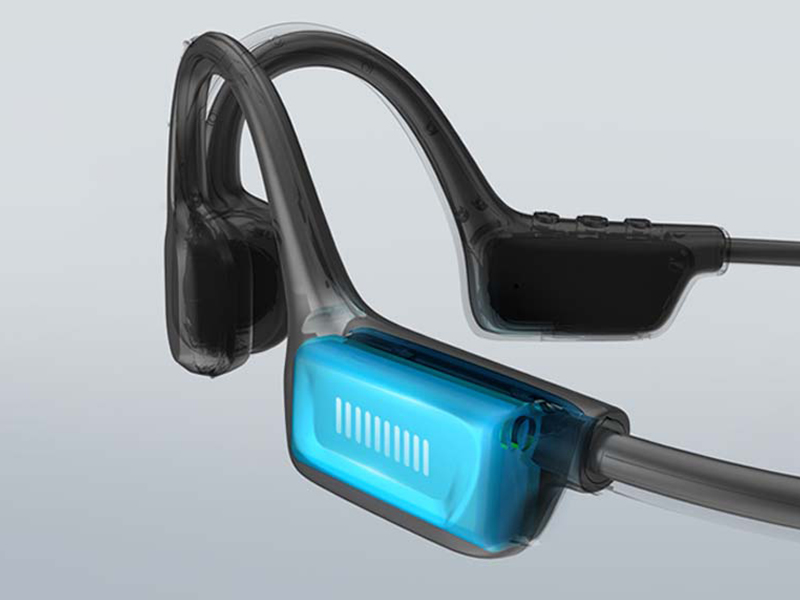
Open-ear headphones are becoming more than audio products.
They are becoming daily health, sports, work, and lifestyle devices.
But new EU rules are now asking a harder question: can these products stay slim, waterproof, comfortable, and still meet USB-C and battery requirements?
Open-ear headphones can meet new EU rules, but not through small changes alone.
USB-C charging and replaceable battery expectations may require deeper structure redesign, especially for IP68 swimming headphones and compact open-ear products where waterproofing, battery space, and wearing comfort are closely linked.
This is not only a compliance topic.
It is also a product design topic.
It affects how brands plan EU versions, how factories build molds, and how buyers judge long-term product risk.
Why Are New EU Rules Changing Headphone Design?
For many years, open-ear headphone design focused on sound, comfort, battery life, and waterproofing.
Now, EU rules are adding two new design pressures: common charging and battery removability.
The main change is that compliance is moving closer to the product structure.
In the past, many rules could be handled through certificates, labels, or packaging.
Now, USB-C and battery requirements can affect the shell, charging port, sealing method, battery layout, and repair path.
This is a major shift for the headphone industry.
A brand can no longer finish the product first and think about Europe later.
If the product is planned for the EU market, the charging structure and battery structure need to be discussed at the beginning.
This is especially true for open-ear headphones.
Open-ear products are usually small, curved, lightweight, and close to the skin.
They need to sit securely around the ear without blocking the ear canal.
They also need to carry a battery, PCBA, microphone, speaker or transducer, buttons, antenna, and charging system in a very limited space.
When new rules ask for USB-C and easier battery replacement, the problem is not only “where to put the port” or “where to put the battery.”
The real problem is how to keep the full product experience stable.
The design pressure is now coming from two sides
| Rule direction | What it asks for | What it affects inside headphones |
|---|---|---|
| USB-C common charging | A more unified charging interface | Charging port, sealing, PCBA, cable design |
| Replaceable battery direction | Easier battery removal and replacement | Shell structure, battery fixing, wiring, waterproofing |
| Waterproof requirement | Protection against water and sweat | Glue, sealing rings, port design, assembly process |
| Open-ear comfort | Lightweight and long-wear comfort | Weight, size, balance, skin-contact materials |
The conflict is clear.
USB-C usually needs a physical port.
A replaceable battery usually needs access to the inside of the product.
IP68 waterproofing usually needs the product to stay sealed.
Open-ear comfort usually needs the product to stay light and compact.
This is why future EU-ready open-ear headphones may not be simple upgrades of old models.
They may need a new structure from the start.
Why Is USB-C Difficult for IP68 Swimming Headphones?
For normal headphones, USB-C may look like a simple connector change.
For IP68 swimming headphones, it can become one of the hardest parts of the design.
USB-C is difficult for IP68 swimming headphones because it creates an opening in a product that depends on sealing.
A true swimming headphone must survive water, sweat, salt, pool chemicals, drying cycles, and repeated charging use, not only one lab test.
Many IP68 swimming headphones still use magnetic charging.
This is not only because magnetic charging looks clean.
It is because magnetic charging is easier to seal than a traditional port.
A magnetic charging area can be made with fewer deep openings.
It can be easier to clean after swimming.
It can also reduce the risk of users leaving a waterproof plug open.
For IP68 products, user behavior matters a lot.
A product may pass a waterproof test in the factory.
But after months of real use, the charging area faces more complex conditions.
The user may swim in a pool.
The user may sweat during running.
The user may rinse the product under water.
The user may charge it before the port is fully dry.
The user may forget to close a silicone plug.
The user may pull the plug too hard over time.
These small actions can turn a good lab design into a real-world failure point.
Why magnetic charging is still common
| Factor | Magnetic charging | USB-C charging |
|---|---|---|
| Sealing difficulty | Lower | Higher |
| User mistake risk | Lower | Higher if a plug is needed |
| Long-term corrosion risk | Medium | Higher if water stays in the port |
| Cleaning after swimming | Easier | More difficult |
| EU charging clarity | Weaker if magnetic-only | Stronger if device-side USB-C works |
| Mold and structure cost | Lower | Higher |
| Production control | Easier | More demanding |
This creates a real product conflict.
From a compliance view, USB-C is becoming more important.
From an engineering view, magnetic charging is still more mature for IP68 swimming headphones.
So the right question is not “Why not just replace magnetic charging with USB-C?”
The better question is:
Can a USB-C swimming headphone still pass IP68 after real use, repeated charging, and long-term aging?
That is much harder.
A reliable USB-C IP68 swimming headphone may need a waterproof USB-C receptacle, inner sealing, drainage design, anti-corrosion treatment, stronger aging tests, and repeated plug-use testing.
It may also need clearer user instructions.
For example, users may need to dry the port before charging.
That adds after-sales risk.
This is why USB-C swimming headphones are not only a compliance project.
They are a full waterproof structure project.
Why Are Replaceable Batteries Even Harder?
USB-C is already difficult for waterproof headphones.
But replaceable batteries may create an even deeper challenge.
Replaceable batteries are harder because they ask the product to be opened, while waterproof headphones are designed to stay closed.
For open-ear products, the battery is not a separate large part.
It is often deeply connected with the shell, PCBA, wiring, acoustic space, and wearing balance.
This is the new pain point many brands may not fully understand yet.
For large electronics, a replaceable battery is hard but possible.
There may be enough room for screws, covers, clips, connectors, insulation, and a repair path.
But open-ear headphones are very different.
They are small wearable devices.
Every millimeter matters.
If the battery becomes easier to remove, the product may need a battery cover.
If there is a battery cover, the product needs a sealing system.
If there is a sealing system, the product may become thicker or heavier.
If it becomes thicker or heavier, wearing comfort may change.
If wearing comfort changes, the whole open-ear value may be affected.
The battery is not only a battery
In compact headphones, the battery affects many design areas.
| Design area | Why the battery matters |
|---|---|
| Wearing comfort | Battery size and position affect weight balance |
| Waterproofing | Battery access can create a new water entry point |
| Acoustic design | Internal space changes can affect sound chamber layout |
| PCBA design | Battery connector and protection circuit need space |
| Assembly | Replaceable design may need screws, clips, or covers |
| Safety | User replacement needs safe contact design |
| After-sales | Wrong replacement may create damage or water leakage |
This is why even regular open-ear headphones may struggle with replaceable battery design.
For IP68 swimming headphones, the difficulty is even higher.
A swimming headphone needs stronger sealing.
A replaceable battery needs a controlled opening.
These two needs naturally fight each other.
The product team must answer several difficult questions.
Can the user open the product without damaging the seal?
Can the battery be replaced without damaging the wire or PCBA?
Can the product remain waterproof after replacement?
Who is responsible if the user replaces the battery incorrectly?
Can the product still stay light and comfortable?
These are not small questions.
They may decide whether a product can be built for Europe in the same way as before.
Can Open-Ear Headphones Meet USB-C and Battery Rules Together?
Yes, but the answer depends on product type, waterproof level, size, and market strategy.
A normal open-ear sports headphone may have more options than an IP68 swimming headphone.
Open-ear headphones may be able to meet USB-C and battery rules together, but the design path will not be the same for every product.
A basic open-ear product, a waterproof sports product, and an IP68 swimming product may need different EU-ready structures.
This is where brands need to be careful.
Not all open-ear headphones should be treated as one category.
A lightweight air-conduction sports headphone is different from a bone conduction swimming headphone.
A call-center open-ear headset is different from a waterproof MP3 swimming headphone.
A hearing-assistance open-ear device is different from a normal music headphone.
The structure, battery size, sealing level, and use case are different.
So the EU version strategy should also be different.
Three possible product paths
| Product type | USB-C difficulty | Replaceable battery difficulty | Main risk |
|---|---|---|---|
| Regular open-ear headphones | Medium | Medium to high | Size and comfort |
| Waterproof sports headphones | Medium to high | High | Sweat sealing and durability |
| IP68 swimming headphones | Very high | Very high | Waterproofing after port or battery access |
| Open-ear assistive listening devices | Medium | High | Safety, comfort, and compliance positioning |
| Communication headsets | Medium | Medium | Structure space and repair path |
For some products, USB-C may be possible with limited structure change.
For others, it may require a new mold.
For replaceable batteries, the challenge is usually deeper.
The product may need a new battery compartment, safer battery connector, new seal design, and a new assembly process.
It may also need a clear repair or replacement plan.
This is why brands should not ask only one question.
They should not ask, “Can this model add USB-C?”
They should ask:
Can this product family become EU-ready from the structure level?
That is a more strategic question.
It can help brands decide whether to modify an old model, create a Europe-only version, or start a new platform.
Why Can’t Brands Wait Until the Mold Is Finished?
Many product problems become expensive after tooling.
USB-C and battery structure problems are especially expensive because they touch the shell and internal layout.
Brands should not wait until the mold is finished because USB-C and battery access can change the product’s core structure.
If these points are discussed too late, the product may need mold changes, PCBA changes, waterproof retesting, and even a new product schedule.
This is one of the biggest lessons for future headphone projects.
In the past, many brands started with ID design.
They focused on shape, color, logo area, and selling points.
Then they asked the factory to handle certification later.
That approach is no longer safe for EU-focused products.
If USB-C is required, the port position must be planned early.
If battery removability is required, the opening method must be planned early.
If IP68 is required, the sealing method must be planned early.
If open-ear comfort is required, the weight balance must be planned early.
All four things are connected.
What happens if planning is too late?
| Late-stage problem | Possible result |
|---|---|
| USB-C port has no space | Shell redesign or mold change |
| Battery cannot be accessed | Full structure redesign |
| Waterproof seal breaks after change | IP68 test failure |
| Battery cover adds weight | Wearing comfort becomes worse |
| PCBA needs movement | Development time increases |
| Packaging claims become wrong | Retail review risk increases |
This is why EU-ready design should start before the mold.
For IP68 swimming headphones, it should start even earlier.
The team needs to decide whether the product is for global use, EU use, or non-EU use.
If Europe is a target market, the design should not rely only on the traditional magnetic charging structure without further review.
If the battery rule becomes a major requirement, the team should also consider whether user replacement, professional replacement, or a special exemption path may apply.
The key is not to guess.
The key is to design with a clear market plan.
What Should Buyers Ask Before Starting an EU Headphone Project?
Buyers do not need to know every engineering detail.
But they should ask better questions before they approve a project.
Before starting an EU open-ear headphone project, buyers should ask about USB-C, battery replacement, waterproof level, mold stage, and product version strategy.
These questions help avoid late redesign and reduce launch risk.
A serious buyer should not only ask for a product price.
A serious buyer should ask whether the product can survive the target market.
This is especially true for Europe.
The product may look ready.
The sample may work.
The sound may be good.
The waterproof test may pass.
But if the charging structure or battery structure does not fit future EU expectations, the product may still create risk.
Buyer checklist
| Question | Why it matters |
|---|---|
| Is this product planned for the EU market? | EU rules may affect the product structure |
| Does the device itself have USB-C charging? | Cable-side USB-C may not be enough |
| Is magnetic charging the only charging method? | Magnetic-only designs may face higher EU questions |
| Is the product IPX5, IPX7, or IP68? | Higher waterproofing makes structure changes harder |
| Can the battery be removed or replaced? | Battery rules may affect future product access |
| Who can replace the battery? | User replacement and professional replacement have different risks |
| Will battery replacement affect waterproofing? | Waterproof products may fail after opening |
| Is the mold already finished? | Late changes are much more expensive |
| Is there an EU-specific version plan? | One global version may not fit every market |
This checklist is not only for compliance teams.
It is also for product managers, sourcing teams, and brand owners.
A good supplier should be able to discuss these questions before mass production.
If a supplier only says “yes, we can do it,” without explaining the structure trade-offs, that is a warning sign.
For open-ear healthy headphones, the future will favor teams that understand both rules and engineering.
Conclusion
Open-ear headphones can still grow in Europe.
But the winning products will not be simple old models with new labels.
They will be products designed from the start for USB-C, battery access, waterproofing, comfort, and long-term trust.
FAQ
Do open-ear headphones need USB-C in the EU?
Open-ear headphones may need USB-C if they fall under covered portable electronic products and support wired charging.
The key issue is usually the device-side charging port.
Are bone conduction headphones included in EU USB-C rules?
Bone conduction headphones are still headphones.
If they support wired charging and are placed on the EU market under the covered category, USB-C should be reviewed seriously.
Can magnetic charging replace USB-C for EU headphones?
Magnetic charging may be useful for waterproof design, but magnetic-only charging can create EU compliance questions.
A USB-C charging path on the device is usually clearer.
Why is USB-C hard for swimming headphones?
USB-C adds a physical port to a product that depends on sealing.
For IP68 swimming use, corrosion, plug mistakes, drying, and repeated charging all add risk.
Do EU battery rules apply to headphones?
EU battery rules cover portable batteries in many products.
For headphones, brands should review removability and replaceability requirements with a compliance expert before new EU projects.
Are replaceable batteries easy to add to open-ear headphones?
No.
Open-ear headphones are compact, curved, and weight-sensitive.
Adding battery access can affect waterproofing, comfort, sound structure, and safety.
Can a waterproof headphone have a replaceable battery?
It may be possible, but it is difficult.
The design must protect the seal after battery replacement and avoid damage during user or service handling.
Should brands make a separate EU headphone version?
For many products, yes.
If USB-C, waterproofing, and battery access create design conflict, an EU-specific structure may reduce risk.