
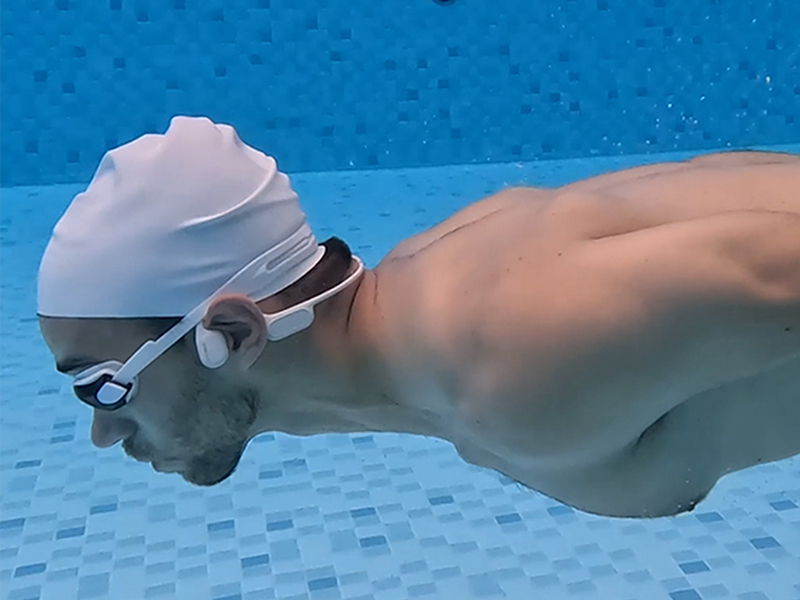
IP68 headphones used to be simple to explain.
They were waterproof, durable, and built for active users.
Now, one question can block a whole EU order: can they still be sold without USB-C?
IP68 headphones can be sold in Europe only when their charging design fits EU common charger rules.
If the product supports wired charging and is newly placed on the EU market after December 28, 2024, a USB-C charging port on the device is the safer compliance direction.
This is not just a small connector issue.
It affects product design, waterproof structure, packaging claims, retail approval, and buyer confidence.
Why Did USB-C Become a Risk Point for IP68 Headphones?
Waterproof headphones are often designed around sealing first.
That is why USB-C can feel like a problem instead of a simple upgrade.
USB-C became a risk point because the EU moved from charger convenience to device-side charging rules.
For covered headphone products, the question is not only what cable is included, but whether the device itself supports the required USB-C charging interface.
For many years, waterproof headphones used magnetic charging pins.
This made sense from an engineering view.
A magnetic charging area can reduce the need for an open port.
It can also make the surface easier to seal.
For swimming headphones, sports headphones, and open-ear healthy headphones, this was a practical choice.
But the EU common charger rules changed the buying logic.
Before, buyers mainly asked whether the product could be charged safely.
Now, EU buyers also ask whether the product can be charged through the common USB-C system.
That creates a new kind of risk.
It is not only a water resistance risk.
It is also a market access risk.
What changed for buyers?
A buyer may like the product design.
A buyer may accept magnetic charging from a user experience point of view.
But a retailer, importer, or compliance team may still reject the product if the device has no USB-C charging port.
This is why IP68 headphones need to be reviewed as both an engineering product and a compliance product.
| Question | Old buying focus | New EU buying focus |
|---|---|---|
| Charging | Does it charge safely? | Does the device support USB-C charging? |
| Waterproofing | Can it pass IP68 tests? | Can it pass IP68 and still meet charging rules? |
| Cable | Is a cable included? | Is the device-side interface compliant? |
| Risk | User complaint risk | Retail and customs compliance risk |
This matters even more for open-ear healthy headphones.
These products often serve outdoor users, swimmers, cyclists, older users, or people who want safer awareness.
The open-ear design already has a strong health and comfort story.
But if the charging structure does not match EU expectations, the product story becomes harder to sell.
A buyer may not want to carry that risk.
So the design question becomes clear.
Can the product keep its waterproof value while also using USB-C?
That is the real product challenge.
Does IP68 Waterproofing Create an Exemption?
IP68 is an important product feature.
But it should not be treated as a free pass.
IP68 waterproofing does not automatically exempt headphones from USB-C charging requirements.
It can explain why magnetic charging was chosen, but it does not by itself prove that a magnetic-only charging design is acceptable for new EU market placement.
Many teams confuse engineering difficulty with legal exemption.
These are two different things.
Engineering difficulty means the product is harder to design.
Legal exemption means the rule clearly says the product does not need to follow the requirement.
For IP68 headphones, waterproofing is a strong engineering reason.
A USB-C port can increase design pressure.
It may need a waterproof socket.
It may need a silicone plug.
It may need better inner sealing.
It may need more testing after aging, salt spray, sweat, and repeated charging use.
But none of these points should be used as a direct claim that the product is exempt.
Why this distinction matters
If a seller tells an EU buyer, “It is IP68, so it does not need USB-C,” that can sound risky.
A serious buyer will ask for the official exemption.
If there is no clear exemption, the discussion becomes weak.
A stronger way to explain it is this.
IP68 products have a real design challenge.
The charging solution must balance waterproof sealing, user convenience, safety, and EU market rules.
This is a better and more honest message.
It also helps product teams make better decisions.
| Design option | Waterproof benefit | EU risk level | Buyer confidence |
|---|---|---|---|
| Magnetic-only charging | High | High | Low to medium |
| USB-C with waterproof plug | Medium to high | Lower | Higher |
| Waterproof USB-C structure | Medium to high | Lower | Higher |
| USB-C plus magnetic charging | Medium to high | Lower if USB-C works | Higher |
| Wireless charging only | Depends on design | Needs separate review | Medium |
The best route is not always the cheapest route.
A magnetic-only design may protect waterproofing, but it can create a sales barrier.
A USB-C design may add structure cost, but it can reduce market access risk.
For EU retail channels, this trade-off is usually worth serious review before mass production.
Why Is USB-C So Hard for IP68 Swimming Headphones?
USB-C sounds simple from a user point of view.
But for IP68 swimming headphones, it is one of the hardest parts of the whole product design.
The real challenge is not only adding a USB-C port.
The real challenge is adding USB-C while still keeping the product sealed, durable, safe, and reliable after repeated swimming, sweating, charging, and long-term use.
In many open-ear swimming headphones, magnetic charging is not used only for convenience.
It is used because the structure is easier to seal.
A magnetic charging area can be designed with fewer deep openings.
It can reduce the risk of water entering the main body.
It also makes the charging area easier to clean after swimming.
For IP68 products, this matters a lot.
A swimming headphone is not only exposed to clean water.
It may also face sweat, pool water, salt water, sunscreen, dust, and repeated drying cycles.
Each of these factors can affect the charging area.
Why USB-C creates extra risk
A USB-C port is a physical opening.
Even with a waterproof socket or silicone plug, it still adds a weak point to the structure.
The product must survive not only one waterproof test, but also long-term daily use.
Users may forget to close the plug.
The plug may loosen over time.
Water or salt may stay inside the port.
The metal contacts may corrode.
The port may fail after repeated insertion and removal.
This is why many IP68 swimming headphones still use magnetic charging or proprietary charging cables.
It does not mean magnetic charging is perfect.
It means magnetic charging is easier to control for high-level waterproof design.
| Design factor | Magnetic charging | USB-C charging |
|---|---|---|
| Sealing difficulty | Lower | Higher |
| User mistake risk | Lower | Higher if plug is needed |
| Long-term corrosion risk | Medium | Higher if water stays inside port |
| Repair and cleaning | Easier | More difficult |
| EU compliance clarity | Higher risk if magnetic-only | Better if device-side USB-C works |
| Engineering cost | Lower | Higher |
| Mass production control | Easier | More demanding |
This creates a real conflict.
From a compliance view, USB-C may be the safer EU direction.
From an engineering view, magnetic charging is still the more mature choice for IP68 swimming headphones.
That is why this issue should not be explained as a simple “change the port” task.
It is a product redesign challenge.
For brands, the better question is not “Can we replace magnetic charging with USB-C?”
The better question is:
Can we design a USB-C swimming headphone that still passes IP68 after real use, not only after lab testing?
That is much harder.
A true USB-C IP68 swimming headphone may need a waterproof USB-C receptacle, inner sealing, structural drainage design, anti-corrosion treatment, stronger aging tests, and repeated plug-use testing.
It may also need a more careful user manual, because charging after water exposure can create safety and after-sales risks.
So for the current market, magnetic charging remains a common and practical engineering choice.
But for the EU market, brands still need to prepare for the possibility that future waterproof headphone projects may require a new USB-C structure.
The real product opportunity is not just making a waterproof headphone.
It is making a waterproof headphone that can satisfy both real swimming use and modern charging expectations.
Is Magnetic Charging the Same as Wired Charging?
Magnetic charging feels different from a normal cable.
But it may still be treated as wired charging.
Magnetic charging is usually still a wired charging method when power travels through a physical cable and conductive contact pins.
Changing only the power-side plug to USB-C does not solve the device-side charging port issue.
This is one of the biggest misunderstandings in headphone projects.
Some people say, “The cable is USB-C, so it should be fine.”
But that sentence can hide two different designs.
One design has USB-C on the charger side only.
The other design has USB-C on the headphone itself.
They are not the same.
If the cable is USB-C on one end and magnetic pogo pins on the other end, the headphone still has a proprietary magnetic charging interface.
The device itself does not have a USB-C receptacle.
This is why buyers should not only look at the cable picture.
They should look at the product charging interface.
Cable-side USB-C vs device-side USB-C
| Design | What it means | Compliance concern |
|---|---|---|
| USB-C charger to USB-C headphone port | Device has USB-C | Safer direction |
| USB-C charger to magnetic headphone pins | Device has magnetic charging | High concern |
| USB-A charger to magnetic headphone pins | Device has magnetic charging | High concern |
| USB-C port plus extra magnetic charging | Device supports USB-C | More flexible |
| No cable, true wireless charging only | No wired charging path | Needs case review |
For waterproof open-ear headphones, magnetic charging can still be useful.
It can be kept as an extra convenience feature.
But the key point is whether the device can also charge through USB-C.
This is the direction many product teams should consider for EU versions.
It may be possible to design a product with both USB-C and magnetic charging.
In that case, the magnetic charging system is not the only path.
The product still gives users the convenience of magnetic charging, while giving buyers a clearer answer on EU charging expectations.
But this design must be tested carefully.
Two charging paths can increase structure risk.
They can also increase PCBA complexity, sealing points, and after-sales questions.
So the product team should not add both interfaces casually.
They should define the EU version from the start.
What Does This Mean for Open-Ear Healthy Headphones?
Open-ear healthy headphones are moving into more serious use cases.
That makes compliance and design quality more important.
For open-ear healthy headphones, USB-C is not only a connector question.
It is part of product trust, because buyers need products that are comfortable, safe, durable, and ready for regulated retail channels.
Open-ear healthy headphones are not only audio products.
They are also lifestyle products.
They are often used during sports, walking, cycling, swimming, work calls, and long daily wear.
The open-ear design keeps the ear canal open.
That helps users stay aware of traffic, voices, alarms, and the surrounding environment.
This is one reason the category has grown.
But as the category grows, buyers become more careful.
A small product issue can affect a whole retail program.
Charging design is now one of those issues.
Health-focused design needs practical compliance
A healthy product story should not stop at comfort.
It should also include safe use, simple charging, clear labels, and fewer after-sales problems.
Users do not want to carry one special cable for every device.
Retailers do not want confusing charging claims.
Importers do not want a product that may be questioned later.
This is why USB-C can support the wider product story.
| Product value | What users see | What buyers check |
|---|---|---|
| Open-ear comfort | No ear canal blocking | Wearing stability and user fit |
| IP68 waterproofing | Safe for wet use cases | Test method and sealing design |
| USB-C charging | Easy charging | EU common charger readiness |
| Long wear | Less ear pressure | Weight and material comfort |
| Healthy listening | More awareness | Safe product positioning |
For open-ear healthy headphones, the best product is not only the one with the highest waterproof rating.
It is the one that can enter the right channel with fewer questions.
This is especially true for Europe.
EU buyers often care about user safety, labeling, environmental impact, and long-term reliability.
A magnetic-only IP68 headphone may still be attractive in some markets.
But for Europe, it should be reviewed with more caution.
If the target channel is a small online store, the risk may feel lower.
If the target channel is a major retailer, the risk becomes much higher.
How Should Brands Plan EU Product Versions?
A global product may need different market versions.
Europe should not be treated as an afterthought.
Brands should plan EU headphone versions early, especially when the product is waterproof, magnetic-charging, or designed for swimming.
The safest path is to review the charging structure before tooling, not after mass production.
The worst time to discover a USB-C problem is after tooling is finished.
At that point, every change becomes expensive.
The shell may need to be redesigned.
The waterproof structure may need to be changed.
The PCBA layout may need to move.
The battery position may need to shift.
The mold may need to be modified.
The IP test may need to be repeated.
The manual, packaging, and labels may also need updates.
This is why EU planning should begin at the product definition stage.
A better planning process
Brands should ask six questions before confirming a waterproof headphone project.
- Is the product planned for the EU market?
- Is it a headphone, headset, earbud, or related portable audio device?
- Does it support charging through a physical cable?
- Does the device itself have a USB-C charging port?
- If it uses magnetic charging, is magnetic charging the only charging path?
- Can the waterproof structure still pass testing after USB-C is added?
These questions are simple.
But they can prevent major project waste.
| Project stage | Key decision | Why it matters |
|---|---|---|
| Product concept | Decide EU target market | Avoid wrong structure |
| ID design | Reserve USB-C space | Prevent late redesign |
| MD design | Build sealing method | Protect waterproof rating |
| PCBA design | Match charging path | Avoid board changes |
| Testing | Retest IP and charging | Prove real durability |
| Packaging | Use correct labels | Reduce retail rejection |
The EU version may need a stronger structure than the non-EU version.
That is not always a bad thing.
A stronger EU version can become the premium global version.
It may also help buyers in other markets feel more confident.
But the decision must be clear.
A brand should not tell the factory to keep the old magnetic-only design and then expect easy EU approval.
That creates tension later.
What Should Buyers Check Before Placing Orders?
Buyers do not need to become engineers.
But they do need a clear checklist.
Before placing an EU order for IP68 headphones, buyers should check the device-side charging port, market placement date, wired charging method, waterproof test plan, and packaging information.
These points reduce both compliance risk and after-sales risk.
A good buyer question is specific.
A weak question is, “Does it have USB-C?”
A better question is, “Does the headphone body itself have a USB-C charging receptacle?”
This small difference matters.
The first question can be answered with a cable photo.
The second question checks the real product structure.
Buyer checklist
| Check item | What to ask | Why it matters |
|---|---|---|
| Device interface | Does the headphone itself have USB-C? | Confirms device-side design |
| Charging method | Is magnetic charging the only method? | Finds hidden compliance risk |
| Market timing | Was it first placed before or after Dec 28, 2024? | Affects old stock logic |
| Waterproof structure | How is the USB-C area sealed? | Protects IP68 performance |
| Test report | Has it passed waterproof testing after final structure? | Avoids prototype-only claims |
| Packaging | Are charging labels and instructions clear? | Supports retail review |
| User safety | Can it charge safely after wet use? | Reduces after-sales risk |
A buyer should also avoid vague promises.
Terms like “EU ready,” “Type-C cable included,” or “waterproof charging” are not enough.
The buyer needs to see the charging interface, test plan, and product version.
If the product is magnetic-only, the buyer should ask for a written compliance review from a local consultant or notified expert.
This is even more important for chain retail.
A product may sell smoothly in one online channel, but still fail the review of a larger buyer.
This does not always mean the product is bad.
It means the channel has higher responsibility.
For IP68 open-ear healthy headphones, the most practical rule is simple.
Do not leave charging compliance to the last step.
Build it into the product from the beginning.
Conclusion
IP68 still matters, but it does not remove the USB-C question.
For EU markets, waterproof headphone design must now balance sealing, usability, and charging compliance.
FAQ
Do all headphones need USB-C in the EU?
New headphones sold in the EU generally need USB-C if they are covered products and support wired charging.
Old stock first placed before the deadline may be treated differently.
When did USB-C become mandatory in the EU?
The main deadline for many portable devices was December 28, 2024.
Laptops follow later, with a separate 2026 deadline.
Does the EU USB-C rule apply to wireless charging?
The current common charger rule mainly targets wired charging.
Wireless charging is being studied, but it is not yet unified in the same way.
Are earbuds included in the EU common charger rules?
Yes.
Earbuds are listed together with headphones, headsets, portable speakers, phones, tablets, and several other portable electronic devices.
Can a product use magnetic charging and USB-C together?
In many cases, magnetic charging can be an extra feature if the device also supports USB-C charging.
The final design still needs proper compliance review.
Is a USB-C cable enough for EU compliance?
Not always.
If the headphone body still uses only magnetic pins, a USB-C plug on the cable side may not solve the device-side interface issue.
Can old headphones without USB-C still be sold in Europe?
Some devices without USB-C may continue to be sold if they were first placed on the EU market before December 28, 2024.
Proof of timing may be needed.
Are waterproof headphones exempt from USB-C rules?
Waterproofing alone is not a clear exemption.
IP68 can explain design difficulty, but it should not be used as the only compliance argument.