
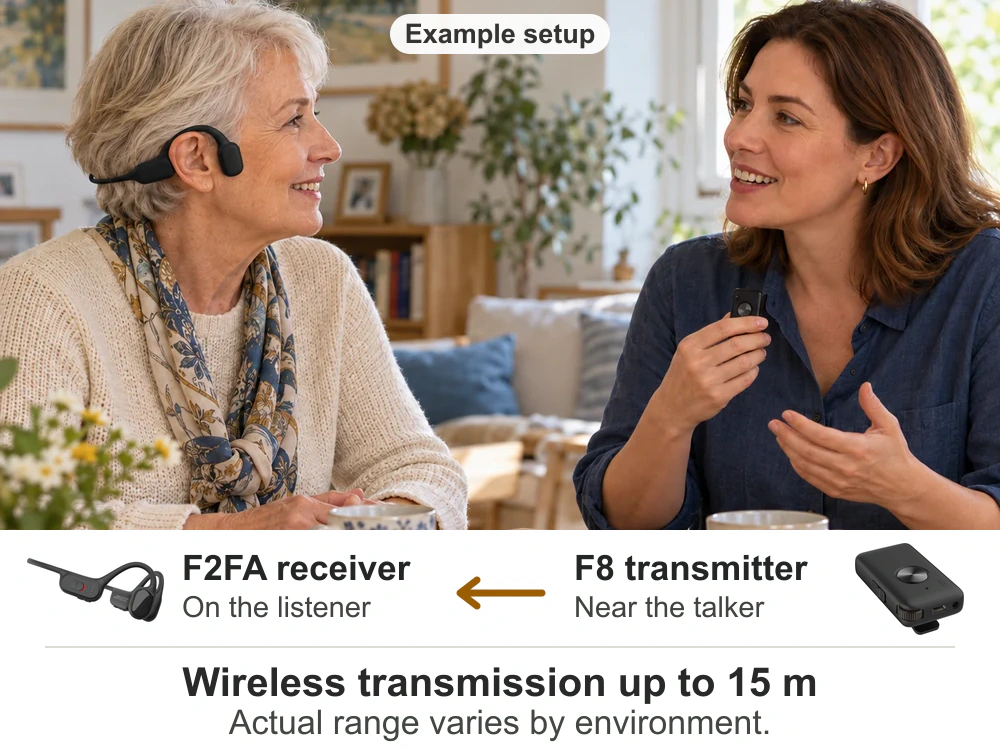
A promising sample can still become an expensive production problem if the buyer approves it without controlled evidence. For a bone-conduction hearing-assistance OEM project, the safest question is not simply, “Does the sample sound good?” It is: “Can the supplier show that this exact configuration meets the agreed user need, can be reproduced, and has a realistic route to the target market?”
The evidence pack described below is designed for that decision. It helps a brand, distributor, or product team compare suppliers on verifiable work rather than marketing claims.
Direct answer: Before approving an engineering sample, request a package that connects intended use, measurable requirements, acoustic and mechanical results, firmware version, reliability findings, compliance planning, the approved golden sample, and production controls. If one of those links is missing, the sample is not yet a controlled product baseline.
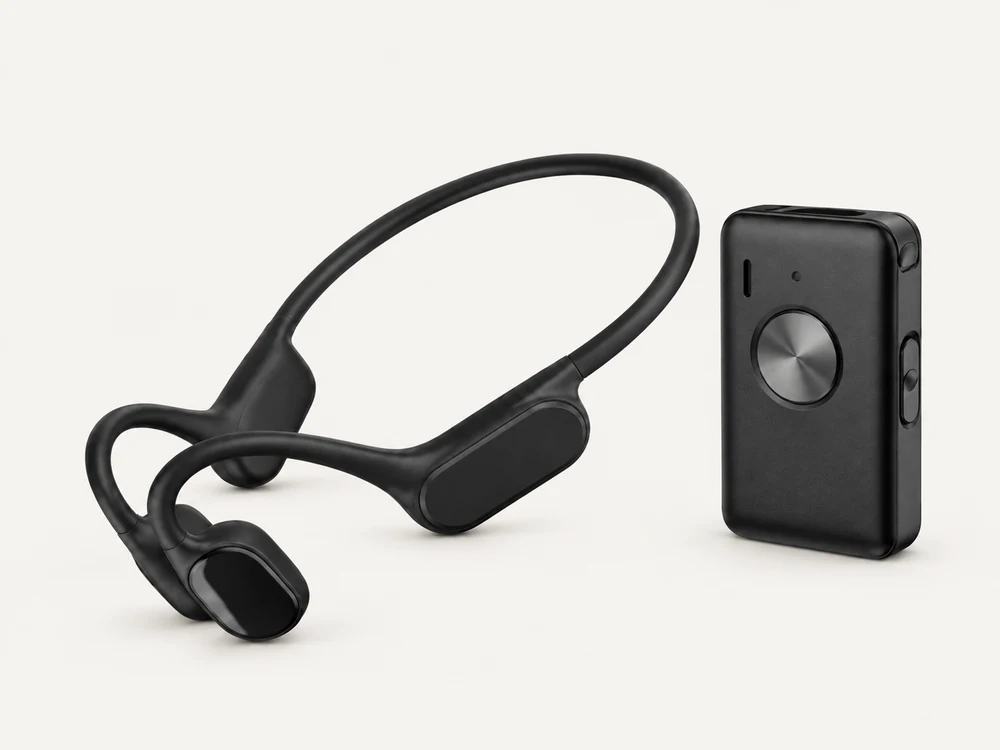
Contents
- Start with intended use and market
- Build a traceable requirements sheet
- Review acoustic and user-fit evidence
- Control firmware, reliability and compliance inputs
- Freeze the golden sample and production evidence
- Make a release decision, not a subjective impression
1. Start with intended use and market — before comparing specifications
The same hardware can enter very different regulatory and commercial paths depending on what the seller says it is for. In the United States, FDA distinguishes hearing aids, which are intended to compensate for hearing loss, from personal sound amplification products intended for people with normal hearing in specific listening situations. FDA also advises teams to define intended use and indications for use when determining whether a product is a medical device.
That makes intended use the first page of the evidence pack, not a sentence added after development. It should state:
- target country or region;
- intended user and listening problem;
- expected sales channel and responsible brand/legal entity;
- medical, hearing-assistance, or consumer positioning to be assessed;
- planned claims, instructions, warnings, and after-sales model;
- whether the program starts from an existing platform, OEM configuration, or deeper ODM development.
This is not legal decoration. It changes the evidence plan, label review, risk work, test selection, technical documentation, and launch schedule. A supplier that quotes before resolving these inputs may be pricing the wrong project.
For an early discussion, the buyer does not need a finished specification. A useful brief can begin with the target users, the problem—such as conversation or TV listening—the market, expected quantity range, and desired launch date. Alova’s bone-conduction hearing-assistance manufacturing page explains how those inputs are used to choose an existing platform, OEM route, or ODM program.
2. Build a traceable requirements sheet
A product requirement is only useful if the team can later show how it was verified. Replace broad phrases such as “clear speech,” “comfortable all day,” or “low leakage” with a requirement-and-evidence table.
At minimum, the controlled sheet should include:
| Requirement area | Buyer input | Evidence expected before approval |
|---|---|---|
| Use case | Conversation, TV, group activity, or another defined scenario | Agreed scenario description and evaluation method |
| Acoustic target | Speech priorities, usable gain, output limits, distortion and leakage objectives | Test setup, sample ID, conditions, result plots and conclusion |
| Mechanical fit | Head-size range, contact position, clamping/contact-force target, glasses compatibility | Fit protocol, measurements, evaluator notes and open issues |
| Microphone system | Environment, pickup objective and wind/noise priorities | Configuration, firmware version and repeatable test conditions |
| Controls/app | Required modes, adjustment permissions, language and accessibility needs | Approved user flow, function list, device/app/firmware version matrix |
| Battery/charging | Expected use pattern and charging interface | Defined test method, sample count, conditions and acceptance criteria |
| Reliability | Temperature, humidity, sweat, drop, flexing, transport and aging risks relevant to the product | Test plan, deviations, failures, corrective actions and retest status |
| Market readiness | Intended claims, market and responsible parties | Applicable route and document responsibility matrix confirmed by qualified regulatory professionals |
The buyer should be able to point from each commercial requirement to a test, inspection, review, or justified decision. The table also exposes vague promises early, when they are still inexpensive to change.
3. Review acoustic evidence and user-fit evidence together
Bone-conduction performance is not determined by a transducer specification in isolation. Contact position, contact stability, mechanical structure, microphone layout, gain structure, DSP, and the final wearing configuration interact. A plot without the sample identity and test setup is therefore weak evidence.
Ask the supplier to include:
- sample ID, hardware revision, transducer and mechanical configuration;
- firmware/app version and active listening mode;
- fixture or wearing condition, microphone arrangement and measurement method;
- relevant output, gain, distortion, leakage, feedback, and speech-oriented results;
- the target or acceptance range agreed before testing;
- the result, conclusion, anomaly, and corrective-action status;
- repeat measurements or unit-to-unit comparison where variability matters.
The acoustic pack should be reviewed with fit evidence. If a device only performs under one carefully adjusted laboratory position, the buyer still needs to know how stable that performance is across intended users and normal movement.
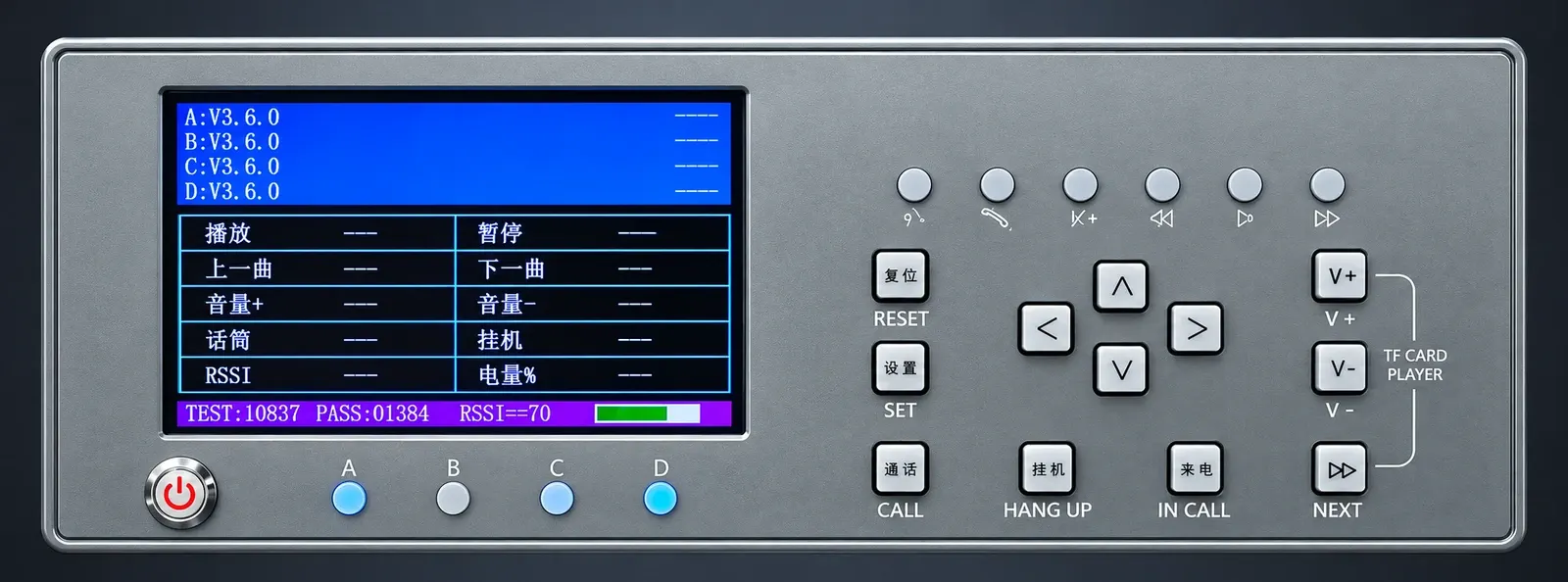
Alova publicly describes a combined approach to transducer choice, contact mechanics, structural isolation, gain structure, microphone layout and DSP feedback control. For hearing-related products, its public capability page also states that additional acoustic gain and distortion verification is applied before shipment. Those are useful capability indicators, but a buyer should still request the project-specific test plan, result and approval record for the exact configuration being purchased.
For a deeper supplier review, see How to Evaluate a Supplier’s Acoustic Tuning Capabilities for Open-Ear Hearing Assist Devices.
4. Control firmware, app, reliability and compliance inputs
Many apparent “hardware” differences are actually configuration differences. An approval record should identify the firmware, DSP parameters, app build, enabled functions and language pack used during evaluation. It should also state which settings are fixed, which can be adjusted by the brand or user, and which changes require revalidation.
Reliability evidence should follow the real product risks, not a generic list copied from another headset. The plan may need to address contact-force drift, transducer mounting, sweat exposure, cable or band flexing, charging, button life, storage, transport, and performance after conditioning. The buyer should receive the sample count, conditions, acceptance criteria, failures, corrective actions and retest results—not only a “PASS” slide.
Compliance planning must also be configuration-specific. Claims and intended use can change the applicable route. In the United States, the FDA Quality Management System Regulation became effective on February 2, 2026 and incorporates ISO 13485:2016 by reference for applicable finished medical-device manufacturers. For the European Union, teams should confirm the applicable MDR route and current MDCG guidance for the defined product. A general consumer-audio test report does not, by itself, establish that a hearing product is market-ready.
The evidence pack should therefore contain a responsibility matrix showing who owns classification, testing, technical documentation, labeling, registrations, post-market activities and change control. Final decisions should be made with qualified regulatory professionals in the target market.
The article Can Bone Conduction Headphones Be Sold as Hearing Aids? provides a useful boundary check before a buyer chooses claims.
5. Freeze the golden sample and production evidence
A successful engineering sample is not yet a repeatable production standard. Before pilot production or a purchase release, the team should freeze a controlled baseline:
- approved golden-sample ID and photographs;
- hardware, firmware and app versions;
- controlled bill of materials and critical-component list;
- drawings, dimensions, tolerances and cosmetic criteria;
- packaging, labels, accessories and language files;
- acoustic and functional acceptance limits;
- incoming, in-process, final and outgoing inspection points;
- approved deviations and open actions;
- change-request and reapproval rules;
- traceability records expected for the production lot.
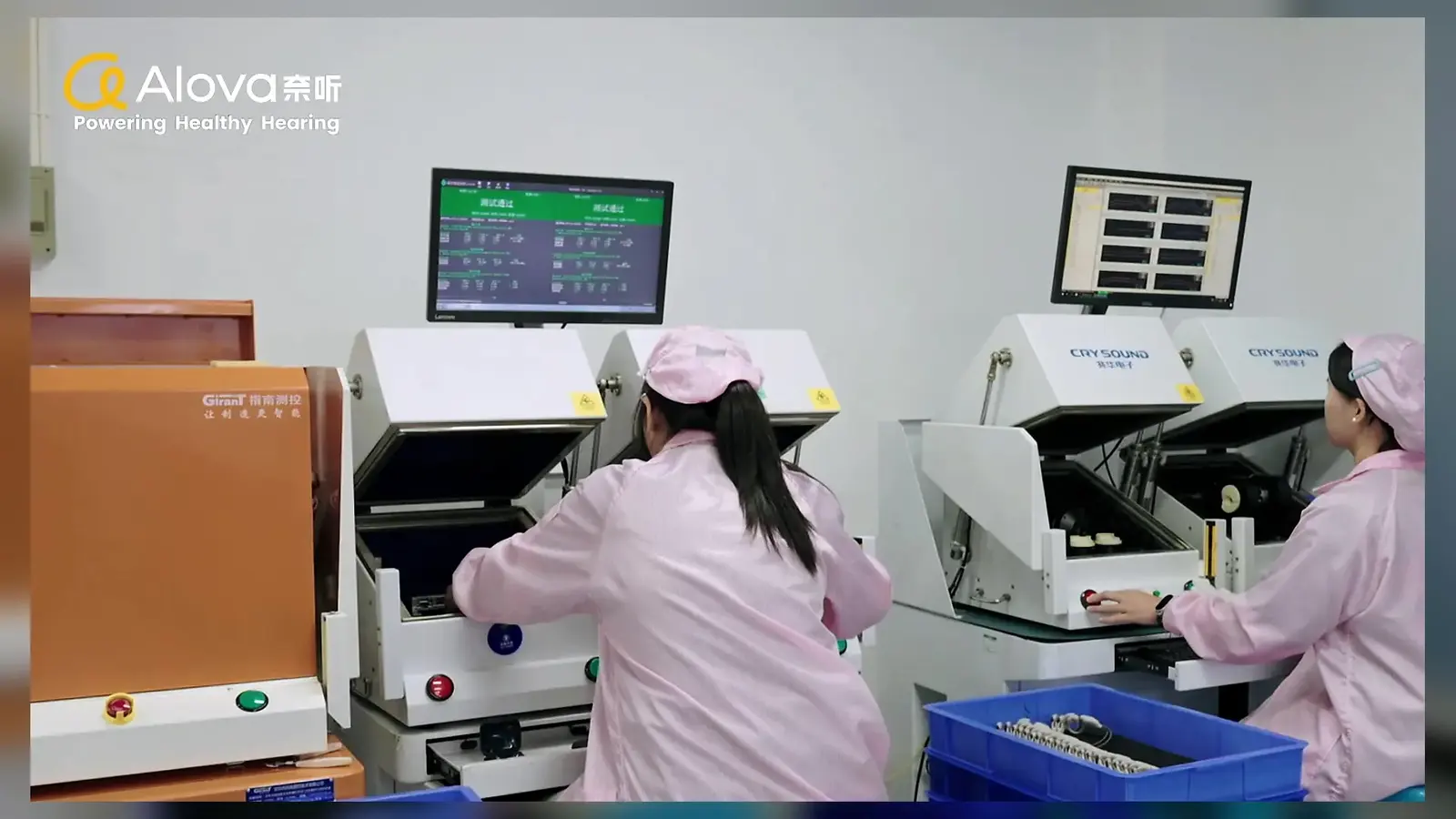
Alova’s public manufacturing page describes incoming inspection, process monitoring, final checks, outgoing release, acoustic calibration, reliability testing, pilot-build control, and a golden-sample/inspection-plan workflow. The important buyer action is to translate those capabilities into the documents and acceptance limits for the specific project.
For common schedule risks before production, read Bone Conduction Product Development: An OEM/ODM Guide.
6. Make a release decision, not a subjective impression
The final review should bring product, engineering, quality, regulatory and sourcing stakeholders together. Each requirement should be marked as:
- accepted: evidence meets the agreed criterion;
- accepted with controlled deviation: risk, owner and closure date are documented;
- open: more evidence or a design change is required;
- not applicable: supported by a documented rationale.
Do not let one impressive demo hide an uncontrolled baseline. If the sample, firmware, test report and production specification refer to different revisions, the approval cannot reliably protect the buyer.
The most valuable outcome of the evidence pack is not more paperwork. It is a shorter path to a defensible decision: what is ready, what remains uncertain, what must change, and who owns the next action.
A practical request to send an OEM supplier
When contacting a supplier, include the following:
- target country or region;
- intended users and listening scenarios;
- planned positioning and claims to be assessed;
- existing platform, OEM or ODM preference;
- acoustic, mechanical, app and packaging priorities;
- expected first-order range and later forecast, if available;
- sample and launch timing;
- the evidence categories that your team must review before approval.
Alova can then map the request to a platform and validation scope without asking the buyer to invent a complete specification first.
Planning a bone-conduction hearing-assistance project? Send your target market, user scenario, cooperation route, quantity range and launch timing to Alova. Ask for a project-specific evidence plan before approving the sample.
FAQ
Is a good listening demo enough to approve an OEM sample?
No. A demo is useful for early screening, but approval should identify the exact sample revision, firmware, test conditions, requirements, results, open risks and production baseline. Otherwise, the approved experience may not be reproducible.
Does every bone-conduction hearing-assistance product need the same certification package?
No. Required evidence depends on intended use, claims, market, configuration and product classification. Confirm the route with qualified regulatory professionals before freezing the validation plan or marketing language.
What is the difference between a test report and an approval record?
A test report documents a method and result. An approval record connects that evidence to a controlled requirement, sample revision, decision, responsible reviewer, deviation status and next action. Buyers need both.
References
- U.S. Food and Drug Administration, Hearing Aids.
- U.S. Food and Drug Administration, Regulatory Requirements for Hearing Aid Devices and Personal Sound Amplification Products.
- U.S. Food and Drug Administration, How to Determine if Your Product is a Medical Device.
- U.S. Food and Drug Administration, Quality Management System Regulation (QMSR).
- European Commission, Medical Devices — New Regulations Overview.
- European Commission, MDCG Endorsed Documents and Other Guidance.
- Alova, Bone Conduction Hearing Aids Manufacturer.