
Hearing support has to fit more than an audiogram. It also has to fit a person’s hands, routines, budget and sense of self.
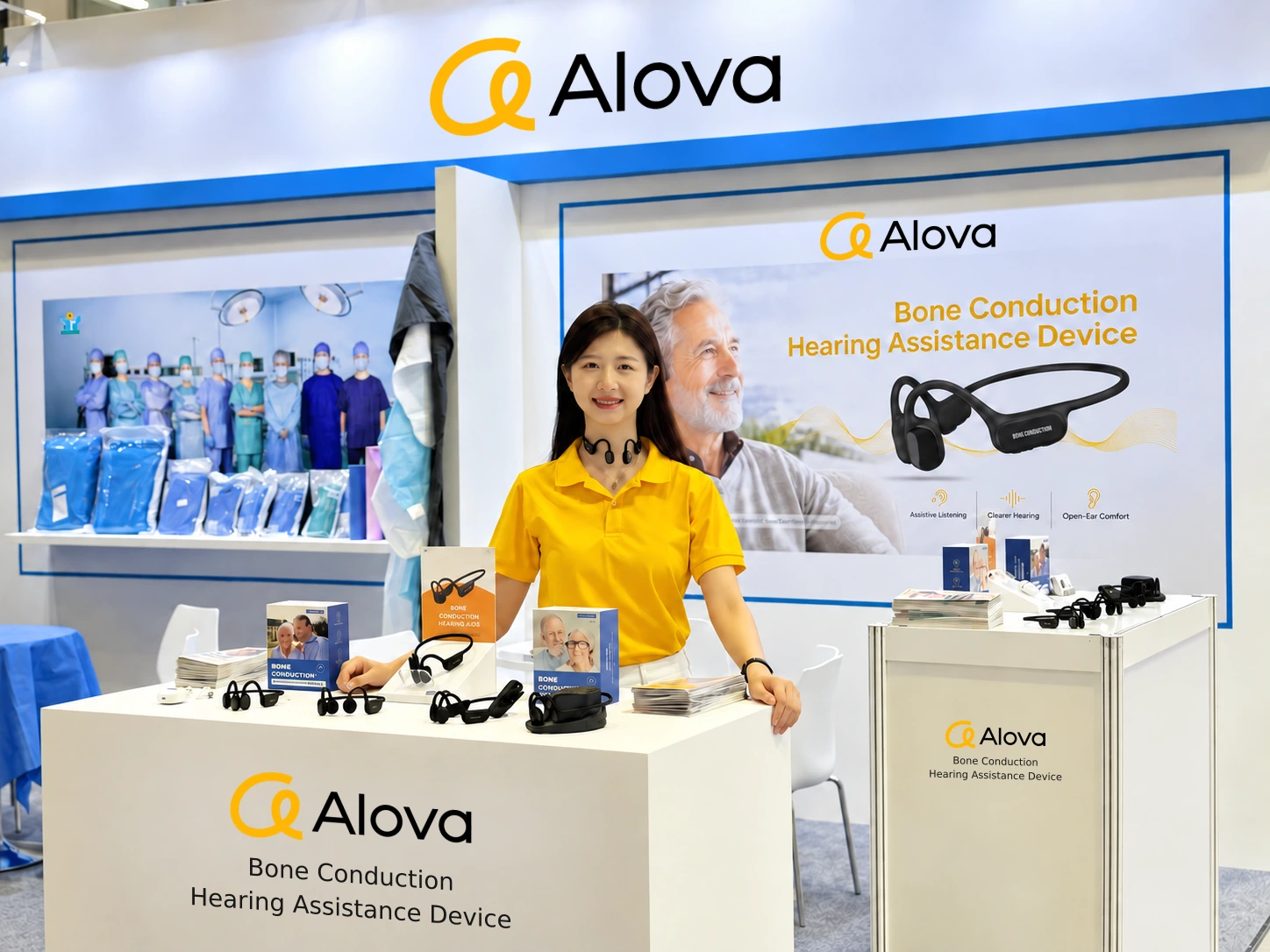
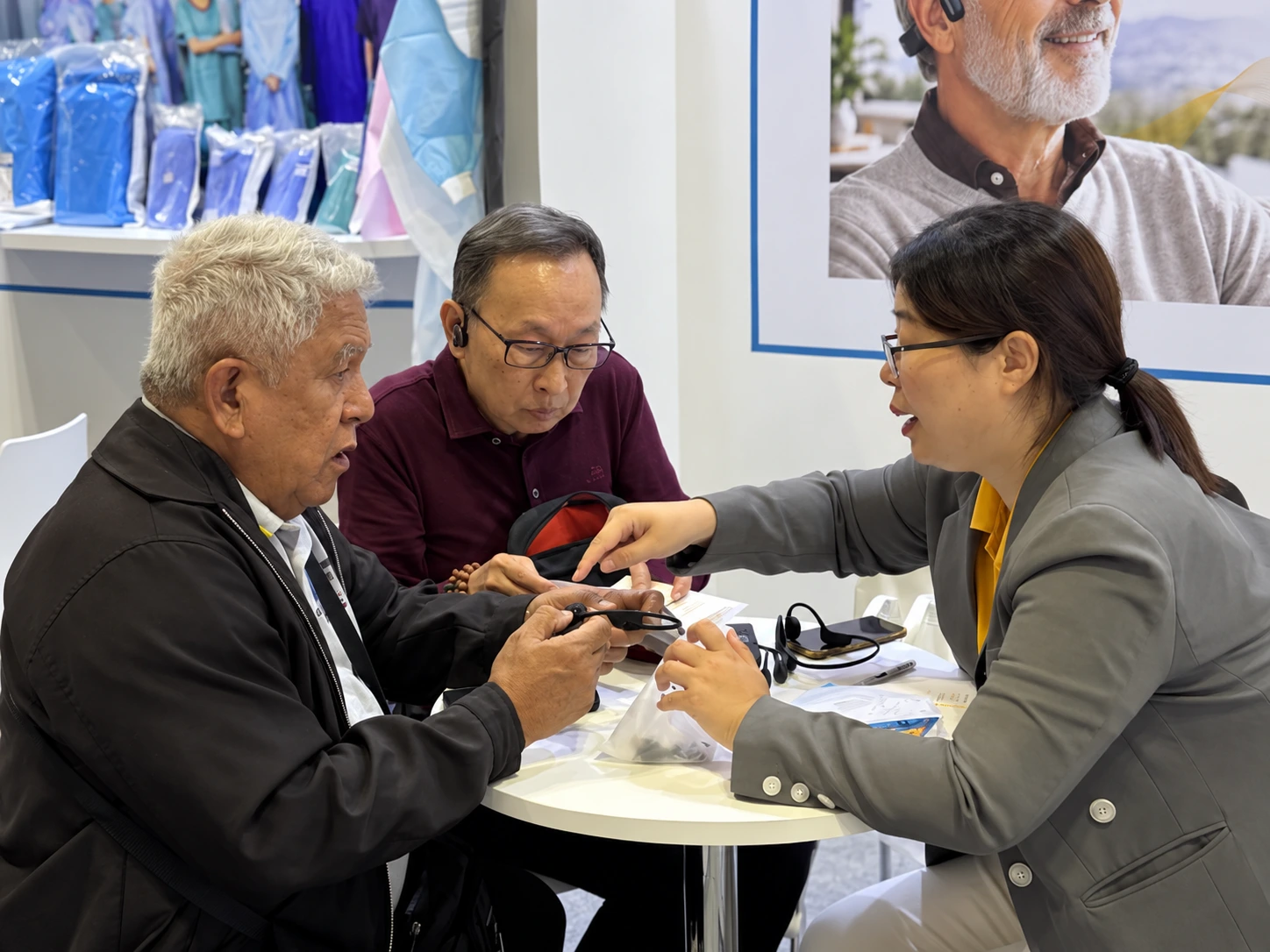
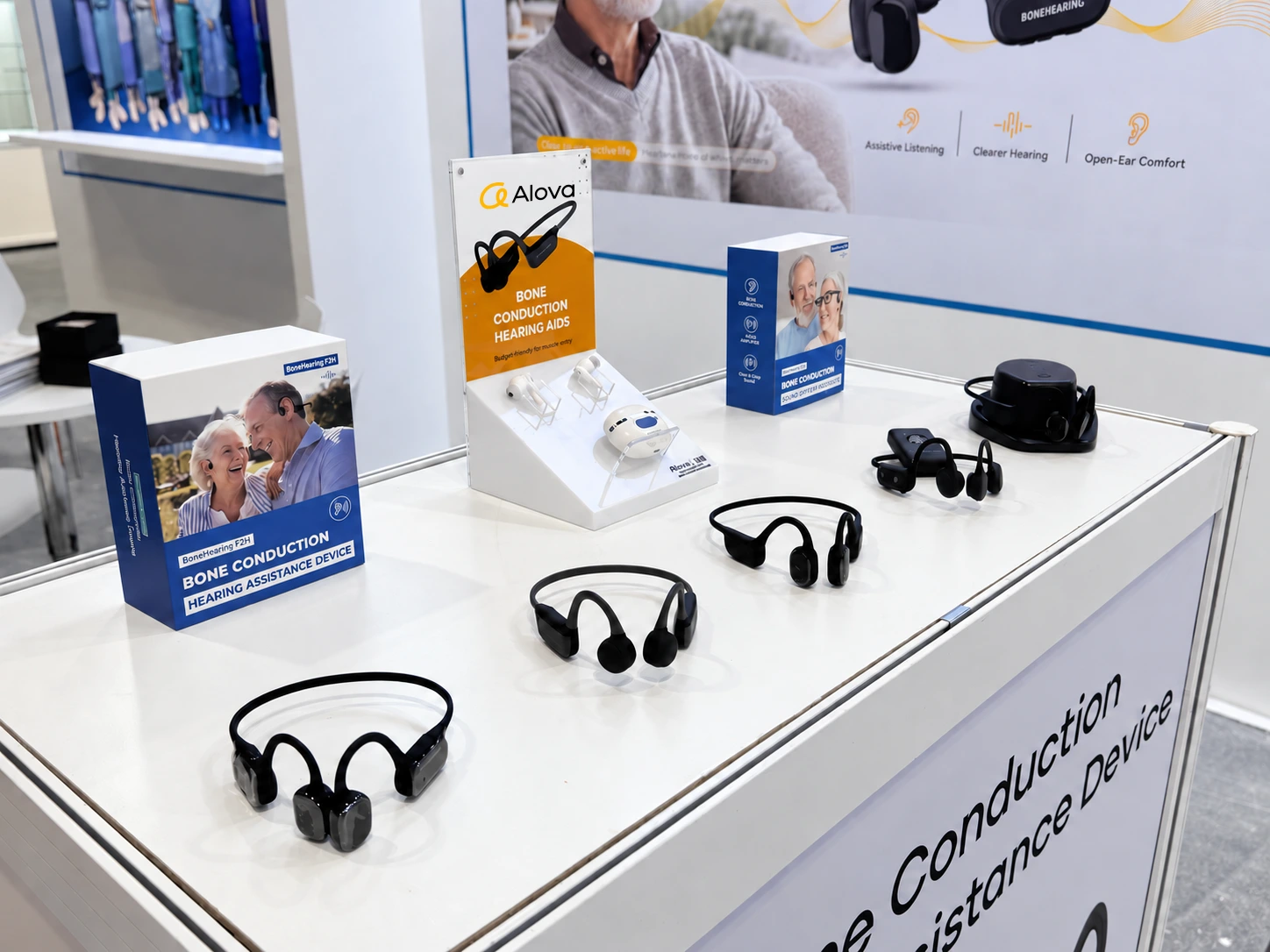
Alova presented bone conduction hearing assistance devices at a medical exhibition in Singapore, bringing its approach to open-ear listening into a setting focused on healthcare and assistive technology. The display included wearable devices and supporting product materials; photographs also document face-to-face product demonstrations.
For hearing-care brands, distributors and product teams, this provides a useful starting point: how can hearing support become easier to accept, easier to operate and practical to bring to market?
Look beyond amplification: acceptance matters
Some people hesitate to try hearing devices because they associate them with age, disability or unwanted attention. These attitudes are social barriers, not something a user should be made to feel ashamed of. The World Health Organization identifies stigma and misconceptions as obstacles to hearing care. WHO: improving access to hearing care.
A familiar wearable form can offer another design choice. Alova’s approach is to explore hearing support that feels compatible with everyday life. Whether that appearance actually improves acceptance needs to be tested with intended users; a new shape alone does not prove greater adoption.
Conventional hearing aids also come in many forms, including discreet and open-fit designs. The opportunity is to expand suitable choices while respecting each person’s preferences.
Affordability means the whole ownership experience
Purchase price matters, but so do fitting, instruction, maintenance and support. A device that is difficult to use can create costs for both the wearer and the distributor. NIDCD advises buyers to consider total cost, warranty, adjustments and servicing when choosing a hearing aid. NIDCD: hearing aids.
For an OEM/ODM project, Alova’s engineering brief should connect the intended selling price with the required performance, validated components, production consistency and service model. Platform reuse and clear feature priorities are possible ways to manage development effort; final savings depend on the project and order conditions.
Affordability should make appropriate hearing support more accessible without removing the performance or support the user needs. No price advantage or percentage saving is claimed for the exhibition devices here.
What bone conduction changes—and what still needs verification
Bone conduction uses mechanical vibration to convey sound through the skull toward the inner ear. In a wearable design, the contact interface becomes part of the acoustic system: position, coupling and stability all need attention. The open-ear form shown in Alova’s display offers an alternative to placing an earpiece inside the ear canal.
That does not make it a universal solution for hearing loss. Hearing needs differ, and a non-implantable wearable must not inherit the clinical claims of an implanted bone-anchored system. Product-specific assessment is needed for the intended user, output and listening task. NIDCD explains device selection and bone-anchored hearing systems.
For brand customers, useful verification includes speech understanding in the intended environment, comfortable contact, feedback behaviour, sound leakage and repeatable fit. A noisy trade-show demonstration can introduce a product; it cannot replace controlled testing.
Age-friendly design begins with everyday tasks
Alova’s age-friendly development direction puts everyday operation alongside acoustic performance. These are design and validation priorities, not a claim that every displayed model includes every feature below.
| User task | Design priority | What to verify |
|---|---|---|
| Put the device on | Clear orientation and a stable, comfortable contact interface | Repeated fitting with different head shapes and glasses |
| Change volume | Distinct, easy-to-locate physical controls | Find and operate controls without looking |
| Understand the current mode | Simple mode choices and clear feedback | Identify the active mode without assistance |
| Use it every day | Essential listening tasks with minimal setup | Complete the basic sequence without unnecessary app steps |
| Recharge and maintain it | Clear charging feedback and readable instructions | Connect, confirm charging and clean the device correctly |
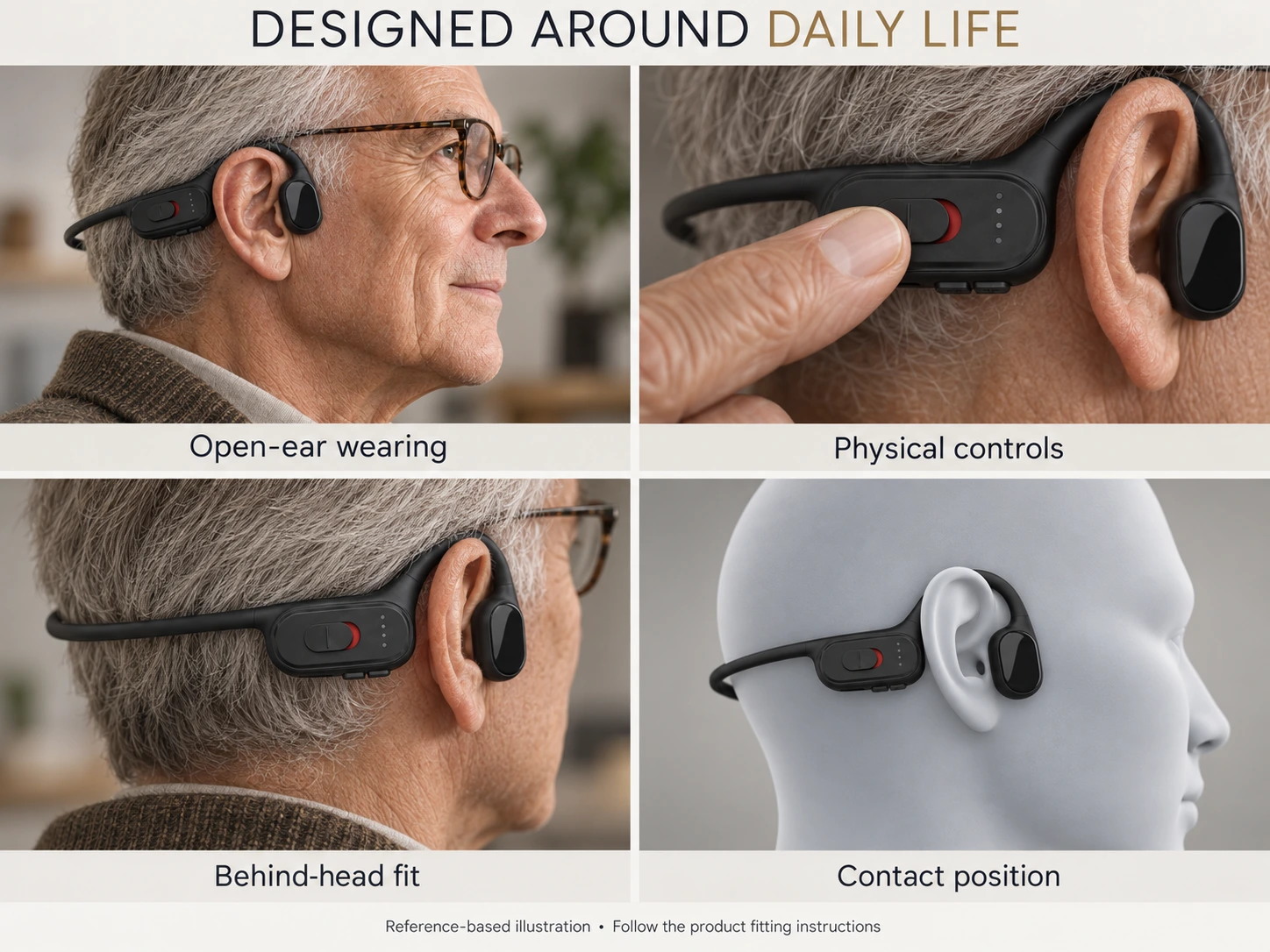
For the physical interface, teams should observe pressure discomfort, slippage and interference with eyewear. For operation, they should record task completion and errors. These observations turn “senior-friendly” from a marketing phrase into an engineering brief.
Good hearing-product design gives people more confidence in daily use—and gives brands clearer evidence for their decisions.
From exhibition sample to an OEM/ODM programme
Alova develops and manufactures bone conduction hearing solutions and open-ear audio products for brand customers through OEM/ODM development. Its role is to connect acoustic components with wearable structure, signal processing, controls and manufacturing requirements.
A productive enquiry starts with five items: the target market, intended users, main listening scenario, target price position and expected order volume. The team can then discuss an appropriate platform, customisation scope and evidence needed before launch. Product classification, permitted claims and market access must be confirmed for the particular model and destination.
Questions for brands and distributors
Is bone conduction suitable for every older adult?
No. Age alone does not determine suitability. Selection depends on the person’s hearing needs and the validated capabilities of the specific device.
Does an open-ear appearance prove better acceptance?
No. It provides a different wearing option. Acceptance should be evaluated with the intended users in everyday situations.
What should we prepare before requesting a sample?
Share your target country, user group, listening task and commercial requirements. Ask for the model’s specifications, available test evidence and applicable documentation.
Develop hearing support around your users
Planning a bone conduction hearing assistance product for your market? Send Alova your user scenario and project requirements to begin an OEM/ODM discussion.