
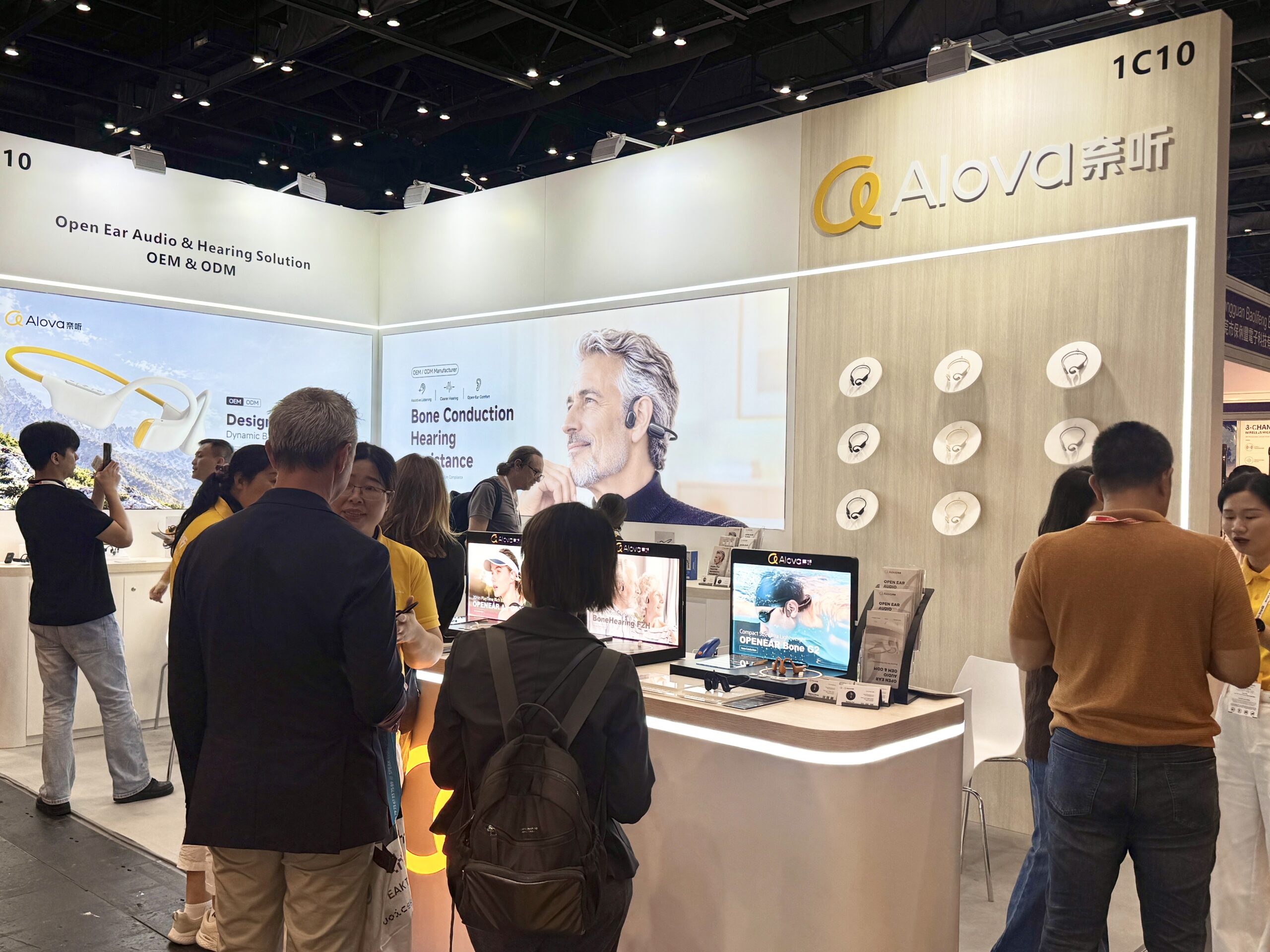
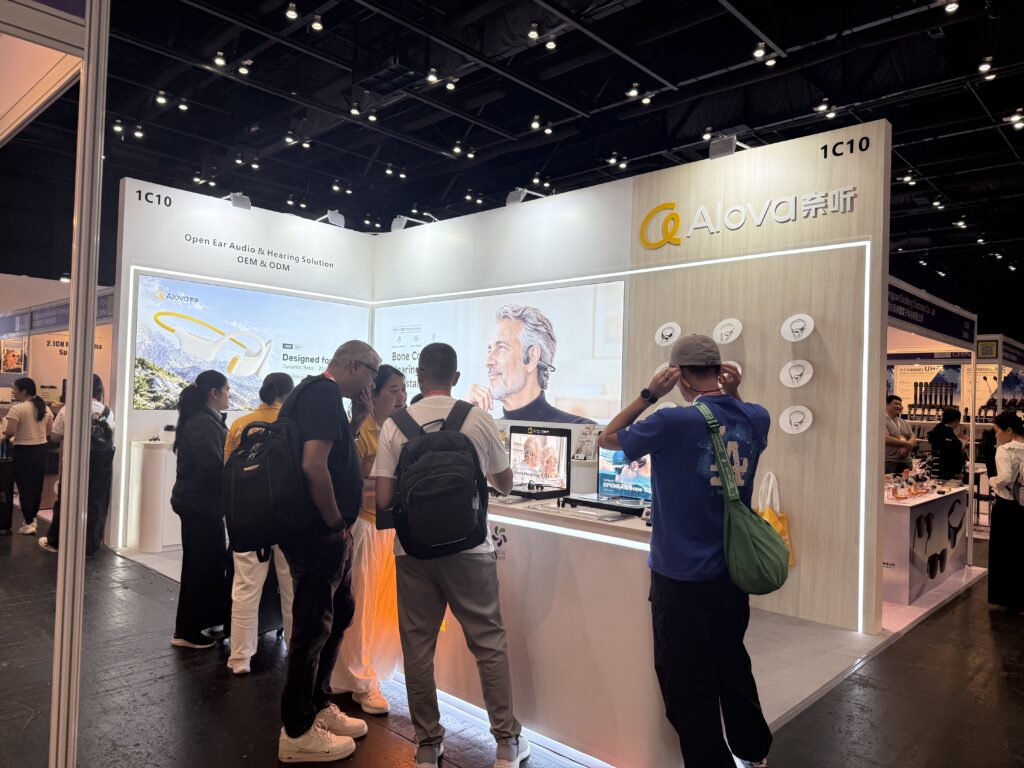
Alova exhibited at Global Sources Consumer Electronics from October 11–14, 2026, at AsiaWorld-Expo, Hong Kong, in Hall 1, Booth 1C10. The on-site photographs show visitors trying open-ear products, examining samples and speaking with the Alova team.
For brand owners, product managers and sourcing teams, a show visit is a starting point for evaluating fit and defining requirements. This recap brings together exhibition footage and practical next steps for discussing health audio, open-ear headphones and hearing assistance projects after the show.
Key Takeaways
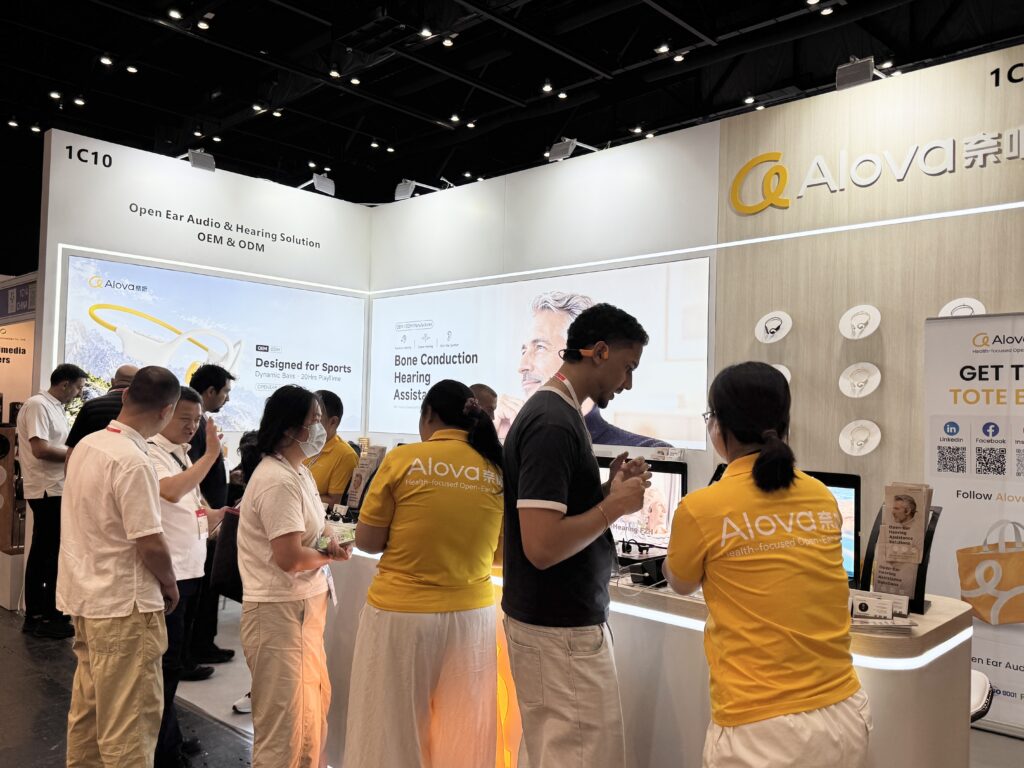
- Visitors tried products and received help with wearing position; follow-up evaluation should include the intended users and everyday environment.
- The exhibition covered bone conduction and air conduction headphones alongside hearing assistance applications. Confirm the intended use and requirements of each model separately.
- For an OEM or ODM follow-up, identify the sample or photograph you discussed and provide your target market, application and expected quantity.
Inside Booth 1C10: Products in Visitors’ Hands
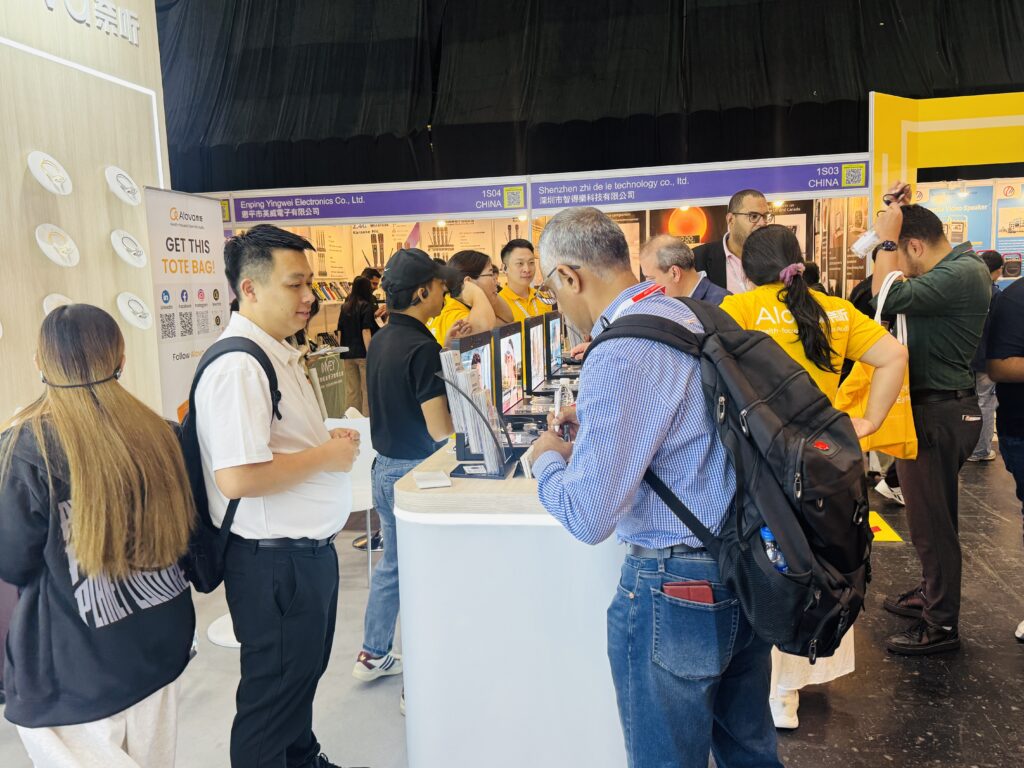
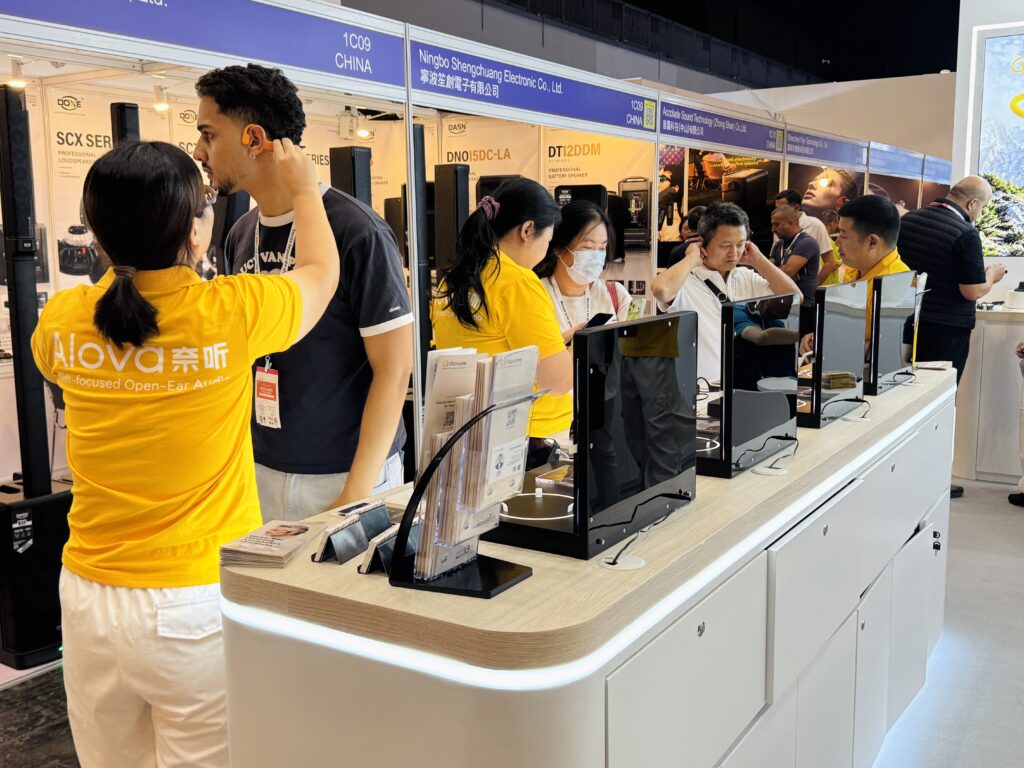
The supplied on-site photographs show hands-on product demonstrations and face-to-face conversations at Alova’s display counters. Visitors can be seen wearing headphones, handling samples and receiving assistance from the team.
For buyers who could not attend, these scenes provide a closer view of the products and the demonstration process. For those who visited, a photograph can help identify the sample they want to discuss with the team.
Watch the Exhibition Video
The exhibition video supplied by Alova adds moving footage to this recap. Use it alongside the photographs when identifying a product for a follow-up discussion.
Watch the exhibition video on YouTube if the embedded player is unavailable in your region.
Open-Ear Health Audio: Start With the Application
The right sourcing discussion starts with the user’s situation and the product’s intended use. Alova’s exhibition materials presented bone conduction and air conduction sports headphones, together with hearing assistance products.
For open-ear headphone projects, explain the wearing conditions, controls and audio tasks your users need. For hearing assistance projects, explain the listening situation and how the user should operate the product. Product classification and supporting documentation must be assessed for the specific model, claims and target market.
From a Booth Demonstration to Sample Evaluation
A brief exhibition trial should lead to a defined evaluation plan before a purchasing decision. The photos show team members helping visitors position products; buyers should also assess independent fitting and operation with their intended users.
- Identify the sample. Share the model reference, a booth photograph or a video timestamp so both teams discuss the same product.
- Define the application. State the target users, market and listening or sports environment.
- Set acceptance criteria. Agree which aspects of fit, operation, audio performance and durability need evaluation, including the relevant test conditions.
- Confirm the evidence. Request available specifications, relevant test records and market-specific documentation for the exact model.
Define the OEM or ODM Scope After the Show
Alova offers OEM customization and ODM development; the scope should be agreed for the individual project. Separate changes to an existing product from requirements that need new structural, electronic or acoustic development.
| Project question | What to provide | What to agree next |
|---|---|---|
| Which product should we evaluate? | Application and sample reference | Candidate models and available documentation |
| What needs customization? | Essential features and design requirements | Feasibility, deliverables and responsibilities |
| How will we decide? | Target users and acceptance criteria | Sample arrangements and evaluation plan |
Summary
Proceed to sample evaluation when the product and intended application are clearly identified. If your requirements are still broad, narrow the use case before committing to development. The next useful step is to agree the relevant model, evidence and evaluation scope with Alova.
FAQ
Where and when did Alova exhibit?
Alova exhibited at AsiaWorld-Expo, Hong Kong, from October 11–14, 2026, in Hall 1, Booth 1C10.
Can I follow up if I missed the exhibition?
Yes. Share your target market, users and application, together with a product photograph or video timestamp if available, to help identify the appropriate discussion.
What should I send after trying a product at the booth?
Send the sample reference and your observations about wearing fit and operation. Add your intended application and the requirements you want to verify during sample evaluation.
Does an exhibition trial replace formal product testing?
No. Use the trial to identify questions for further evaluation. Product performance and suitability need supporting evidence under relevant conditions.
Can I discuss both OEM and ODM projects?
Yes. Specify which existing product you are considering and which requirements involve customization or new development. Scope, costs, sample arrangements and timing are agreed separately.
Discuss Your Post-Show Project
Email [email protected] with the subject GS HK 2026 Follow-up. Include your target market, target users, application and expected quantity, plus the sample reference or photograph from the show.
Related Articles
- The 8 critical milestones of a successful open-ear headphone OEM project — Understand how a sourcing discussion progresses into development.
- When is open-ear headphone ODM a smart choice for brands — Assess whether new development fits your requirements.
Sources & Editorial Notes
Updated October 15, 2026, from Alova-supplied exhibition photographs, the supplied exhibition video, and the event details in the original announcement. Photographs retain the original people, products, signs and colors; web-sized versions preserve their aspect ratios. Photographs document the exhibition and demonstrations; no visitor identities, commercial relationships, order totals or test results are inferred. Evaluation steps are editorial recommendations, not a report of agreements made at the show. This short event recap uses descriptive sections instead of a separate table of contents.