
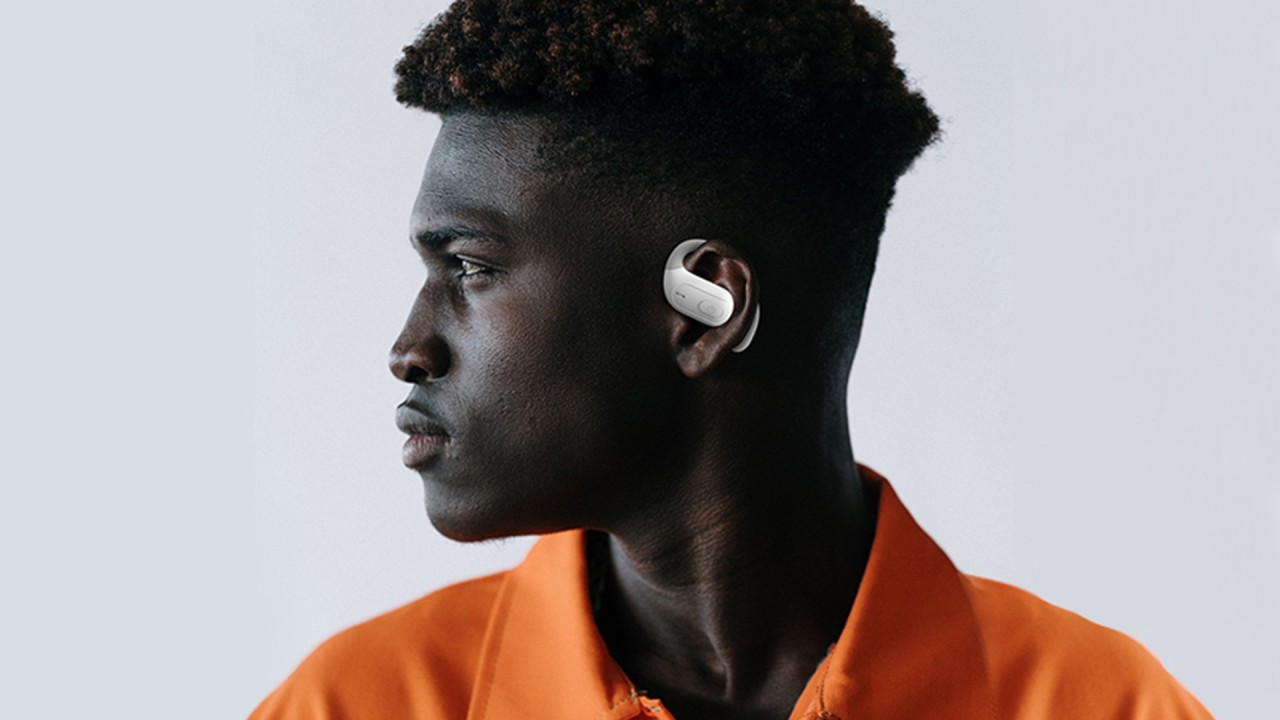
Bone conduction is changing rapidly.
It is no longer just for runners or swimmers who want to listen to music while exercising.
This technology is shifting from simple consumer audio to critical professional applications, powering hearing aids, office communication tools, and industrial safety equipment in 2025 and beyond.
The market is evolving.
Businesses and professionals are now the biggest drivers of this change.
Let’s look at why this shift is happening and what it means for the future of audio.
A Global Market Ready for Open-Ear and Bone Conduction
People around the world are worried about their hearing health.
Traditional headphones can hurt our ears, and the demand for safer options is growing fast.
Global markets in Europe, Asia, and the US are adopting bone conduction because it offers a safer way to hear audio without blocking the ear canal.
The world is waking up to a quiet health crisis.
The World Health Organization (WHO) warns that over 1.5 billion people currently struggle with some hearing loss.
By 2050, that number could jump to 2.5 billion.
This massive number is changing how companies design audio products.
It is not just about listening to music anymore.
It is about protecting what hearing we have left.
In the past, if you had hearing trouble, you had to go to a doctor for an expensive medical hearing aid.
Now, the market is filling up with “hearing-assist” devices.
These are affordable gadgets that help people hear better without a prescription.
Bone conduction is perfect for this.
It bypasses the eardrum entirely, sending sound directly to the inner ear.
This makes it a great tool for elderly people or those with mild hearing damage.
Furthermore, we are seeing a shift in how workplaces view safety.
In logistics centers, busy kitchens, and construction sites, blocking your ears with noise-canceling headphones is dangerous.
You need to hear the forklift behind you or your coworker shouting a warning.
This is called “ambient awareness.”
Key Market Drivers:
- Health Awareness: People want to avoid ear infections and hearing damage.
- Safety Requirements: Companies need gear that allows workers to hear their surroundings.
- B2B Demand: Distributors want products that are easy to sell and safer than traditional earbuds.
This creates a perfect storm.
The technology is moving away from being a “cool gadget” for joggers and becoming a “must-have tool” for safe communication in professional environments.
Why Bone Conduction Is Expanding Beyond Sports
Why are companies choosing bone conduction for their workers?
The answer lies in safety, comfort, and hygiene.
Bone conduction is expanding into professional sectors because it protects the ear canal, ensures situational awareness, and remains comfortable for all-day wear.
For a long time, bone conduction was marketed strictly to athletes.
It made sense: runners need to hear traffic.
But those same benefits are actually even more valuable in a workplace.
Consider a customer service agent or a delivery driver.
They might wear a headset for 6 to 10 hours a day.
If you wear traditional earbuds for that long, you risk two things:
- Ear Fatigue: The physical pain of having plastic jammed in your ear.
- Infection: Bacteria grows faster in a blocked, warm ear canal.
Bone conduction solves this completely because nothing goes inside the ear.
The “open-ear” design allows air to flow freely.
This drastically reduces the risk of ear infections and makes it possible to wear the device for a full shift without pain.
Comparison: Traditional vs. Bone Conduction in the Workplace
| Feature | Traditional Headsets | Bone Conduction Headsets |
| Ear Health | Blocks canal, risk of infection | Open canal, hygienic |
| Awareness | Isolates user from environment | User hears environment clearly |
| Comfort | Can hurt after 2-3 hours | Comfortable for 8+ hours |
| Primary Use | Focus work, noisy travel | Collaboration, safety, driving |
This technology also bridges the gap for people with mild hearing issues.
It acts as a gentle hearing support system.
It allows a worker to hear a phone call clearly through their cheekbones while still hearing their boss talking to them in the room.
It is the ultimate multitasking tool for the ears.
Data Proof: Professional B2B Segments Are Growing Faster Than Consumer Segments
Is this shift real or just hype?
The numbers show that professional use is growing much faster than personal use.
Industry data confirms that professional and hearing-assist bone conduction markets are growing at over 25% annually, outpacing the consumer sector.
When we look at the sales data, a clear pattern emerges.
The consumer market for these headphones is still growing, but it is steady—around 12% to 15% per year.
This is good, but it is not explosive.
However, the professional side is booming.
The “Over-the-Counter” (OTC) hearing device market in the US grew by nearly 400% in just two years.
This is massive.
It shows that people are hungry for non-medical hearing solutions.
In the Asia-Pacific region, the market for elderly hearing support is doubling every 3 to 4 years.
Why the difference in growth?
- Saturation: Everyone already has a pair of earbuds for music. The consumer market is crowded.
- New Need: The professional market is just getting started. Many industries are only now realizing they can replace clunky walkie-talkie headsets with lightweight bone conduction gear.
- Aging Population: As the global population gets older, the need for “assistive” audio grows much faster than the need for “recreational” audio.
We are also seeing a surge in outdoor safety devices.
Projections suggest this specific niche will exceed $3 billion by 2028.
This includes gear for construction workers, park rangers, and emergency responders.
The data proves that the money is moving toward tools that solve problems, not just toys for entertainment.
What Professional Markets Need (and Where Most Manufacturers Fail)
Making a headset for a jogger is easy.
Making one for a medical professional or a factory worker is very hard.
Professional markets demand stable acoustic performance, durable engineering, and strict compliance, which many standard consumer factories fail to deliver.
There is a big gap in the manufacturing world right now.
Many factories try to jump on the bone conduction trend by simply copying the shape of sports headphones.
They use cheap parts and basic designs.
This works for a $20 toy, but it fails in a B2B setting.
Professional buyers face five specific pain points when sourcing these products:
1. Acoustic Stability
Consumer factories often treat bone conduction like a vibrating speaker.
They don’t tune it properly.
For a hearing-assist device, the sound needs to be crisp and clear, specifically for human voices.
If the “tuning” is off, the user just feels a buzzing on their face without hearing clear words.
Professional manufacturing requires specialized transducers (the vibrating part) and years of R&D to get the sound right.
2. Structural Complexity
Bone conduction creates strong vibrations.
If the device isn’t built well, it will literally shake itself apart over time.
- Heat Dissipation: Vibration creates heat.
- Waterproofing: Professional gear often needs to be IPX8 rated (fully waterproof) for outdoor work.
- Resonance: The casing needs to be solid so it doesn’t rattle.
3. Compliance and Standards
You cannot sell a hearing-assist device in Europe or Japan without the right paperwork.
B2B buyers need factories that have CE, FCC, RoHS, and ISO certifications.
A generic factory often lacks the team to handle this complex documentation, leading to customs delays or legal issues for the brand.
4. Customization Speed
B2B clients need to move fast.
They might need a custom logo, a specific color for a uniform, or a slight tweak to the button layout.
Large factories often demand a “Minimum Order Quantity” (MOQ) of 5,000 or 10,000 units.
This is too risky for a specialized medical distributor.
Flexible manufacturing that allows for smaller batches (like 1,000 units) is critical for this market.
Case Insights: How B2B Clients Are Using Bone Conduction Today
We have talked about the theory, but who is actually using this technology right now?
The use cases are diverse.
From elderly care distributors to education sectors, B2B clients are adopting bone conduction to solve specific communication and health challenges.
Let’s look at how different industries are practically applying this technology.
It is not just one sector; it is happening everywhere.
The Education Sector
Schools and training centers are using these headsets for language labs and online tutoring.
- The Problem: Students wearing heavy headphones for hours get sweaty ears and lose focus. They also can’t hear the teacher if they have noise-canceling cans on.
- The Solution: Bone conduction allows them to hear the digital lesson while still hearing the teacher’s instructions in the room. It keeps them connected to the class.
Elderly Care
Distributors who serve nursing homes are buying these devices in bulk.
- The Problem: Many seniors refuse to wear medical hearing aids because they are uncomfortable, easy to lose, or make them feel “old.”
- The Solution: A bone conduction headset looks like a modern gadget. It rests on the shoulders or neck. It is harder to lose and comfortable to wear while watching TV or talking to family. It removes the stigma of hearing loss.
Logistics and Warehousing
- The Problem: Warehouse pickers need to hear voice instructions from their system, but they also need to hear the electric carts whizzing by.
- The Solution: Open-ear headsets provide the data they need without blinding them to safety hazards.
The “3C” Consumer Brands
Even standard electronics brands (computer, communication, consumer) are changing.
They are launching “open-ear” product lines to diversify.
They know they cannot compete with Apple or Sony on noise-canceling, so they compete on “health and safety” using bone conduction.
The Next Industry Wave
What does the future hold for this technology?
We are just at the beginning of the curve.
The next wave of bone conduction will focus on non-clinical hearing solutions, integrated safety wearables, and specialized care for the aging population.
As we look toward 2030, the line between “medical device” and “consumer gadget” will blur even more.
We will see the rise of Preventative Audio.
Instead of waiting until you are deaf to buy a device, you will buy a “smart headset” in your 40s that protects your ears while letting you enjoy music.
Future Trends to Watch:
- Smart PPE: Hard hats and safety helmets with built-in bone conduction. No more separate headphones; the communication system will be molded directly into the safety gear.
- AI Integration: Headsets that use AI to separate speech from noise. Imagine a construction worker who hears their boss’s voice perfectly clearly via bone conduction, while the headset’s software filters out the sound of the jackhammer.
- Expansion of “OTC” Markets: As laws change in more countries to allow Over-the-Counter hearing aids, bone conduction will become the dominant form factor for these devices.
The window for B2B adoption is open now.
The brands that win will be the ones that partner with specialized factories—manufacturers who understand that this is no longer just about audio, but about health, safety, and quality of life.
Conclusion
Bone conduction is evolving from a sports niche to a professional necessity, driven by safety needs and health awareness.
The future of audio is open, safer, and built for business.
Frequently Asked Questions
1. Is bone conduction safer for hearing than regular earbuds?
Yes, generally.
Because they don’t block the ear canal, they reduce the risk of ear infections.
However, like any audio device, listening at maximum volume for long periods can still damage the cochlea (inner ear).
2. Can people with hearing loss use bone conduction headphones?
Often, yes.
If the hearing loss is related to the eardrum or ear canal (conductive hearing loss), bone conduction can bypass the damage and send sound directly to the inner ear, allowing the user to hear clearly.
3. Do bone conduction headphones have good sound quality?
The sound quality has improved significantly but is different from traditional headphones.
They lack deep bass because they don’t seal the ear.
They are optimized for vocal clarity (podcasts, calls) rather than high-fidelity music.
4. Are these headphones comfortable for people wearing glasses?
Most modern designs account for this.
The “shokz” style wraps around the back of the head and sits over the ear, usually leaving enough room for eyeglass frames to sit comfortably alongside them.
5. How long is the battery life on professional bone conduction headsets?
Professional-grade models typically offer 6 to 10 hours of continuous talk/play time.
This is designed to cover a full work shift without needing a recharge.
6. Do bone conduction headphones leak sound?
Yes, there is some sound leakage, especially at high volumes.
However, professional models use “anti-leakage” technology to minimize this, so people standing nearby won’t hear your conversation unless they are very close.
7. Are they waterproof?
Many models are.
Because they don’t need speaker holes, they are easier to waterproof.
Ratings often range from IPX5 (sweat resistant) to IPX8 (swimmable), making them great for outdoor work.